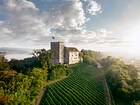
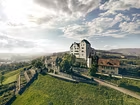
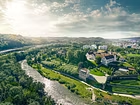
Wildegg Castle

Rose garden

Rose garden Admission Entrance free A major attraction for rose lovers The rose garden of Wildegg Castle is a major attraction for rose lovers. Numerous historical roses with rose arches, as well as English roses and hybrid tea roses, can be found here. Laid out in around 1830 it's a magnificent sight, especially during the main flowering period in June, replete with carefully tended, historical and rare roses. For weddings, the rose garden is a popular backdrop for photo shoots. It's also the perfect place to sit on a bench and read a gripping detective story. The small park near the historic wine cellar has been maintained free of charge for many years by the Aargau Regional Group of the Society of Swiss Rose Enthusiasts. Rose garden on Wildegg Castle: A major attraction for rose lovers!

 
Wildegg Castle

Vineyard path

Permanent exhibition Price Museum/garden admission 0 Nine interactive stations about viticulture The Wildegg Castle vineyard trail tells the story of the hard but rewarding work of winegrowers in centuries past. At nine interactive stations, built from old wine barrels, visitors discover the challenges of winegrowing: from tending the vines in winter to the dangers posed by weather, pests and diseases, right through to the grape harvest in autumn. Special attention is paid to the Effinger family, who used viticulture as their economic basis for centuries. Rebpfad Schoss Wildegg: Ausstellung über Weinbau

 
Wildegg Castle

Children's area and stables

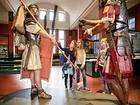
Permanent exhibition Admission Museum entrance fee Saddle up the horses in the stables! Wildegg Castle is a paradise for families: children can play and paint in the castle barn, or saddle up the horses in the stables! Children's area: books, games and billiards There's never a dull moment in the children's area at Wildegg Castle! Here, kids can dress up as knights, set the table in the children's castle, browse through books on the elegant sofa or try out old games. They can even play a game of billiards – just as the residents of Wildegg Castle once did. Stables: saddle up the horses! In the old stables, Albert von Effinger talks to his favourite horse, while his hunting dog gives a running commentary! The wooden horses are waiting to be fed and groomed. In this exhibition, children learn what horses like to eat, how they were used in the past – and can even meet a talking horse. Sit side-saddle yourself, climb aboard the carriage, or race for the finishing line as a jockey! Exhibition on Wildegg Castle: Children's area and stables. Saddle up the horses in the stables!

 
Wildegg Castle

Hunting and game

Permanent exhibition Admission Museum entrance fee Stroke a wild boar! Stroke a wild boar and find out how the lords of Wildegg hunted with birds of prey and dogs around 1800. In the Jagd & Wild (Hunting & Game) exhibition you'll walk through the woods and stand amidst their animal inhabitants. You'll also learn which animals and tools were helpful to hunters, discover on a map where the hunting ground was located, and marvel at the many trophies that the Effingers brought home. In the lifelike hunting and game exhibition, Sigmund Effinger himself talks about his passion. His talking portrait explains why hunting was a privilege of the nobility and how everything changed in 1798. Exhibition "Hunting an game" on Wildegg Castle. Stroke a wild boar!

 
Wildegg Castle

Kitchen garden and pleasure garden

Admission Museum entrance fee Rare variety Take a stroll through the 3,300-square-metre kitchen garden and pleasure garden with its old crop plants and rare vegetables. The historic vegetable cellar gives an interactive insight into the history of the garden and the work of ProSpecieRara. Kitchen garden and pleasure garden: rare variety The combined kitchen garden and pleasure garden at Wildegg Castle is the perfect place to stroll, smell the scents and marvel at the flora. Old, barely remembered vegetable varieties grow in the borders, while the flowers and shrubs fill the air with their fragrances. In collaboration with ProSpecieRara, old varieties such as the purple artichoke, skirret and tree onion are cultivated here. Stroll through the garden and appreciate the plant diversity of the 18th century! Vegetable cellar: a word with gardener Bruno In the historic vaulted cellar, where tools were once stored and plants wintered, you will now meet Julie von Effinger. In her talking portrait, the last lady of the castle discusses the latest developments in the castle garden with gardener Bruno. The vegetable cellar also showcases the work of the ProSpecieRara Foundation, which cultivates and propagates rare vegetable and ornamental plant varieties in the kitchen garden and pleasure garden. Kitchen garden and pleasure garden on Wildegg Castle: Rare variety and historic plants.

 
Wettingen Abbey

Parlatorium

Discussion Lab Admission Museum entrance fee Registration Not required (recommended for schools) Hundreds of questions in one room Built around 1600, the Parlatorium was one of the few rooms in the abbey where speaking was once permitted. Today, Museum Aargau invites visitors here to engage in conversation about faith, power and knowledge – and poses hundreds of questions on these topics. Choose one of them and embark on a journey of discovery through the Parlatorium: through conversation, play, or via interactive text, image and film installations. The exhibition was developed in collaboration with pupils from the Wettingen Cantonal School, which is also based on the monastery peninsula. Their perspectives on the themes of faith, power and knowledge build bridges between this place's past and the present day. At the weekend, school pupils usually welcome visitors to the Parlatorium. They have been trained as hosts for this role. The Parlatorium at Wettingen Abbey was one of the few rooms in the abbey where speaking was once permitted.

 
Wettingen Abbey

Cloister

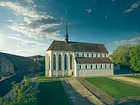
Permanent exhibition Admission Museum entrance fee 0 A place of meditation with a significant series of stained-glass windows The well-preserved cloister, with its Romanesque and Gothic tracery, evokes the tranquillity that once characterised life within these walls. Small gravestones of monks buried here are set into the flagstone floor. At the heart of the cloister lies the idyllic cloister garden. The cycle of stained-glass windows in the cloister is particularly valuable. Private donors, friendly abbeys and the Swiss cantons have all donated these significant cabinet windows to Wettingen Abbey. The earliest examples date back to the 13th century. Cloister Chapel with the Wettingen Christ Child Above the altar of the Cloister Chapel hangs the sacred image of the "Wettingen Christ Child". The wooden painting miraculously survived the devastating abbey fire on White Sunday in 1507. The monks saw this as a sign from heaven. The "Christ Child", marked by burn holes, has been venerated ever since. The cloister at Wettingen Abbey: a significant series of stained-glass windows. An exhibition by Museum Aargau.

 
Wettingen Abbey

Observatory

Permanent exhibition Admission Museum entrance fee Take a journey through the history of knowledge and belief At the Observatory, take a journey through the history of knowledge and belief in a cinematic installation. Together with a group of pupils from Wettingen Cantonal School, you will visit places that tell this story: from the earliest known cave paintings to the vastness of the World Wide Web. On this journey, you will discover how the monks of the Cistercian abbey understood knowledge in the Middle Ages – and how the expulsion of the monks from the abbey in 1841 was linked to new concepts of knowledge and power structures. Finally, you will return to the present day, amidst the challenges we now face in the "knowledge society". In addition, a timeline provides an insightful and varied account of the history of Wettingen Abbey. Selected objects also offer a glimpse into the collection of Museum Aargau. At the Observatory at Wettingen Abbey, take a journey through the history of knowledge and belief in a cinematic installation.

 
Wettingen Abbey

Medicinal garden

Admission Free of charge Tradition of monastic healing Today, medicinal herbs, spices, flowers and also certain vegetables grow in the medicinal garden of Wettingen Abbey. The garden showcases the long tradition of monastic medicine. The original location and design of the medicinal garden are not known in detail. It is assumed that, as in comparable abbey complexes, the Wettingen garden was located by the infirmary wing. The garden has been reconstructed at this location, based on the Hortulus book on gardening by the Reichenau abbot Walahfrid Strabo and the St. Gallen abbey plan from the 9th century. Medicinal garden on Wettingen Abbey. Tradition of monastic healing.

 
Wettingen Abbey

Cloister garden

Admission Museum entrance fee Idyllic garden in the heart of the abbey complex Experience a special monastic atmosphere in the cloister garden of Wettingen Abbey: the idyllic garden with its meadow, yew tree, water basin and path is located within the abbey walls and surrounded by the cloister quadrangle. Throughout the ages, the cloister garden was designed as a spiritual garden with a central solitary tree. In monastic culture, the tree is reminiscent of the forbidden tree of knowledge in the Garden of Eden. On the other hand, it stands for life, as a symbol of Christ and the cross. Today's cloister garden has been restored to how it was in around 1900. Cloister garden on Wettingen Abbey. Idyllic garden in the heart of the abbey complex.

Gradian
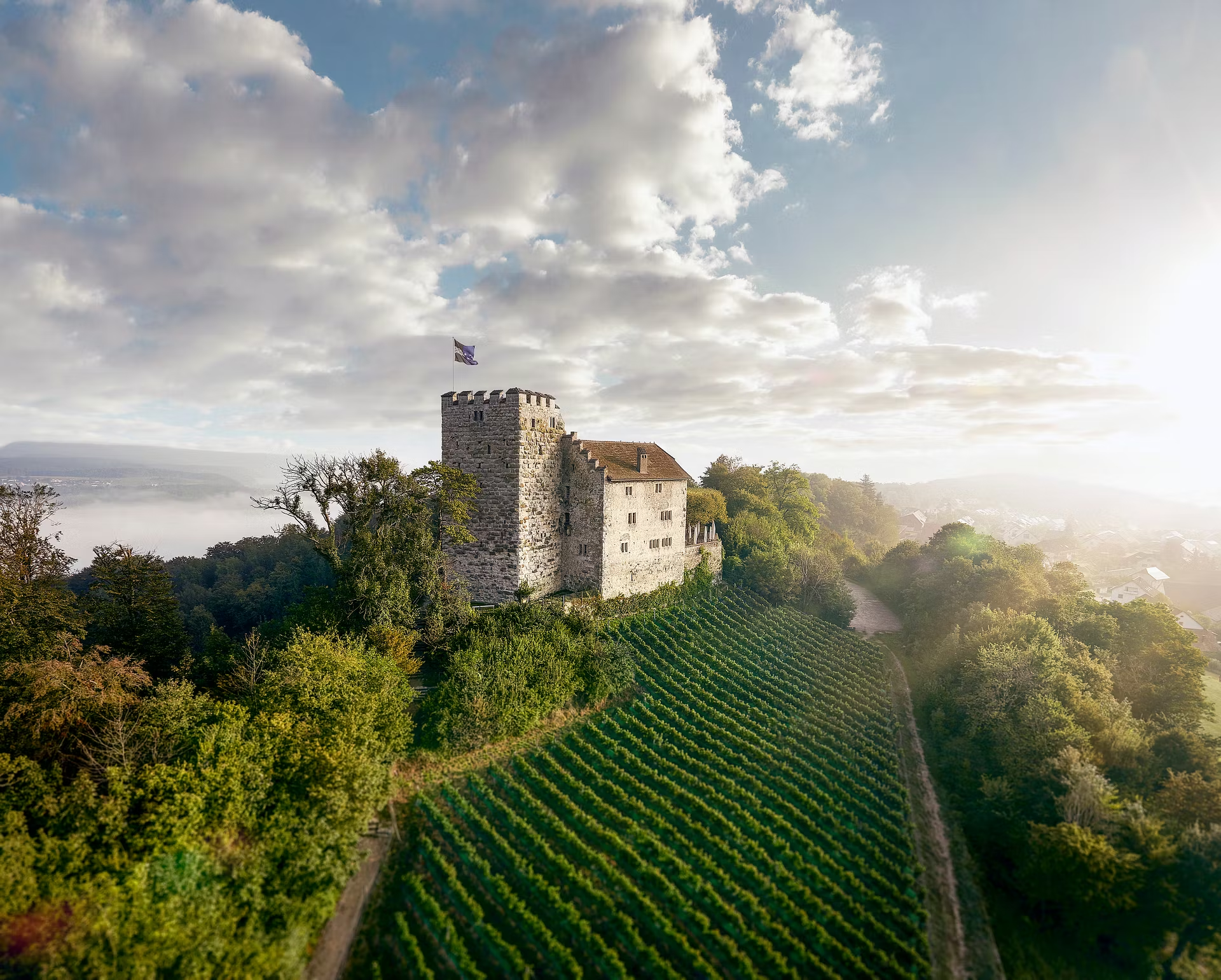
Luftaufnahme vom Schloss Habsburg von Michel Jaussi

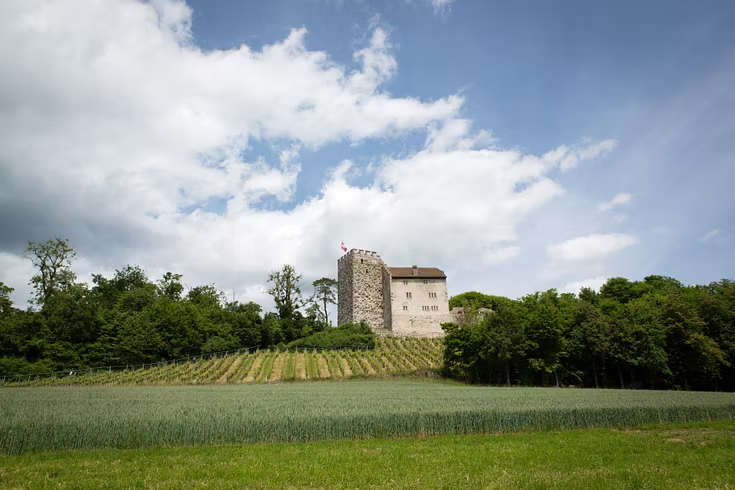
Habsburg Castle

Ancestral Seat of a Global Dynasty

The foundation stone of what was to become the Habsburg dynasty was laid at Habsburg Castle in around 1030. Exhibitions, guided tours and events present the history of the legendary castle and its noble family.
PLANNING YOUR VISIT

 
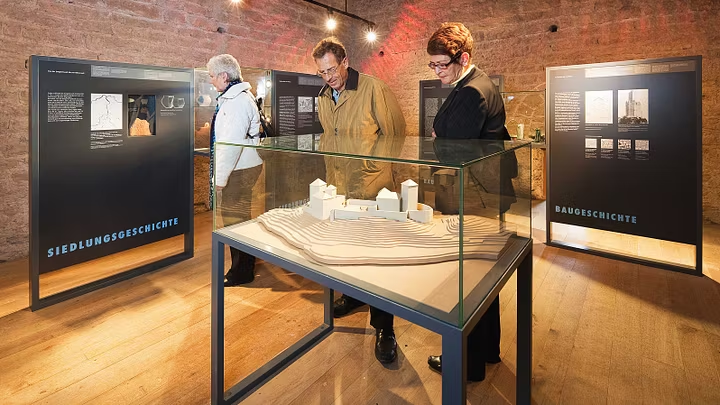
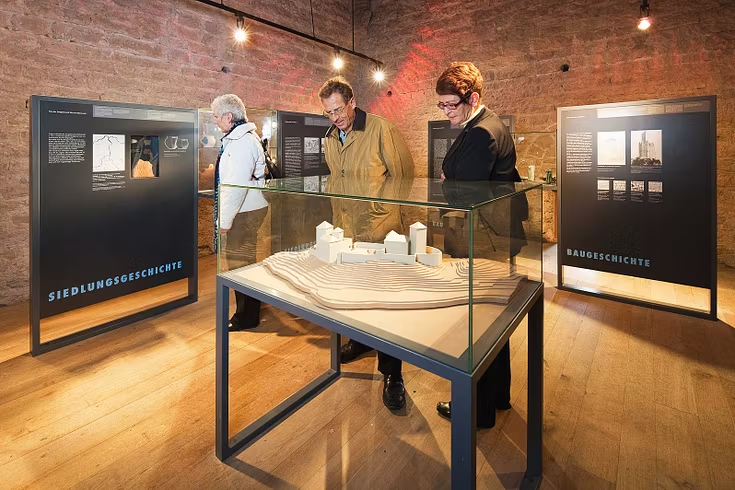
Besucher in der Dauerausstellung Schloss Habsburg

Museum and
exhibitions

Explore the castle and ruins  

 
Mädchen bastelt am Familiensonntag am Schloss Habsburg

Events and public
guided tours

Calendar of events (in German)  

 
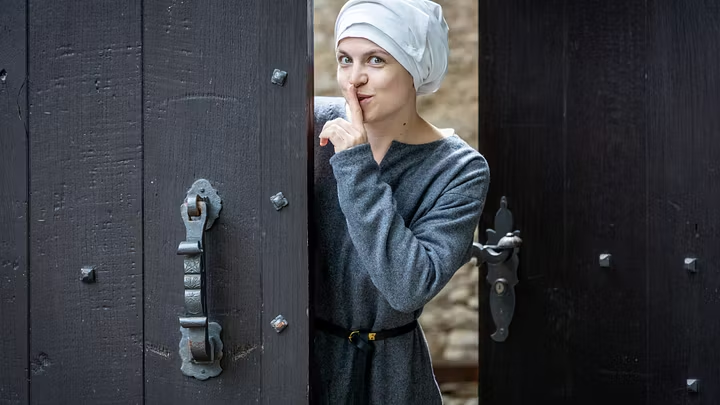
Eine mittelalterlich gekleidete Magd blickt durch das offene Tor von Schloss Habsburg in die Kamera. Sie hält verschwörerisch den linken Zeigfinger vor dem Mund ("nichts verraten!")

Opening hours
and entrance fees

Open all year round  

 
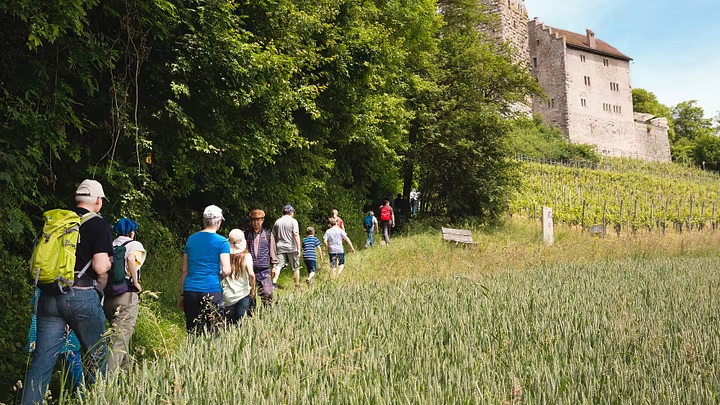
Wanderer auf dem Weg zum Schloss Habsburg

Getting
here

Directions  

 
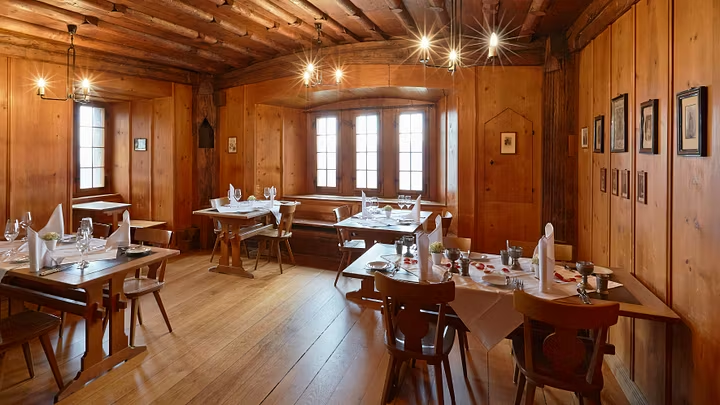
Gotische Stube Schloss Habsburg: Rustikaler Raum mit viel Holz und schön gedeckten Tischen.

Food and
drinks

Castle restaurant  

SCHOOLS, FAMILIES AND GROUPS

 
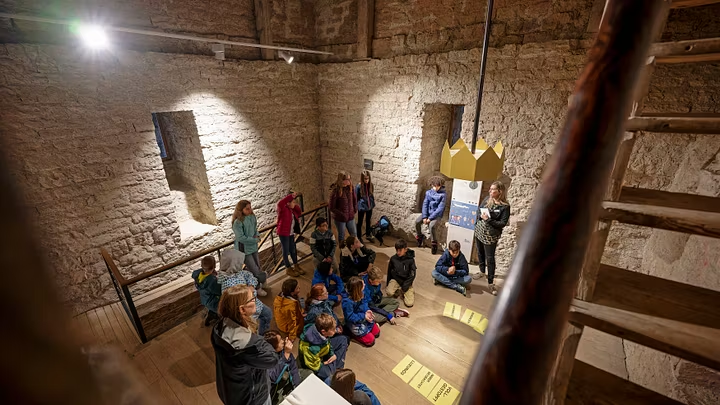
Eine Schulklasse sitzt im Kreis im Innern von Schloss Habsburg; am Boden liegen Blätter mit Texten.

For
schools

Guided tours and workshops  

 
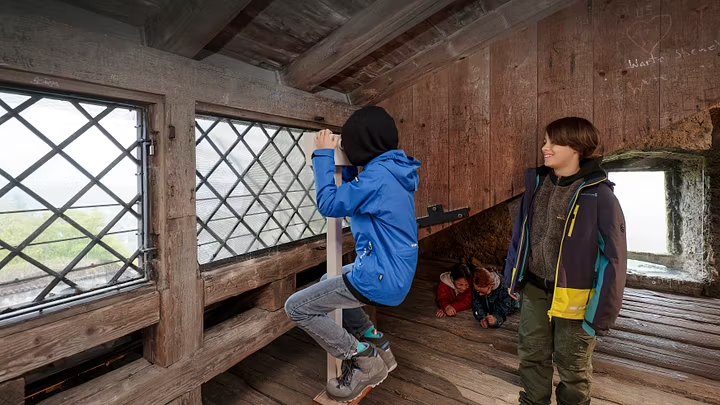
Zwei Schüler unter dem Dach von Schloss Habsburg; ein Bub blickt durch ein Fernrohr ins Weite.

For
families

For young knights and princesses  

 
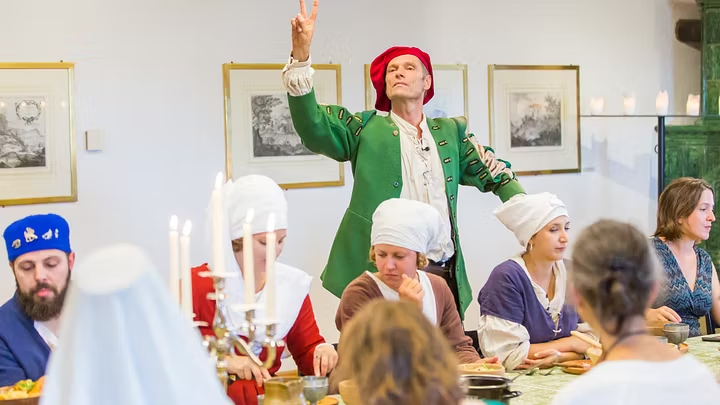
Verkleideter Museumsführer erzählt im Esstheater den dinierenden Gästen am Esstisch Anekdoten auf Schloss Habsburg

For
groups

Guided tours and workshops  

HISTORY AND COLLECTION

 
Virtuelles Schloss Habsburg

History

Residents and construction history  

 
Ein gelber Heizlüfter, Objekt im Sammlungszentrum Egliswil

Collection

Treasure trove of Aargau's history  

 
Grosses Handy in der Hand eines Benutzers, auf dem Bildschirm ist die "Sammlung online" von Museum Aargau dargestellt.

Collection online

Site in German  

Impressions

Aussenaufnahme mit mächtigen Wolken über Schloss Habsburg
Besucher in der Dauerausstellung Schloss Habsburg
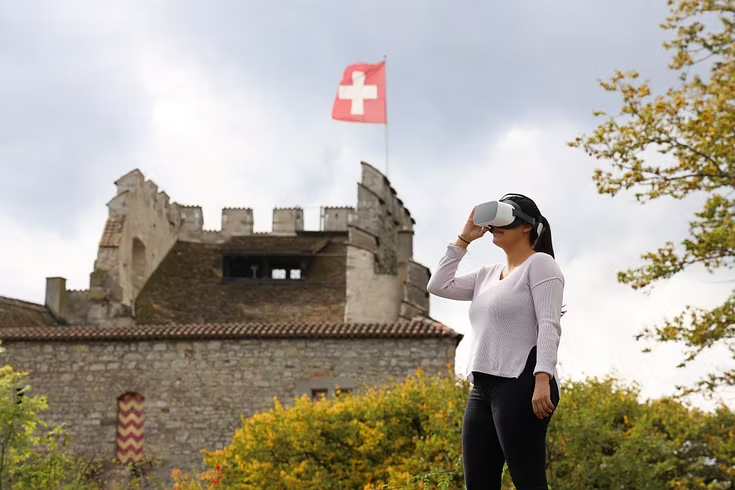
Besucherin vor dem Schloss Habsburg mit der VR-Brille
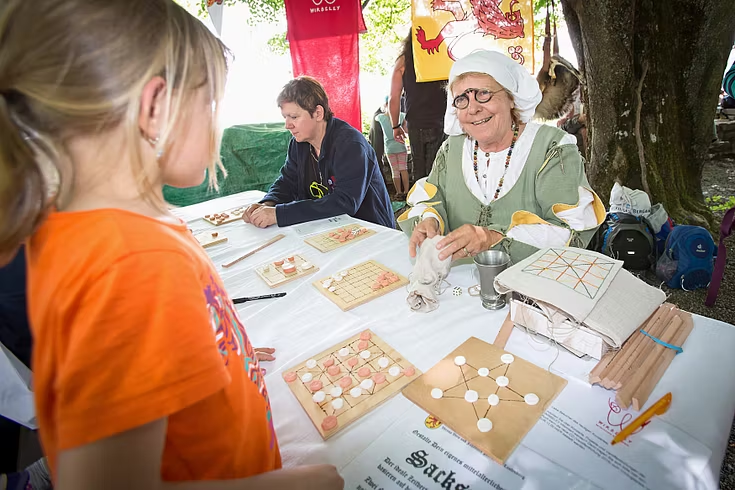
Mädchen bastelt am Familiensonntag am Schloss Habsburg
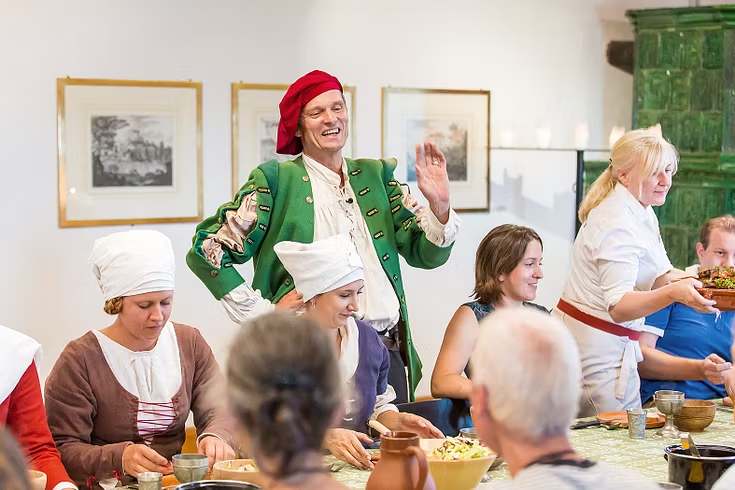
Verkleideter Museumsführer erzählt im Esstheater den dinierenden Gästen Anekdoten auf Schloss Habsburg
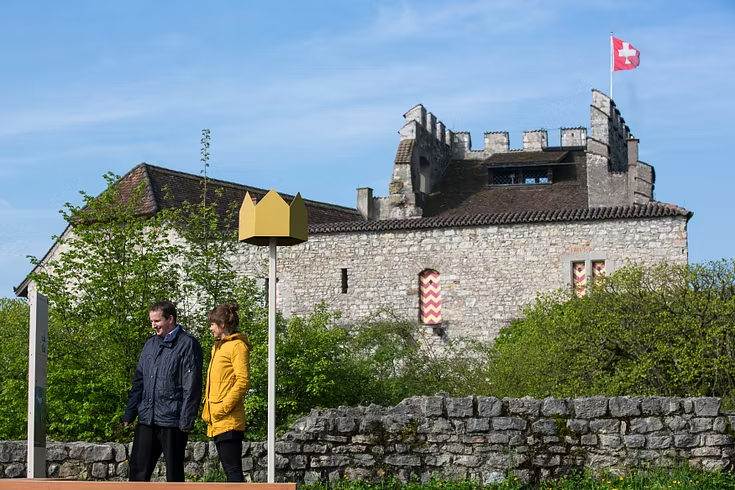
Besucherinnen und Besucher auf dem Königsweg mit dem Schloss Habsburg im Hintergrund
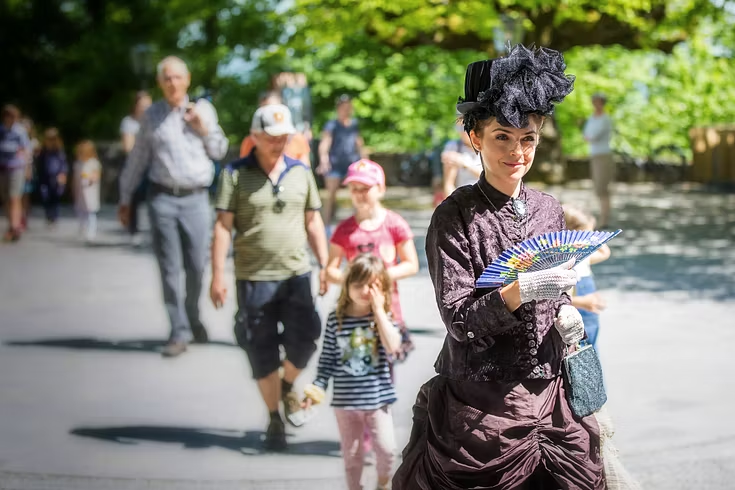
Eine als Kaiserin Sisi gekleidete Museumsführerin führt eine Gruppe Besucherinnen und Besucher durch das Schloss Habsburg.