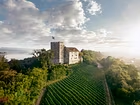
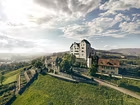
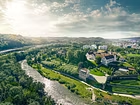
Lenzburg Castle

Domestic life museum and prison

Permanent exhibition Admission Museum entrance fee The museum of domestic life and prison reveal the lives of lords, rogues and scoundrels. The museum of domestic life and prison of Lenzburg Castle reveal the lives of lords, rogues and scoundrels. Come and explore! Domestic life museum: how lords and ladies lived In the museum of domestic life it feels as if the lords and masters had just left Lenzburg Castle. Filled with original furniture, it provides an insight into the different eras in which the castle was inhabited. In the late medieval kitchen, for example, you can look into the cooking pots, smell the exquisite spices or inspect the kitchen utensils of the time. You'll enter impressive rooms from the 18th century with hand-printed fabric wallpaper all around and a matching tiled stove. The bathroom with its golden taps bears witness to the luxurious life of the industrialist's wife Lady Mildred, who lived in the castle with her husband Augustus Edward Jessup from 1893 until the 20th century. Many other rooms display exquisite objects and give an impression of how the inhabitants of Lenzburg Castle have lived over the centuries. Prison: where rogues and crooks ended up The prison, by contrast, is cold and damp. Enter an original preserved cell from the 17th century and decipher the inscriptions carved into the wood by prisoners. Instruments of torture such as thumbscrews show the methods used in the penal system at that time. The execution sword, with which rogue king Bernhard Matter was the last person to be executed in Aargau in 1854, has been preserved in its original form. Domestic life museum and prison. Exhibition at Lenzburg Castle. The museum of domestic life and prison reveal the lives of lords, rogues and scoundrels.

 
Lenzburg Castle

Knighthood and Nobility

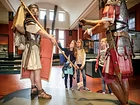
Permanent exhibition Admission Museum entrance fee The "Knighthood and Nobility" exhibition focuses on the Middle Ages. Medieval fans will find plenty to interest them in the "Knighthood and Nobility" exhibition: discover how three great Swiss noble families organised their rule and the legacy they left behind. From the 11th to the 15th century, the Lenzburgs, Kyburgs and Habsburgs ruled Lenzburg Castle. This 400-year history of rule is presented in the residential and south tower, the oldest part of the castle. Audiovisual shadow plays show how the three great noble families fought out conflicts, who played what role in the empire, and how they organised their dominion. Visitors can learn how noble youths were prepared for their future task as rulers, how they learned to handle weapons while hunting, and how they participated in the cultural life at court. Selected original objects bear witness to an eventful time. Knighthood and Nobility. Permanent exhibition at Lenzburg Castle. The "Knighthood and Nobility" exhibition focuses on the Middle Ages.

 
Lenzburg Castle

Fauchi and the dragon research station

Permanent exhibition Admission Museum entrance fee Visit Fauchi, the castle dragon! What would Lenzburg Castle be without Fauchi! The castle dragon is loved by all young visitors. At the dragon research station you can find out all about the castle's legendary inhabitant. Fauchi: are you brave enough? Anyone with enough courage can visit the castle dragon Fauchi at Lenzburg Castle. Enter his dark cave full of hissing, smoke and ominous rumbling. It's an unforgettable experience for castle visitors of all ages! According to legend, the castle dragon Fauchi hatched from a dragon egg many years ago on the castle hill. He is far less frightening than his ancestors, but meeting him can still be a little scary! Dragon research station If you want to know what the legendary dragon likes, how he lives, what his dragon skin feels like or how long his claws are before you visit Fauchi, the dragon research station is the place to go. There, young researchers can examine a collection of teeth, claws and bones, learn about the different types of dragons, and discover the secret of Fauchi's origins. Fauchi and the dragon research station. Exhibition on Lenzburg Castle. Visit Fauchi, the castle dragon!

 
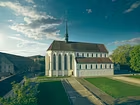
Wettingen Abbey

Parlatorium

Discussion Lab Admission Museum entrance fee Registration Not required (recommended for schools) Hundreds of questions in one room Built around 1600, the Parlatorium was one of the few rooms in the abbey where speaking was once permitted. Today, Museum Aargau invites visitors here to engage in conversation about faith, power and knowledge – and poses hundreds of questions on these topics. Choose one of them and embark on a journey of discovery through the Parlatorium: through conversation, play, or via interactive text, image and film installations. The exhibition was developed in collaboration with pupils from the Wettingen Cantonal School, which is also based on the monastery peninsula. Their perspectives on the themes of faith, power and knowledge build bridges between this place's past and the present day. At the weekend, school pupils usually welcome visitors to the Parlatorium. They have been trained as hosts for this role. The Parlatorium at Wettingen Abbey was one of the few rooms in the abbey where speaking was once permitted.

 
Wettingen Abbey

Cloister

Permanent exhibition Admission Museum entrance fee 0 A place of meditation with a significant series of stained-glass windows The well-preserved cloister, with its Romanesque and Gothic tracery, evokes the tranquillity that once characterised life within these walls. Small gravestones of monks buried here are set into the flagstone floor. At the heart of the cloister lies the idyllic cloister garden. The cycle of stained-glass windows in the cloister is particularly valuable. Private donors, friendly abbeys and the Swiss cantons have all donated these significant cabinet windows to Wettingen Abbey. The earliest examples date back to the 13th century. Cloister Chapel with the Wettingen Christ Child Above the altar of the Cloister Chapel hangs the sacred image of the "Wettingen Christ Child". The wooden painting miraculously survived the devastating abbey fire on White Sunday in 1507. The monks saw this as a sign from heaven. The "Christ Child", marked by burn holes, has been venerated ever since. The cloister at Wettingen Abbey: a significant series of stained-glass windows. An exhibition by Museum Aargau.

 
Wettingen Abbey

Observatory

Permanent exhibition Admission Museum entrance fee Take a journey through the history of knowledge and belief At the Observatory, take a journey through the history of knowledge and belief in a cinematic installation. Together with a group of pupils from Wettingen Cantonal School, you will visit places that tell this story: from the earliest known cave paintings to the vastness of the World Wide Web. On this journey, you will discover how the monks of the Cistercian abbey understood knowledge in the Middle Ages – and how the expulsion of the monks from the abbey in 1841 was linked to new concepts of knowledge and power structures. Finally, you will return to the present day, amidst the challenges we now face in the "knowledge society". In addition, a timeline provides an insightful and varied account of the history of Wettingen Abbey. Selected objects also offer a glimpse into the collection of Museum Aargau. At the Observatory at Wettingen Abbey, take a journey through the history of knowledge and belief in a cinematic installation.

 
Hallwyl Castle

Exhibitions

Experience the impressive history of the von Hallwyl family at the Museum of Hallwyl Castle. Over the course of more than 800 years, this minor noble family distinguished itself in many ways: on Swiss battlefields, at European courts, in science, politics and trade, and in the world of finance. On the audio-guided tour, members of the family recount their lives. Ordinary people such as the farmers and subjects of the Hallwyl estate also have their say. The eerie cries of prisoners can still be heard today in the tower where they were imprisoned. Opening hours 1 April to 1 November 2026 Tue – Sun, holidays: 10 am – 5 pm Mon: closed COLLECTION Portrait Collection Museum Aargau Site in German Collection online Egliswil Collection Centre Visit the collection Impressions

 
Vindonissa Legionary Trail

Events

Experience the Romans live! Events, public guided tours and family Sundays take place regularly on the Vindonissa Legionary Trail. Calendar of events (in German) Contact +41 (0)848 871 200 Send a message Telephone availability: Tuesday to Friday 9 am - 12 pm / 1 pm - 4:30 pm November to March only in the morning Impressions

 
Wettingen Abbey

Medicinal garden

Admission Free of charge Tradition of monastic healing Today, medicinal herbs, spices, flowers and also certain vegetables grow in the medicinal garden of Wettingen Abbey. The garden showcases the long tradition of monastic medicine. The original location and design of the medicinal garden are not known in detail. It is assumed that, as in comparable abbey complexes, the Wettingen garden was located by the infirmary wing. The garden has been reconstructed at this location, based on the Hortulus book on gardening by the Reichenau abbot Walahfrid Strabo and the St. Gallen abbey plan from the 9th century. Medicinal garden on Wettingen Abbey. Tradition of monastic healing.

 
Wildegg Castle

Castle Estate & History

Wildegg Castle Estate includes all lands and properties outside the castle walls. It comprises numerous buildings to this day including Gasthof Bären and an organic farm. Wildegg Castle Estate has undergone many changes and conversions over the course of the centuries as a result of sales and purchases. In around1770 it achieved its maximum extent of approximately 120 hectares of cropland, meadows, vineyard and commercial premises. From the 18th century onwards the Effinger family sold off parts of the property. Along with the Castle Estate, the Effinger family also held governing rights over the villages of Möriken and Holderbank - including taxation and lower-level legal jurisdiction. The family passed judgement on smaller-scale offences, appointed the priest and was allowed to open commercial enterprises such as inns and mills. Apart from the fishing rights, these governing rights were lost when the French invaded in 1798. After 1912, the Swiss Confederation was able to buy back some of the properties sold by the Effinger family such as Gasthof Bären in Wildegg. Today the estate has a surface area of some 100 hectares and comprises 37 buildings, a vegetable and pleasure garden, an organic farm, grapevines, forestry and fishing rights. In 2011, Wildegg Castle Estate was converted into a foundation of the same name. The foundation is responsible for administering the entire estate. Museum Aargau runs the museum and takes care of the gardens. The aim is to give visitors the opportunity to experience all the facets of a Baroque castle estate in situ. Enquiries and contact +41 (0)848 871 200 schlosswildegg@ag.ch Telephone availability Tuesday to Friday 9 am – 12 midday 1:30 pm – 4:30 pm History Under Habsburg rule Wildegg Castle was built in the first half of the 13th century by order of the Habsburgs. Perched on a ledge with a striking main tower and residential annex, the castle was first mentioned in 1242. It was the seat of a branch of the Habsburg family that belonged to the lower gentry, the stewards of Habsburg and Wildegg. Before 1348 the castle was granted to the Lords of Hallwyl as a fief by the Habsburgs. Thüring I of Hallwyl had the complex elaborately modernised in 1372. More Less 13/14th c. Under Bernese rule When Aargau was conquered in 1415, Wildegg Castle also fell to the Bernese. The Hallwyls sold the castle in 1437. After various changes of owner it was purchased by the City of Bern. In 1483 it was then sold along with all its lands and rights to Kaspar Effinger, a member of the Aargau gentry. More Less From 1415 The Effinger family Wildegg remained in the possession of the Effinger family for eleven generations until 1912. The Effingers belonged to the lower nobility and appeared in the town of Brugg in the 14th century where several of them were mayors. When they purchased Wildegg, the Effingers also acquired Bernese citizenship rights and were among the ruling families of Bern from 1680. The castle virtually burned to the ground in 1552 after being struck by lightning. It was then reconstructed in the Late Gothic style. In around 1700 Bernhard Effinger had the castle converted into a Baroque manor house, with extended gardens replacing the demolished fortification structures. In the 17th century and again in the 19th century the Effingers also owned nearby Wildenstein Castle in Veltheim. However, the last owners in the 19th century preferred to reside in the more comfortable Erlachhaus and at the country house in Wildegg. More Less 1483-1912 Under the ownership of the Swiss Confederation In 1912 the last in the family line, Julie von Effinger, bequeathed Wildegg and most of its furnishings and lands to the Swiss Confederation. Zurich National Museum turned the castle into a residential museum which has been open to the public since 1917. The castle underwent extensive renovation in 1938 and then again from 2007. More Less 1912-2010 Under the ownership of the canton of Aargau Since January 1st 2011 the castle and its estate have belonged to the Wildegg Castle Estate Foundation established by the canton of Aargau. Museum Aargau is responsible for running the museum. More Less Since 2011

Gradian
Aussenaufnahme Schloss Hallwyl

Hallwyl Castle

Where culture
meets nature

Discover Hallwyl Castle on Lake Hallwil! The moated castle in the canton of Aargau is one of the most beautiful castles in Switzerland.
PLANNING YOUR VISIT

 
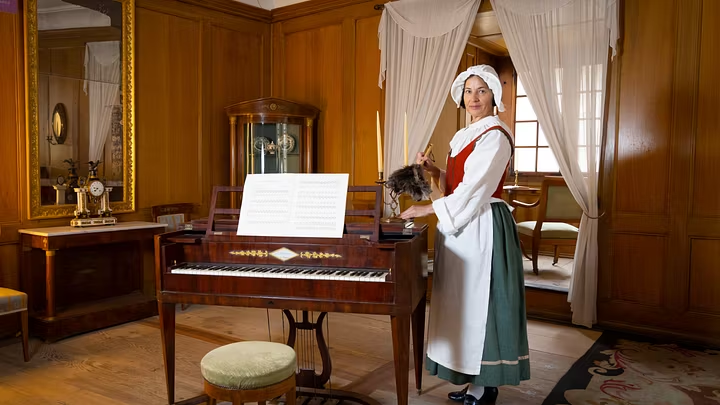
Eine mittelalterlich gekleidete Magd steht in einem eingerichteten Wohnzimmer im Museum von Schloss Hallwyl

Museum and
exhibitions

Museum of the history of the von Hallwyl family  

 
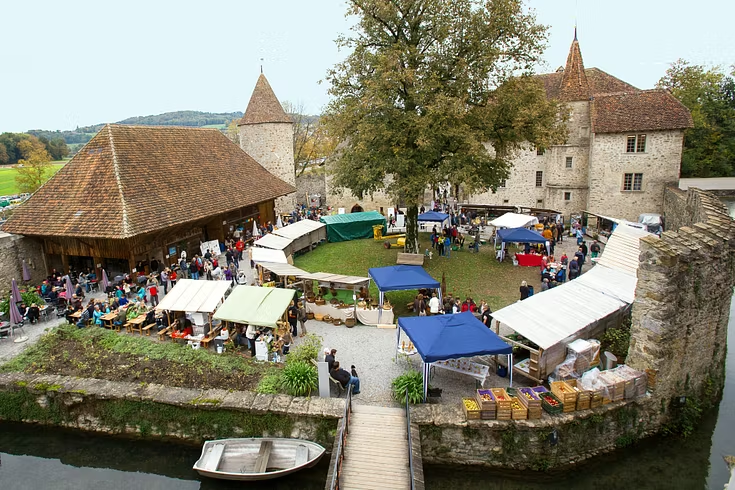
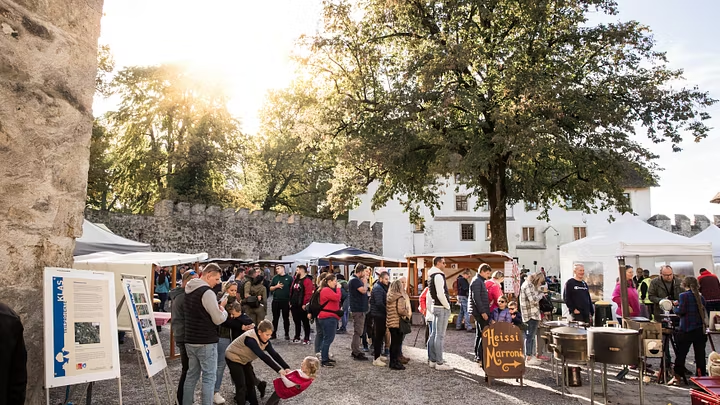
Blick in den Innenhof von Schloss Hallwyl an den Mosttagen. Viel Volk rund um Marktstände.

Events and public
guided tours

Calendar of events (in German)  

 
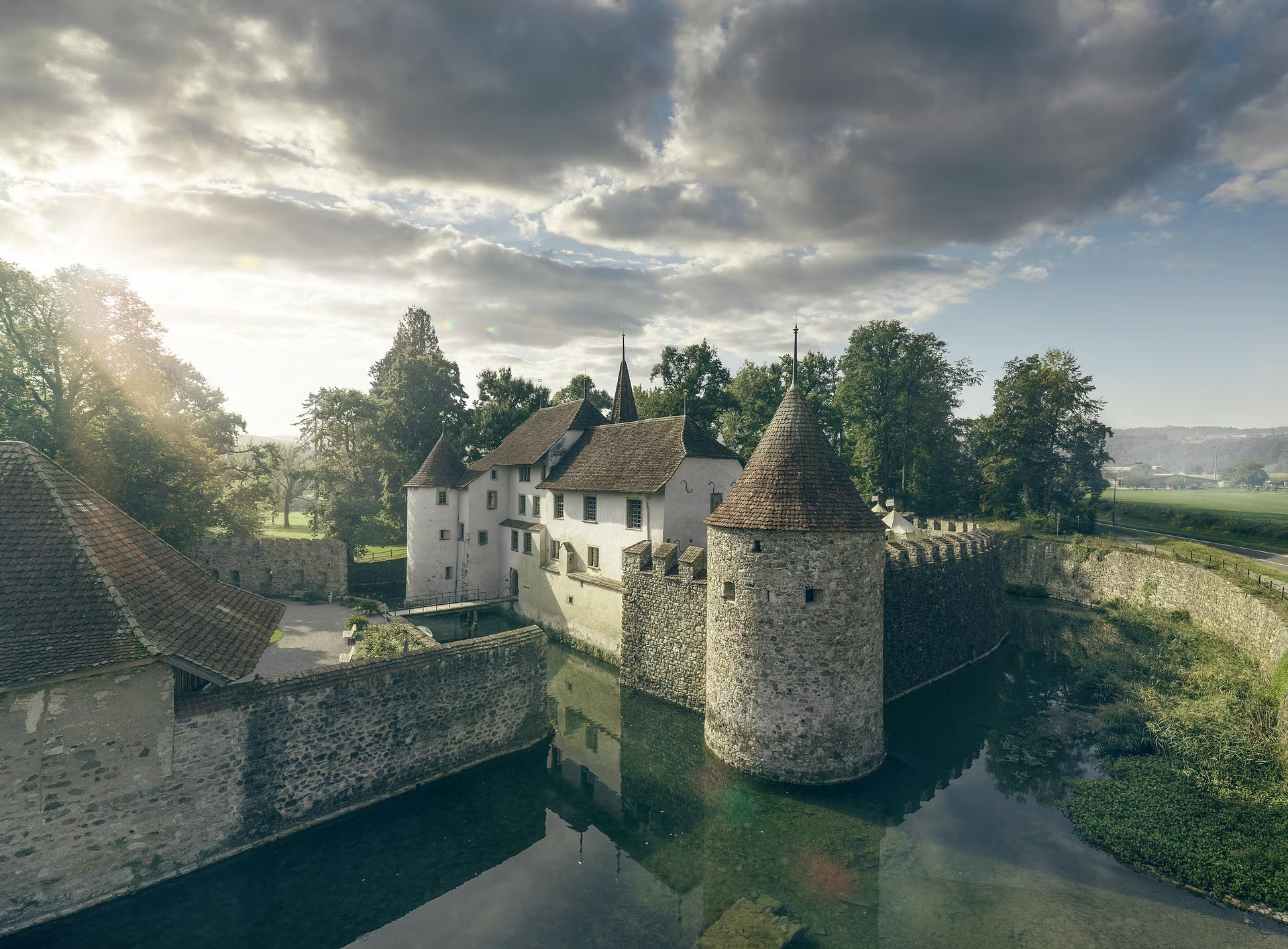
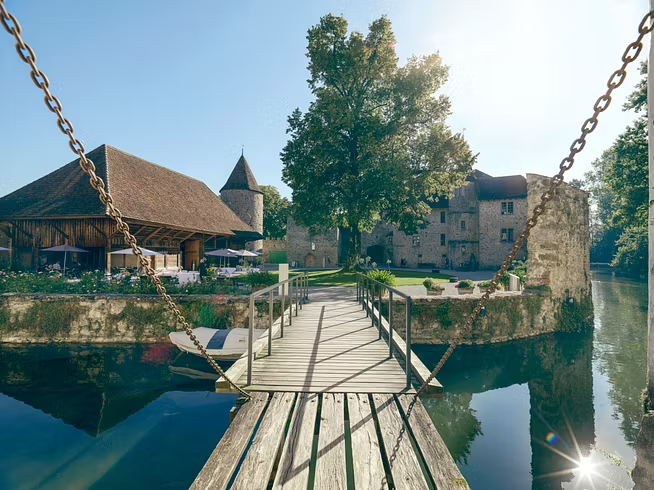
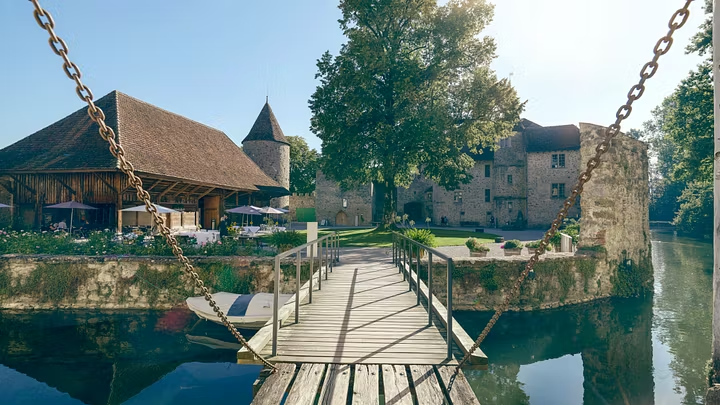
Brücke zum wunderschön Schlosshof Schloss Hallwyl

Opening hours
and entrance fees

Open from April to October  

 
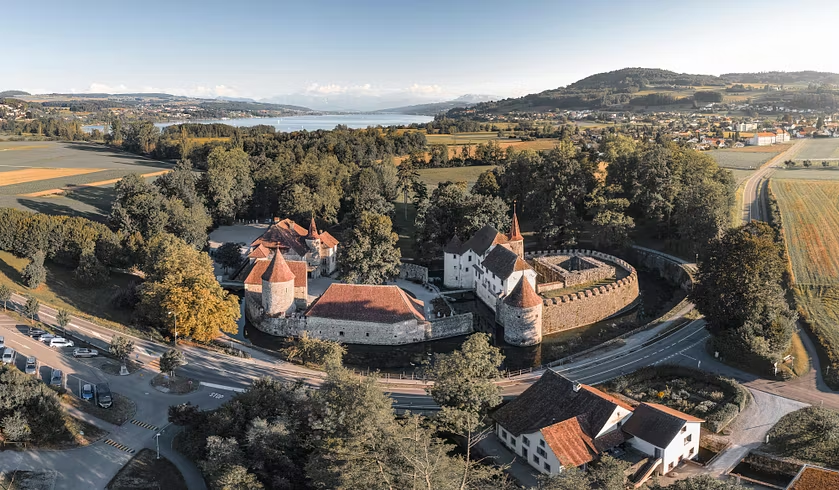
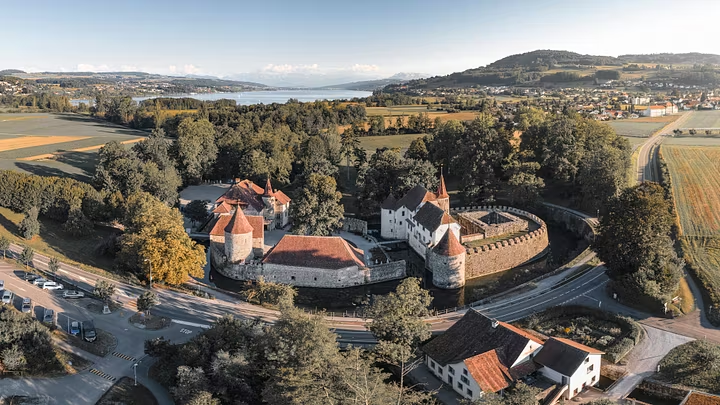
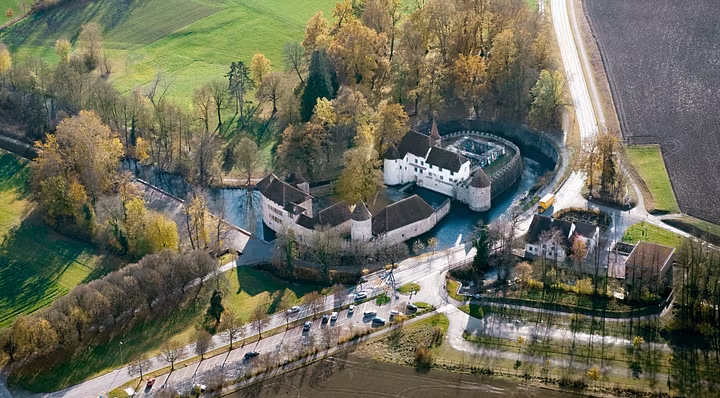
Luftaufnahme von Schloss Hallwyl mit Hallwilersee im Abendlicht

Getting
here

Directions  

SCHOOLS, FAMILIES AND GROUPS

 
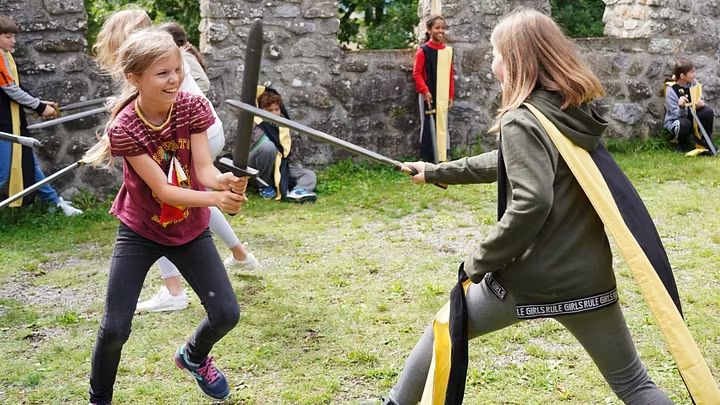
Workshop "Feste Burg Schloss Hallwyl" Kinder haben zusammen spass im Schwertkampf mit Zinnen im Hintergrund

For
schools

Tours and workshops  

 
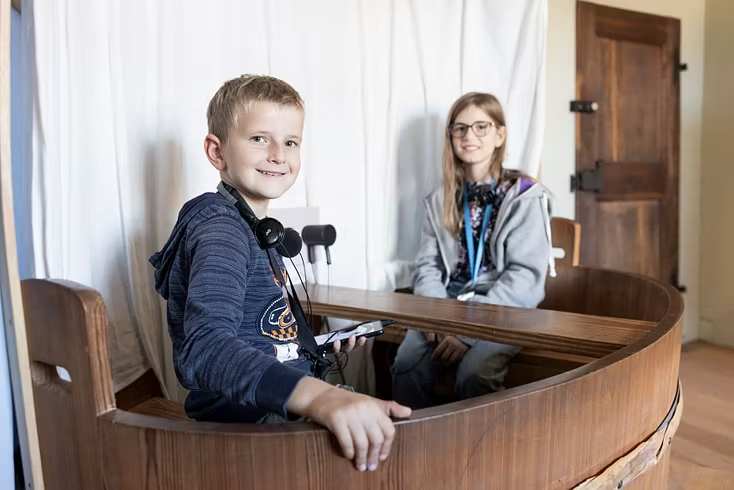
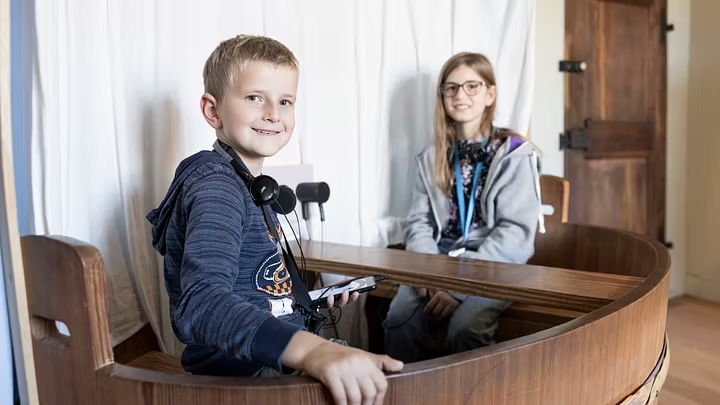
Ein Bub und ein Mädchen sitzen mit Kopfhörern in einem kleinen Schiff in der Ausstellung von Schloss Hallwyl. Der Bub blickt direkt in die Kamera.

For
families

Secret corners and tricky puzzles  

 
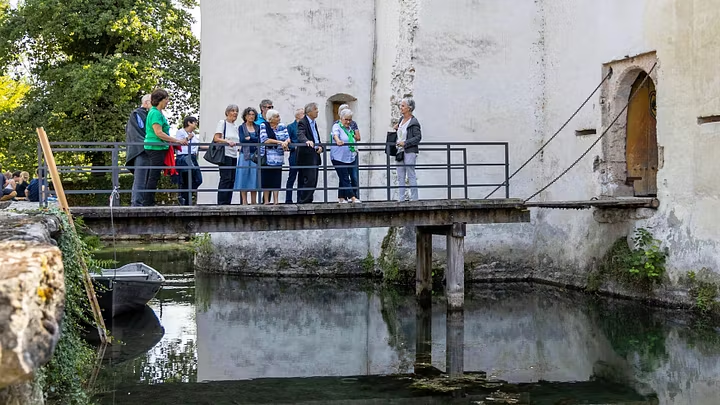
Führung auf Schloss Hallwyl: Eine Besuchergruppe steht auf einer Brücke zwischen Hof und dem Eingang zu Schloss Hallwyl, unter der Brücke Wasser des Schlossgrabens und ein Boot.

For
groups

Tours and workshops  

HISTORY AND COLLECTION

 
Luftaufnahme Schloss Hallwyl mit Aabach

History

800 years of history  

 
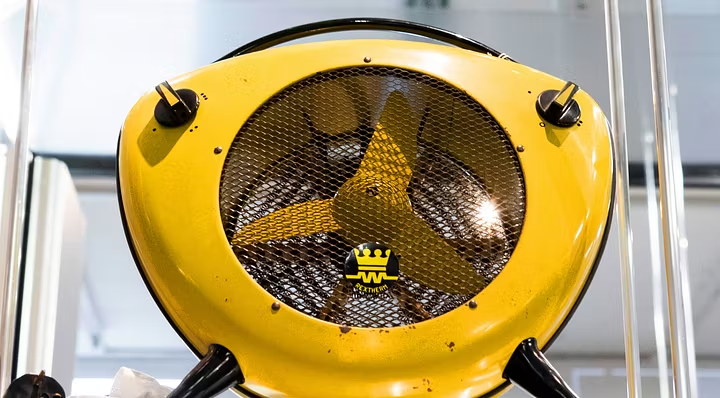
Ein gelber Heizlüfter, Objekt im Sammlungszentrum Egliswil

Collection

Treasure trove of Aargau's history  

 
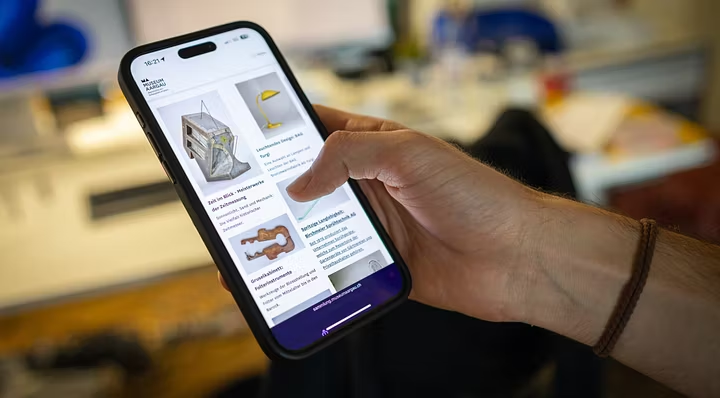
Grosses Handy in der Hand eines Benutzers, auf dem Bildschirm ist die "Sammlung online" von Museum Aargau dargestellt.

Collection online

Site in German  

Impressions

Luftaufnahme von Schloss Hallwyl mit Hallwilersee im Abendlicht
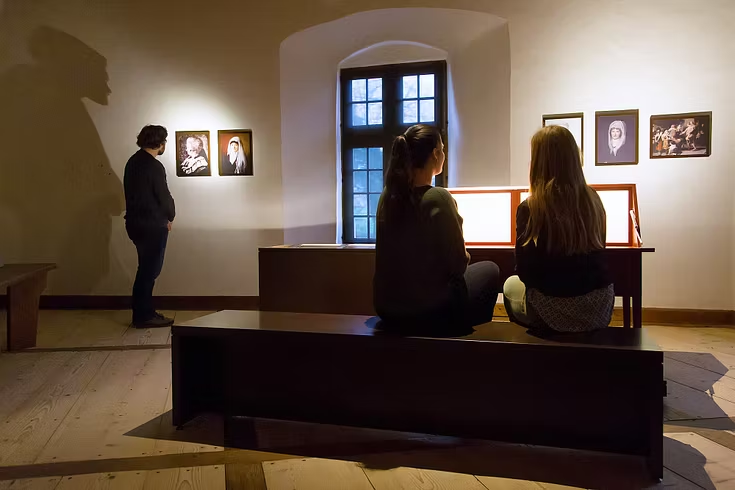
Besucher und Besucherinnen in der Dauerausstellung Schloss Hallwyl
Brücke zum wunderschön Schlosshof Schloss Hallwyl
Ein Bub und ein Mädchen sitzen mit Kopfhörern in einem kleinen Schiff in der Ausstellung von Schloss Hallwyl. Der Bub blickt direkt in die Kamera.
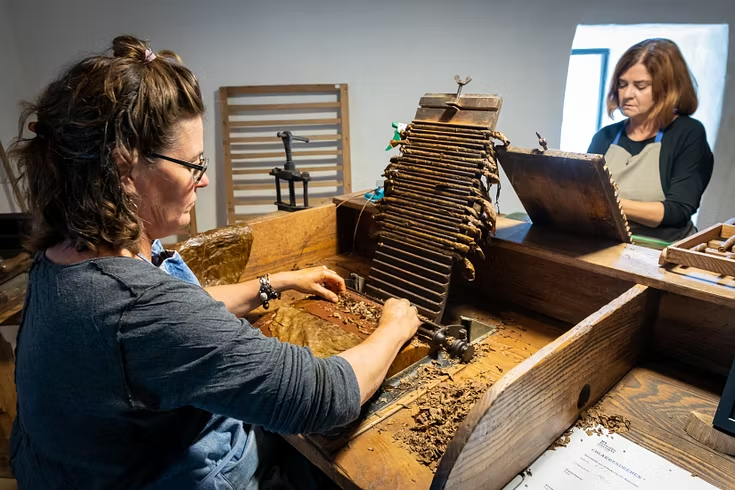
Zwei Frauen rollen auf Schloss Hallwyl Zigarren.
Luftaufnahme Mosttage Schloss Hallwyl: Viele Marktstände und Menschen im Hof.