Vindonissa Museum

Contact

Vindonissa Museum – Museum Aargau Museumstrasse 1 5200 Brugg Tel. 0848 871 200 Send a message Organisation Museum Aargau Management Member Contact Dr. Marco Sigg Director E-Mail Sibylla Fischer Head of Marketing & Communications E-Mail Rahel Göldi Head of Museum Programme E-Mail Andrea Lehner Head of Guest Services E-Mail Thomas Lüscher Head of Operations & Administration E-Mail Dr. Rudolf Velhagen Head of Collection & Conservation E-Mail

 
Vindonissa Legionary Trail

Excursions for families and children

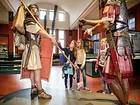
The Vindonissa Legionary Trail offers unforgettable experiences for children: discover the Roman sites of Vindonissa on your own or solve the riddle of the great oracle as a family in a play tour. Some of these offers are available in English. Families can discover the Legionary Trail on a self-guided tour. Most of the texts at the Roman sites are translated into English. There are also several picnic areas along the way. The Vindonissa Legionary Trail also offers the challenging " Becoming a Roman " (audio guide) play tour in English. This is suitable for families. Special events for children take place regularly on Sundays. Opening hours 1 April to 1 November 2026 Tue – Fr: 9 am – 5 pm Sat/Sun, holidays: 10 am – 6 pm Mon: closed

 
Egliswil Collection Centre

Getting here by train, bus and car

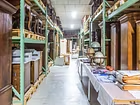
Directions to Egliswil Collection Centre Address Sammlungszentrum Egliswil – Museum Aargau Binzenholzstrasse 10 5704 Egliswil Contact Arrival by public transport and car Arriving by train and bus The Egliswil Collection Centre is well served by public transport. The bus stop "Egliswil, Industrie" is only a few hundred meters away. The bus stop is served by bus lines 390 and 395, which run every half hour between Lenzburg railway station and the Seetal. To the SBB timetable Arriving by car The collection centre is located on the edge of the village of Egliswil in the direction of Seon. A limited number of parking spaces are available for visitors. We recommend arriving by public transport. Calculate route with Google Maps The Collection Guided tours & events Contact

 
Vindonissa Museum

Exhibitions

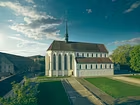
The Vindonissa Museum's exhibitions showcase the most important original finds from the excavations at Vindonissa. The permanent exhibition is translated into English. The only Roman legionary camp on Swiss soil was at Vindonissa. Excavations and research have been carried out here for around 100 years. The most important finds and discoveries can be seen in the exhibitions at the Vindonissa Museum. The museum is internationally renowned for the largest collection of Roman writing tablets, the most commonly used writing material of the Roman period. Other highlights include rare finds of leather and wood as well as well-preserved equipment belonging to Roman soldiers. Opening hours Open all year Tuesday to Friday: 1 - 5 pm Sunday and public holidays: 1 - 5 pm Monday and Saturday: closed

 
Egliswil Collection Centre

Contact

Sammlungszentrum Egliswil – Museum Aargau Binzenholzstrasse 10 5704 Egliswil Tel. 0848 871 200 Send a message Organisation Museum Aargau Management Member Contact Dr. Marco Sigg Director E-Mail Sibylla Fischer Head of Marketing & Communications E-Mail Rahel Göldi Head of Museum Programme E-Mail Andrea Lehner Head of Guest Services E-Mail Thomas Lüscher Head of Operations & Administration E-Mail Dr. Rudolf Velhagen Head of Collection & Conservation E-Mail

 
Vindonissa Legionary Trail

Flag shrine (Aedes)

Directly at the intersection of the two main roads (Via principalis and Via praetoria) was the staff building (principia), the largest building within the camp. One of its central rooms was the flag shrine. In front of it was a portico that led to a large courtyard where there was an altar and a water basin, which was probably used for washing during sacrificial rites. Dazzling emblems The standards were placed in the flag shrine. These included the unit standards, adorned with dazzling decorations, and the flags (vexilla) for smaller units and cavalry. Of particular importance was the image of the emperor (imago), the supreme commander, whose presence was symbolised by his standard. Most important to the legionaries, however, was the golden eagle, a symbol of the supreme god Jupiter. The eagle was only taken from the shrine when the entire legion set off on a march, and was carried ahead of it. At least two feast days have been recorded, during which the standards were the focus of attention, venerated and decorated. During these days, specific sacrificial rituals were performed for the highest deities, and on one of these feast days the oath was taken to the legion and the emperor. The flag shrine therefore combines emperor worship, faith in the gods and army ritual. Officers were even assigned to guard this sacred space, which made it the best guarded place in the legionary camp. That may also explain why the legion kept its funds here. The flag shrine is accessible with museum admission.

 
Vindonissa Legionary Trail

Military hospital (Valetudinarium)

Switzerland's first ever military hospital was built 2,000 years ago at Vindonissa. The 60 sick rooms enabled the provision of medical care for up to 300 legionaries. At the camp hospital (valetudinarium), military doctors and medical orderlies treated battle injuries, everyday illnesses and work accidents. In addition to the infirmary, the Romans also invented the world's first ever medical service. The military hospital is approx. 4,500 m2 in size and was discovered in 1936. Built first out of wood and later stone, it was situated at the centre of the camp, directly on one of the main camp roads (via decumana). The sick rooms were arranged on each side of a corridor around a large courtyard. The hospital area was archaeologically investigated but has since been entirely covered with modern buildings. In mobile marching camps and probably during the early days of Vindonissa, soldiers were looked after in tents. An authentically reconstructed and fully equipped field infirmary of this type made of goatskin leather is on display here. Surgical instruments as discovered in great numbers in Vindonissa as well as herbs, ointments and scrolls with ancient prescriptions impressively convey how Roman doctors performed surgery, blood-letting and other healing techniques. The second tent contains three camp beds. Here, three legionaries tell visitors about their own personal medical history. Even judging by today's standards, Roman healing methods were quite sophisticated. Medicine was based on a holistic approach that encompassed nutrition, pharmacy and surgery. However, the gods had an important role to play when it came to health issues, too – such as Asclepius, the god of healing, and his daughter Hygieia: Roman doctors (medici) swore the famous Hippocratic oath by both of them. The military hospital can be visited with museum admission.

 
Vindonissa Legionary Trail

Water main (Aquaeductus)

The aqueduct of Vindonissa now supplies a water fountain, making it the oldest structure in Switzerland that still performs its original function. Using innovative surveying technology, the legionaries were able to construct the aqueduct over a stretch of 2.4 kilometres with a gradient of just 4‰. The fresh water system supplied water for drinking, cooking and other domestic purposes for some 6,000 legionaries, auxiliary troops, horses and mules. It would not have been possible to live in the legionary camp without this fresh water supply. The aqueduct is a technological masterpiece: groundwater was captured in an elaborately constructed, subterranean stone channel in Hausen and transported to Windisch. The legionaries used a special watertight mortar to ensure the water was not lost on the way. Once it had arrived in the camp, the fresh water was further distributed in pipes made of clay, lead and wood. Roman engineers applied highly precise surveying methods and ingenious construction techniques to create such facilities. Unknown in this area in pre-Roman times, the aqueduct is regarded as the Roman's most important civilisatory feat - along with their baths and infirmaries. The water system continued to be used by Königsfelden Monastery in the Middle Ages. The story goes that during construction of the monastery, a monk was "shown by God where water could be found". A document dating back to 1363 provides evidence that the aqueduct was endowed to the monastery by Duke Rudolf IV of Austria. Up until 1897 it was the only supply of drinking water serving the population of Windisch, and even today it feeds the fountain in front of the main building of Königsfelden psychiatric clinic. This roman site can be visited with museum admission.

 
Vindonissa Legionary Trail

Tours to the Roman sites

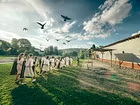
From April to October, the Vindonissa Legionary Trail offers exciting expeditions to original Roman sites. Two tours are available in English. On a self-guided tour, you'll encounter atmospherically presented archaeological sites and true-to-life reconstructions, from the sunken officers' kitchen to the excavated thermal bath and the impressive remains of the amphitheatre. Travel back 2,000 years and experience the life of the legionaries and their officers. Most of the texts in the Roman sites have been translated into English. The Vindonissa Legionary Trail offers two tours in English (see below). Please also note our bookable offers for families , groups and schools . Some of these offers can also be booked in English on request. Please contact our advice & sales team for details. Opening hours 1 April to 1 November 2026 Tue – Fr: 9 am – 5 pm Sat/Sun, holidays: 10 am – 6 pm Mon: closed Impressions

 
Vindonissa Legionary Trail

Main street and main gate (Via et Porta Praetoria)

The most important gateway in a military camp was the Porta Praetoria. The main street starting at the gate (via praetoria) lead in a straight line to the legion's headquarters (principia), the administrative and religious centre of the camp. The legion commander's palace (praetorium) was situated on the same road. When the soldiers were required to go to war, they left the camp in orderly formation through the Porta Praetoria. At Vindonissa, the Porta Praetoria was some 13 to 15 metres high and was built in stone by the 11th legion. It had two side towers that were rectangular in layout, like the North Gate, and it comprised a wooden superstructure. The passage through the gateway was spanned by a bridge at the height of the battlements so as to be able to deploy guards. The camp wall (vallum) encompassing the entire legionary camp was joined directly onto the side of the gateway. The camp wall was 12 Roman feet (approx. 3.6 metres) wide and reinforced at regular intervals with fortified towers. In front of it was a V-shaped ditch (fossa) as an obstacle to approaching enemies. The Via Praetoria led straight from the South Gate to the North Gate of the camp and comprised a thick, compact gravel layer which remains excellently preserved after 2,000 years. Rain water was collected from the roofs and drained by means of stone gulleys by the roadside. Legionary Trail visitors can still see the stone column bases of the pergolas which once ran along the Roman road. This roman site can be visited without museum admission.

Gradian
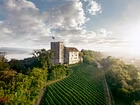
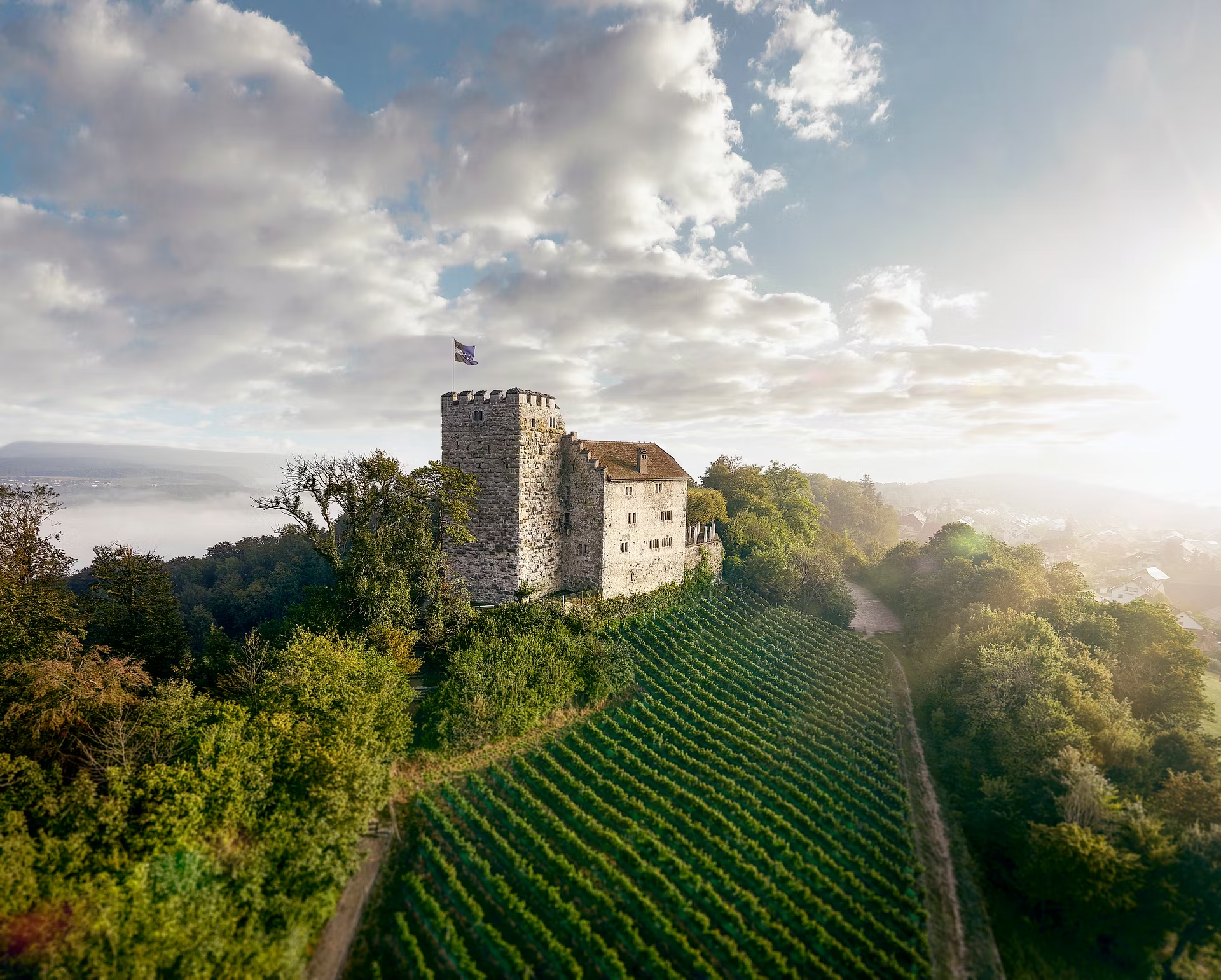
Luftaufnahme vom Schloss Habsburg von Michel Jaussi

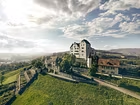
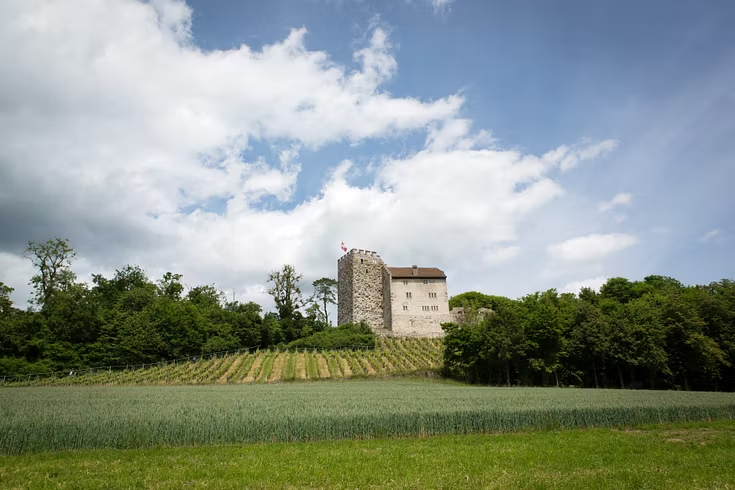
Habsburg Castle

Ancestral Seat of a Global Dynasty

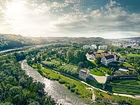
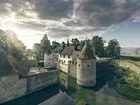
The foundation stone of what was to become the Habsburg dynasty was laid at Habsburg Castle in around 1030. Exhibitions, guided tours and events present the history of the legendary castle and its noble family.
PLANNING YOUR VISIT

 
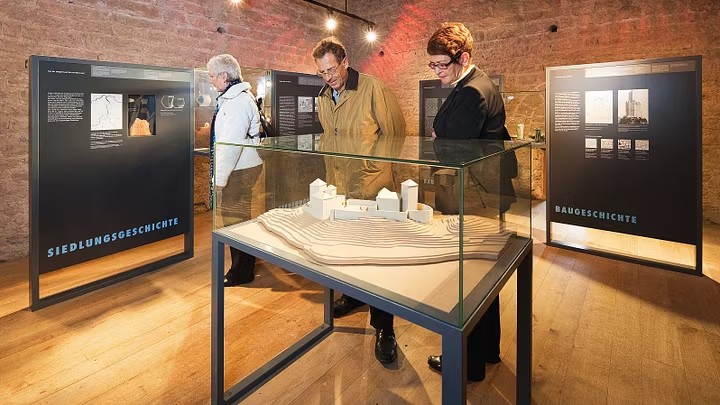
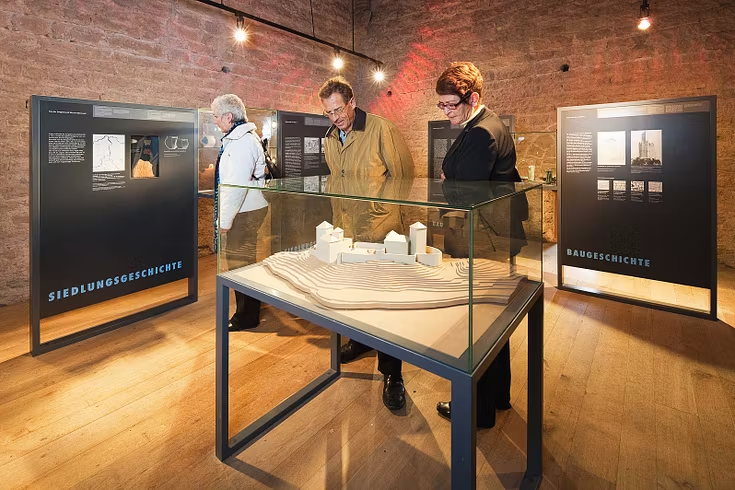
Besucher in der Dauerausstellung Schloss Habsburg

Museum and
exhibitions

Explore the castle and ruins  

 
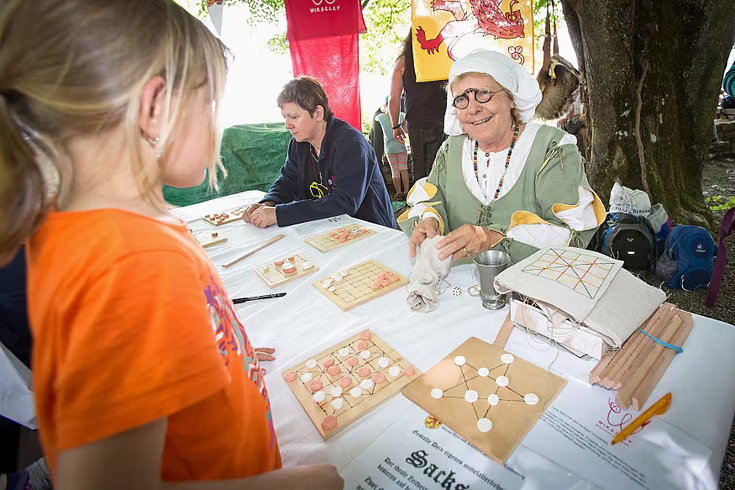
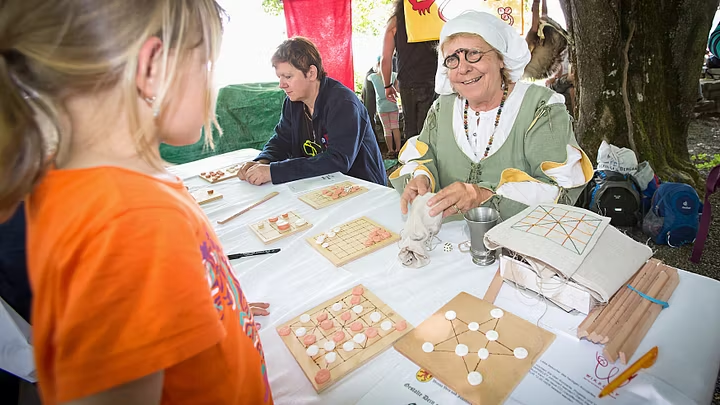
Mädchen bastelt am Familiensonntag am Schloss Habsburg

Events and public
guided tours

Calendar of events (in German)  

 
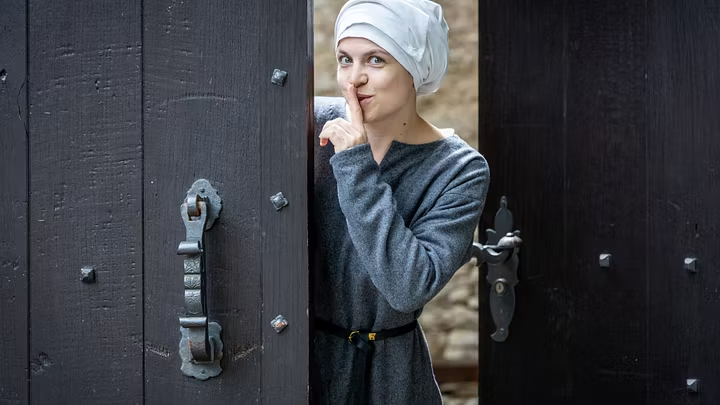
Eine mittelalterlich gekleidete Magd blickt durch das offene Tor von Schloss Habsburg in die Kamera. Sie hält verschwörerisch den linken Zeigfinger vor dem Mund ("nichts verraten!")

Opening hours
and entrance fees

Open all year round  

 
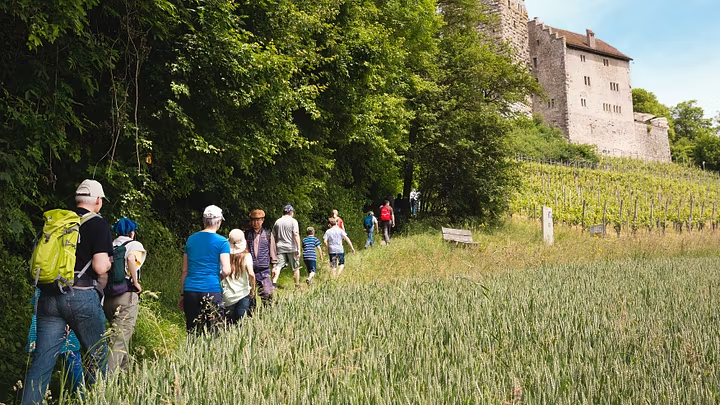
Wanderer auf dem Weg zum Schloss Habsburg

Getting
here

Directions  

 
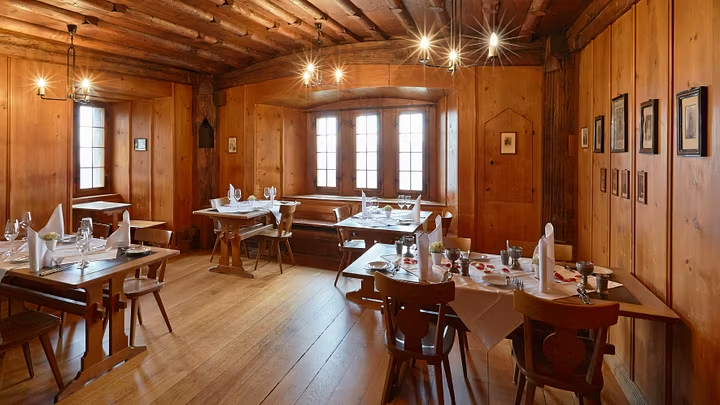
Gotische Stube Schloss Habsburg: Rustikaler Raum mit viel Holz und schön gedeckten Tischen.

Food and
drinks

Castle restaurant  

SCHOOLS, FAMILIES AND GROUPS

 
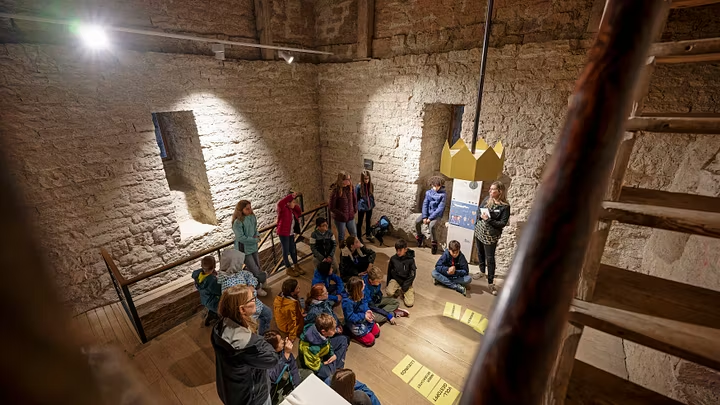
Eine Schulklasse sitzt im Kreis im Innern von Schloss Habsburg; am Boden liegen Blätter mit Texten.

For
schools

Guided tours and workshops  

 
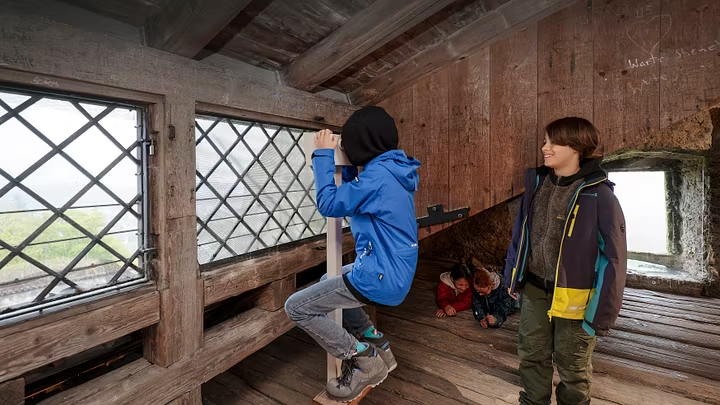
Zwei Schüler unter dem Dach von Schloss Habsburg; ein Bub blickt durch ein Fernrohr ins Weite.

For
families

For young knights and princesses  

 
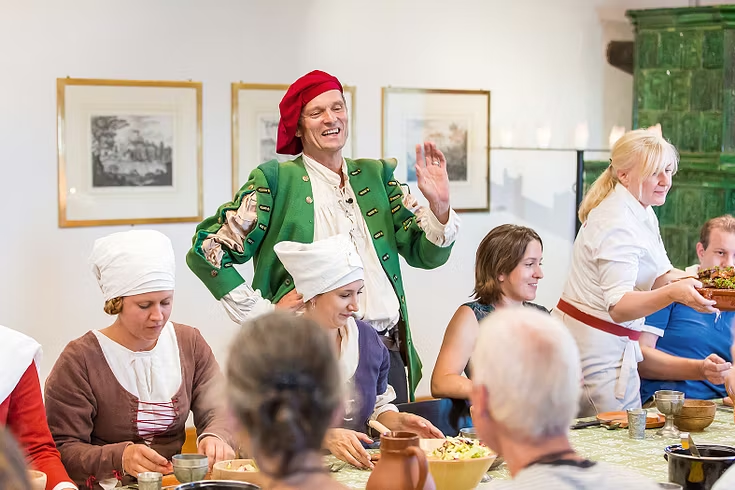
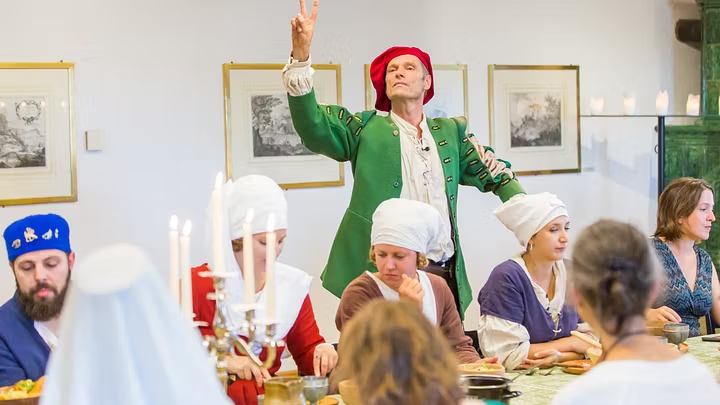
Verkleideter Museumsführer erzählt im Esstheater den dinierenden Gästen am Esstisch Anekdoten auf Schloss Habsburg

For
groups

Guided tours and workshops  

HISTORY AND COLLECTION

 
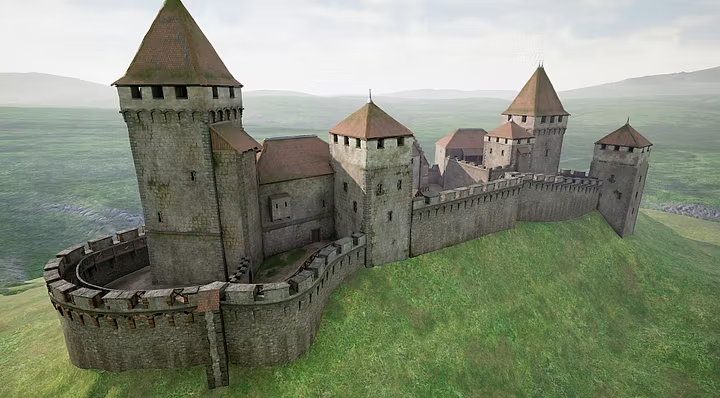
Virtuelles Schloss Habsburg

History

Residents and construction history  

 
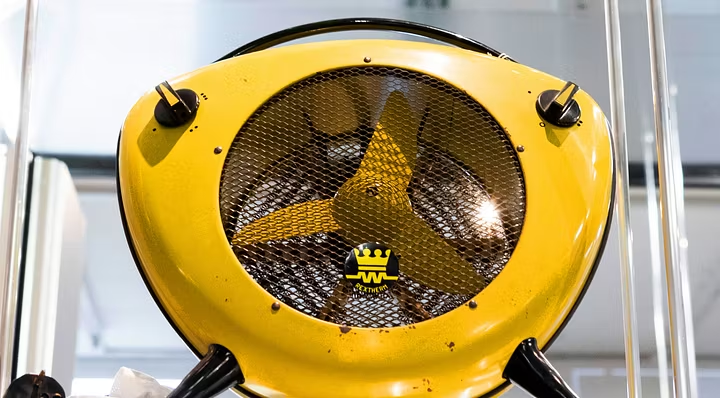
Ein gelber Heizlüfter, Objekt im Sammlungszentrum Egliswil

Collection

Treasure trove of Aargau's history  

 
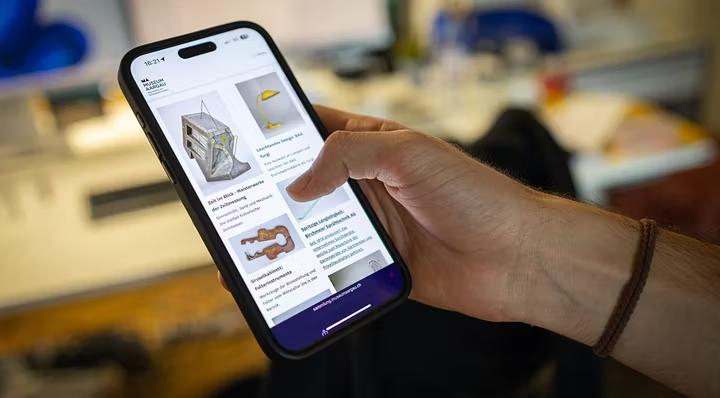
Grosses Handy in der Hand eines Benutzers, auf dem Bildschirm ist die "Sammlung online" von Museum Aargau dargestellt.

Collection online

Site in German  

Impressions

Aussenaufnahme mit mächtigen Wolken über Schloss Habsburg
Besucher in der Dauerausstellung Schloss Habsburg
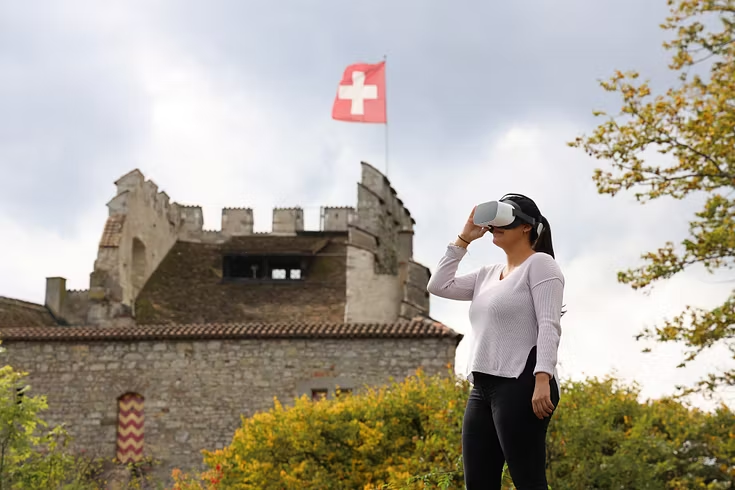
Besucherin vor dem Schloss Habsburg mit der VR-Brille
Mädchen bastelt am Familiensonntag am Schloss Habsburg
Verkleideter Museumsführer erzählt im Esstheater den dinierenden Gästen Anekdoten auf Schloss Habsburg
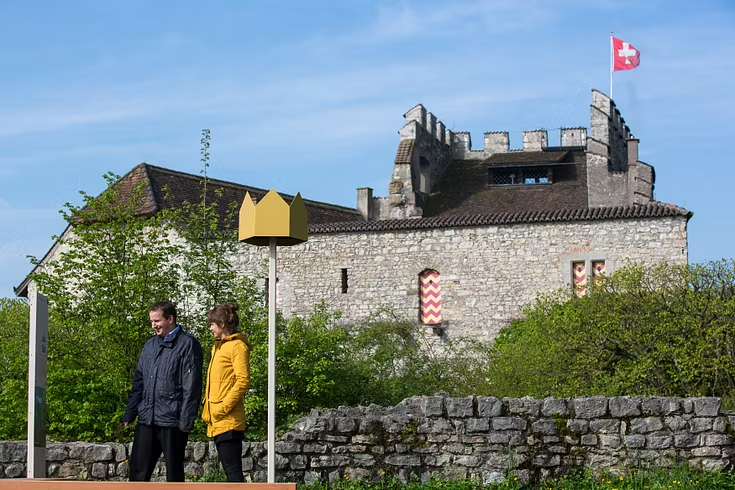
Besucherinnen und Besucher auf dem Königsweg mit dem Schloss Habsburg im Hintergrund
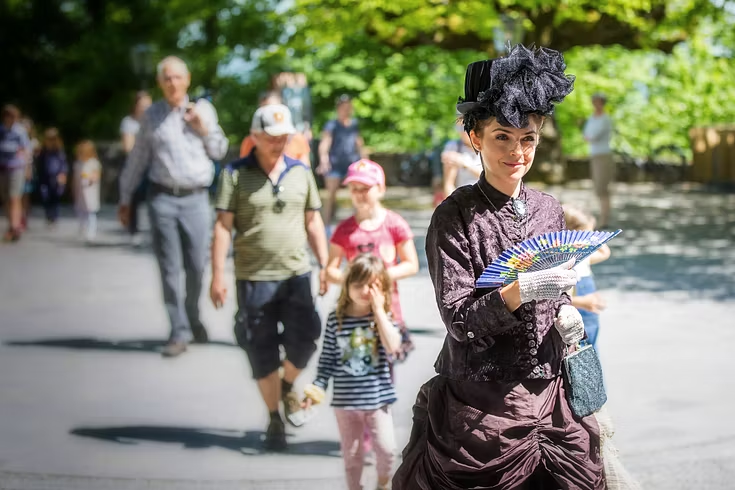
Eine als Kaiserin Sisi gekleidete Museumsführerin führt eine Gruppe Besucherinnen und Besucher durch das Schloss Habsburg.