
Vindonissa Legionary Trail

Amphitheatre (Amphitheatrum)

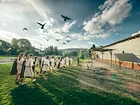
The amphitheatre of Vindonissa is the oldest in Switzerland. It was erected by the 13th legion, initially being made of wood. After a fire, the 21st legion replaced it with the stone structure that survives today. The seating area (cavea) had a capacity of some 11,000 spectators while the oval arena in the centre measured 64x52 metres - the largest of the seven known amphitheatres on Swiss territory. The amphitheatre was a Roman invention that was widespread in the provinces and is regarded as the ultimate symbol of Roman culture. Animal hunting and slaying (venationes) and gladiator duels (munera) were presented to the audience in the arena. The gladiators in particular were highly popular, with real fan communities forming among spectators. Due to their huge popularity among the people, the games were also of political interest to the organisers: popular support could be gained by investing in the games, so no expense was spared when it came to the gladiator pairings. Exotic animals were a particular highlight, too: a possible indication here is the foot bone of a camel that was found at Vindonissa. Since the legionaries liked to be entertained during their free time, too, amphitheatres were virtually a standard feature of legionary camps. Like the troops' parade ground (campus), an amphitheatre would have been situated outside the camp. The first excavations in the amphitheatre at Vindonissa were carried out as long ago as 1897. The structure has been in the possession of the Swiss Confederation since 1898. If you stand in the arena and looked up at the spectator terraces, you can almost sense the excitement and noise even today. The amphitheatre of Vindonissa can be visited without museum admission.

 
Königsfelden Abbey

Sammlung

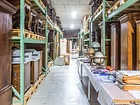
The Museum Aargau Collection has been assembled from various holdings since 1830. It consists of bequests from Aargau's castles and monasteries, numerous donations, objects acquired from company archives and targeted purchases. The Collection is constantly being expanded and documents Aargau's history in tangible form through objects that can be experienced. Collecting, preserving, researching Collecting, preserving and researching objects are among the core tasks of a museum. A collection strategy defines the criteria according to which objects are collected. When an object is added to the Collection, it is inventoried, documented and preserved for storage by experts. If necessary, it is restored. The objects thus form the basis for research and for exhibitions that use originals to make the past come alive. The items on show in the permanent and special exhibitions of Museum Aargau (including the castles) and other cultural institutions are a mere fraction of what is stored in the Egliswil Collection Centre. Numerous objects are waiting to be exhibited and shown off to the public in the coming years.

 
Wettingen Abbey

Abbey church

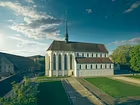
Wettingen Abbey church is divided by an imposing rood screen into a spiritual and a secular area: The converse church (rear part of the nave) was already open to the public when the abbey still existed. The red-brown rood screen, with its magnificent altars and paintings, provides a ceremonial setting for church services, concerts or weddings. The monks' church (front section of the nave) was reserved for the monks and clergy. The abbey church can be visited freely, and church services are held here regularly. The monks' church is part of the museum (admission fee payable). For more information, see Opening hours and admission fees . Museum Aargau also offers guided tours for groups and schools . The church can be rented for church weddings and baptisms as well as other events (including concerts). Exterior appearance of the abbey church The exterior of the church still preserves much of its sober early Gothic layout from the 13th century, but shows the interventions of modern times. The portal on the porch, renewed in 1760, adds a special Baroque touch, with a group of figures of Our Lady and the founders of the order, St. Bernard and Robert of Molesme. The ridge turret crowned by an onion dome dates from the same period. Next to the main portal is a plaque in honour of Alberich Zwyssig, composer of the Swiss Psalm and Cistercian monk. Converse church (lay church) The basic Gothic structure of the church can still be seen in the ribbed vaulting of the side aisles and the row of columns with pointed arches. The interior of the Romanesque-Gothic basilica has been fitted out in the Baroque style. Ornamental bands and stucco figures of saints, on the other hand, are later additions. The rich illustration follows clear rules. View into the converse church. (Wettingen Cantonal School) The abbey owes its name and coat of arms to its founding legend (see abbey history ). The large panel painting also refers to this legend. This hangs on the west wall of the lay church and depicts the "stormy sea voyage" as well as the appearance of the Stella Maris. In the centre of each of the two side aisles is an image related to the transfer of the relics of Marianus and Getulius in 1651. In the north aisle, the grisaille painting by the artist Rudolf Schwerter from Baden, created around that time, is a direct reminder of the transfer. The anonymous painting of monumental proportions on the opposite side commemorates the 100th anniversary of the transfer. This celebration was one of the most magnificent Baroque festivities in Aargau. From this time on, the church was also open to the general public for the first time. Also in the converse church are two stone sarcophagi of the houses of Kyburg and Habsburg, as well as floor grave slabs from the 13th century. Monks' church The centre of the high altar is the scene of an Assumption, against the background of light falling through the windows. The chapel altars, the abbot's throne and celebrants' seats form a coherent whole with the high altar. Choir stalls The richly carved choir stalls are especially celebrated. Their rectangular arrangement is entirely Renaissance. Gothic features can still be seen in the elongated robed figures beneath the column arcades. In the carvings, a humorous artist's fantasy unfolds in tendril friezes, animals, grimaces, arabesques and fruit hangings. The imposing monks' church in Wettingen Abbey. (Wettingen Cantonal School) Bells In the abbey church of Wettingen there are a total of eight bells that form a complete C major scale. The bells are located behind the blinds, which are clearly visible to the naked eye from the outside. In the onion dome itself there are four bells. As is common practice, the bells strike every quarter of an hour. Swinging bells are only rung early on Saturday evenings and on Sundays, as well as on request for official occasions such as christenings, weddings for the entrance and exit of the bride and groom, or for funerals.

 
Wettingen Abbey

Collection

The Museum Aargau Collection has been assembled from various holdings since 1830. It consists of bequests from Aargau's castles and monasteries, numerous donations, objects acquired from company archives and targeted purchases. The Collection is constantly being expanded and documents Aargau's history in tangible form through objects that can be experienced. Collecting, preserving, researching Collecting, preserving and researching objects are among the core tasks of a museum. A collection strategy defines the criteria according to which objects are collected. When an object is added to the Collection, it is inventoried, documented and preserved for storage by experts. If necessary, it is restored. The objects thus form the basis for research and for exhibitions that use originals to make the past come alive. The items on show in the permanent and special exhibitions of Museum Aargau (including the castles) and other cultural institutions are a mere fraction of what is stored in the Egliswil Collection Centre. Numerous objects are waiting to be exhibited and shown off to the public in the coming years.

 
Wettingen Abbey

Excursions for families and children

Wettingen Abbey offers great attractions for children and families: discover secret corners and solve the mystery of an incident in the year 1762. Offers for children (in German) Opening hours 1 April to 1 November 2026 Tue – Sun, holidays: 10 am – 5 pm Mon: closed

 
Wettingen Abbey

Dining & Drinking

RESTAURANTS AND BEER GARDEN Restaurant Gasthof Sternen Restaurant Klosterparkgässli Beer garden Biergarten Lägerebräu Restaurant Ristorante Alpini

 
Wettingen Abbey

Accessibility

Getting here Arriving by car Visitors with limited mobility can drive up to the abbey complex (Klosterstrasse). However, there are no parking spaces available here. We kindly ask you to park your car in the general parking lot (P+Rail facility at Wettingen train station, 5 minutes’ walk from the abbey). Above the abbey there are also a small number of parking spaces for disabled persons. Getting here Arriving by train and bus Wettingen Abbey is well connected by public transport (for bus and train connections see Getting here ). The abbey is about 400 metres from Wettingen train station. The train station is wheelchair accessible. The paved and signposted path to the abbey leads through the station underpass in a south-westerly direction / towards the Limmat river. The bus stop "Wettingen, Kloster" (RVBW lines 4, 8 and 12) is about 300 metres north of the abbey. RVBW buses are step-free and can be lowered for boarding and alighting. The path from the bus stop to the abbey is level and wheelchair-accessible. The route via the bus stop "Neuenhof-Klosterrüti" (RVBW line 2) is not suitable for guests with walking disabilities, because of steps. SBB timetable (in German) RVBW timetable (in German) Access to the abbey Abbey and exhibitions Guests in wheelchairs: Some of the exhibition rooms are not wheelchair accessible. Blind and visually impaired: The exhibition is not suitable for the blind and visually impaired. There is no Braille labelling. Hearing impaired: The exhibition does not have an induction-loop system. People with intellectual disabilities: There are no labels in simple language. Museum and exhibitions Park and gardens The abbey park is only partially accessible to people with reduced mobility, because of steps. However, it is possible to drive via Kanzlerrainstrasse to the lower park entrance at the abbey's plant nursery. Please park your vehicle afterwards in one of the official parking spaces. Most of the paths in the abbey park are gravelled. Abbey park Toilets A handicapped-accessible toilet is located at Klosterstrasse 20 (access badge can be obtained from the visitor centre). Opening hours & entrance fees Getting here Dining & Drinking

 
Wettingen Abbey

Getting here by train, bus and car

How to find Wettingen Abbey Address Museum Aargau Klosterhalbinsel Wettingen (Wettingen Abbey) Klosterstrasse 10 5430 Wettingen Tel. 0848 871 200 Contact Getting here by public transport and car Getting here by train and bus Wettingen Abbey is well served by public transport. For larger events in particular, we recommend travelling by train and bus. Train and bus connections SBB direct trains run from Zurich main station, Olten, Aarau and Baden to Wettingen. From Wettingen station you can reach the abbey on foot in 5 minutes. The signposted path runs through the station underpass towards the south-west / Limmat river. RVBW bus line 4 (Baden–Spreitenbach) runs every quarter of an hour via Wettingen Abbey (bus stop "Wettingen, Kloster"). RVBW bus lines 8 (Wettingen–Neuenhof) and 12 (Dättwil Kantonsspital–Wettingen Tägi) also run via Wettingen Abbey. Alternatively, you can reach the abbey via the RVBW stop Neuenhof-Klosterrüti (line 2). Please also note our information for people with disabilities . To the SBB timetable To the RVBW timetable (Regionale Verkehrsbetriebe Baden-Wettingen; in German) Getting here by car Wettingen Abbey is located right next to motorway exit 55 at Neuenhof (A1 Bern–Zurich). Follow the signs to "Kloster". Calculate route with Google Maps Parking The Park+Ride facility (fee payable) at Wettingen train station offers sufficient parking spaces. From here you can reach Wettingen Abbey on foot in 5 minutes. Please also note our information for people with disabilities . Access and parking for touring cars Parking spaces are available for cars at the Wettingen hydroelectric power plant. The access road is signposted. The walk to the abbey takes about 10 minutes. Alternatively, coaches can drop off and pick up passengers above the abbey. Direct access to the abbey is not possible (entry not permitted for buses due to lack of turning facilities). Opening hours & entrance fees Dining & Drinking Accessibility

 
Wildegg Castle

Collection

The Museum Aargau Collection has been assembled from various holdings since 1830. It consists of bequests from Aargau's castles and monasteries, numerous donations, objects acquired from company archives and targeted purchases. The Collection is constantly being expanded and documents Aargau's history in tangible form through objects that can be experienced. Collecting, preserving, researching Collecting, preserving and researching objects are among the core tasks of a museum. A collection strategy defines the criteria according to which objects are collected. When an object is added to the Collection, it is inventoried, documented and preserved for storage by experts. If necessary, it is restored. The objects thus form the basis for research and for exhibitions that use originals to make the past come alive. The items on show in the permanent and special exhibitions of Museum Aargau (including the castles) and other cultural institutions are a mere fraction of what is stored in the Egliswil Collection Centre. Numerous objects are waiting to be exhibited and shown off to the public in the coming years.

 
Wettingen Abbey

Abbey park and gardens

Gradian
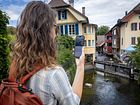
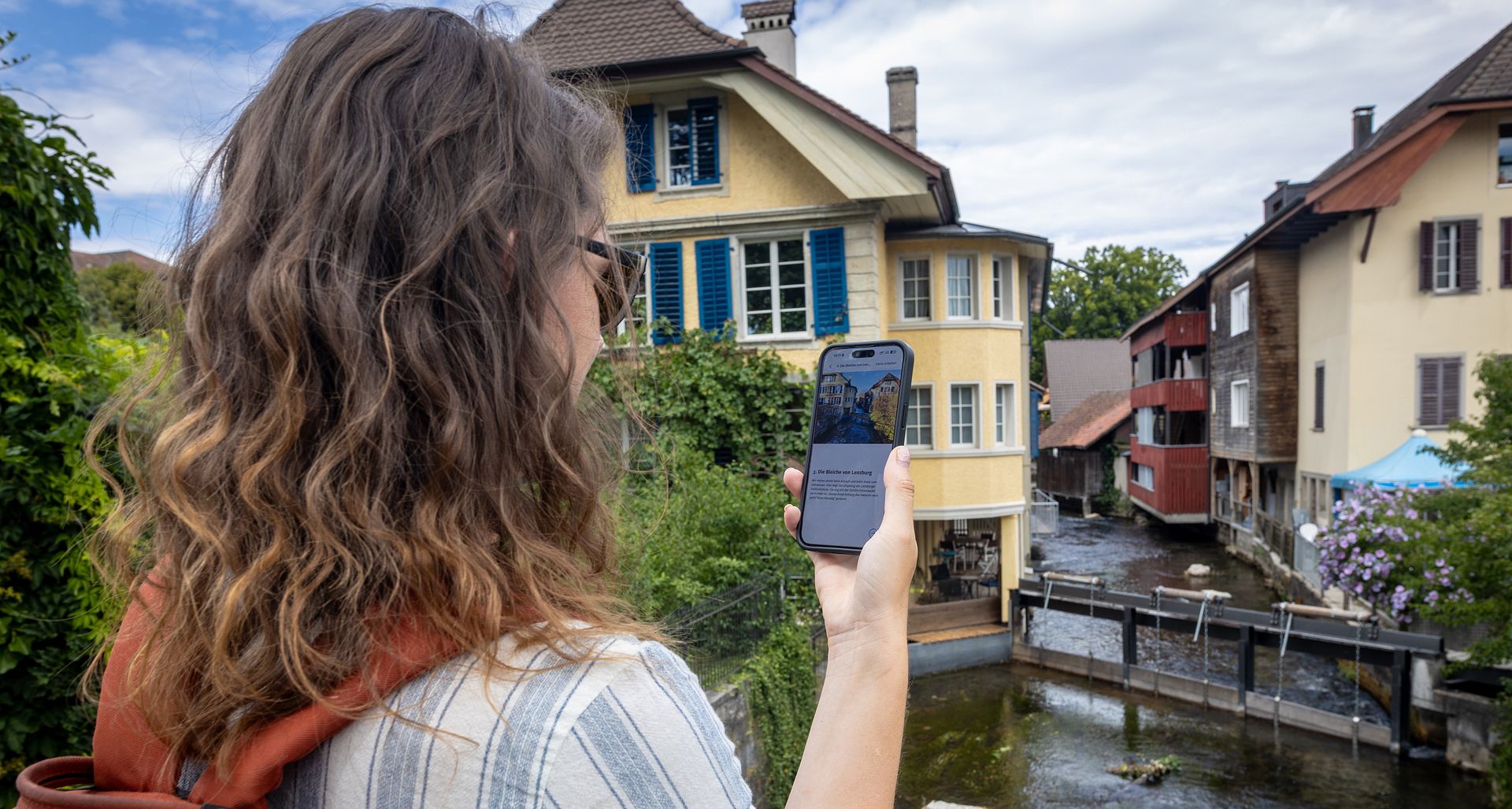
Eine Frau steht mit einem Handy in der Hand an einem Fluss.

IndustriekulTOUR Aabach

A Virtual Tour of Industrial History

Experience the industrial culture on the Aabach with your smartphone: the IndustriekulTOUR Aabach is the first virtual museum space in the canton of Aargau. The digital offering is available in German.

Start an exciting tour along the Aabach in Lenzburg, Wildegg and Niederlenz with your smartphone and experience the industrial history of the canton of Aargau at the original locations.

Download the app now

A cooperative project

IndustriekulTOUR Aabach is a cooperation between Museum Aargau, the Museum Burghalde and the Verein Industriekultur Aabach (both websites in German).

Enquiries and contact

+41 (0)848 871 200
museumaargau@ag.ch
Telephone availability
Tuesday to Friday
9 am – 12 midday