Wettingen Abbey

Parlatorium

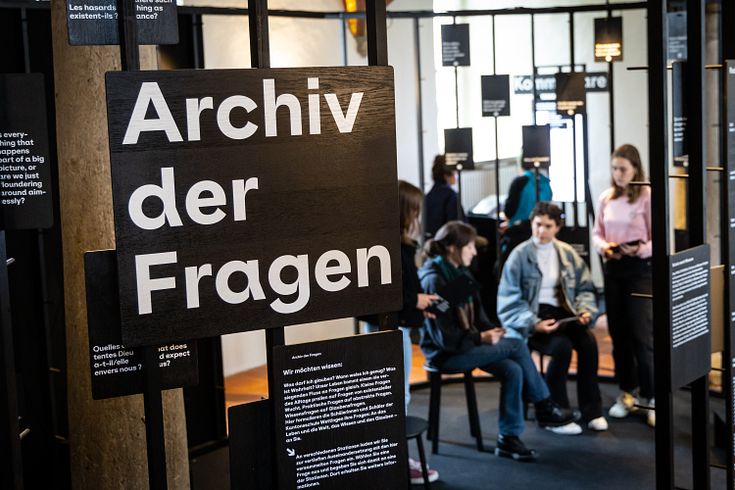
Discussion Lab Admission Museum entrance fee Registration Not required (recommended for schools) Hundreds of questions in one room Built around 1600, the Parlatorium was one of the few rooms in the abbey where speaking was once permitted. Today, Museum Aargau invites visitors here to engage in conversation about faith, power and knowledge – and poses hundreds of questions on these topics. Choose one of them and embark on a journey of discovery through the Parlatorium: through conversation, play, or via interactive text, image and film installations. The exhibition was developed in collaboration with pupils from the Wettingen Cantonal School, which is also based on the monastery peninsula. Their perspectives on the themes of faith, power and knowledge build bridges between this place's past and the present day. At the weekend, school pupils usually welcome visitors to the Parlatorium. They have been trained as hosts for this role. The Parlatorium at Wettingen Abbey was one of the few rooms in the abbey where speaking was once permitted.

 
Wettingen Abbey

Cloister

Permanent exhibition Admission Museum entrance fee 0 A place of meditation with a significant series of stained-glass windows The well-preserved cloister, with its Romanesque and Gothic tracery, evokes the tranquillity that once characterised life within these walls. Small gravestones of monks buried here are set into the flagstone floor. At the heart of the cloister lies the idyllic cloister garden. The cycle of stained-glass windows in the cloister is particularly valuable. Private donors, friendly abbeys and the Swiss cantons have all donated these significant cabinet windows to Wettingen Abbey. The earliest examples date back to the 13th century. Cloister Chapel with the Wettingen Christ Child Above the altar of the Cloister Chapel hangs the sacred image of the "Wettingen Christ Child". The wooden painting miraculously survived the devastating abbey fire on White Sunday in 1507. The monks saw this as a sign from heaven. The "Christ Child", marked by burn holes, has been venerated ever since. The cloister at Wettingen Abbey: a significant series of stained-glass windows. An exhibition by Museum Aargau.

 
Wettingen Abbey

Observatory

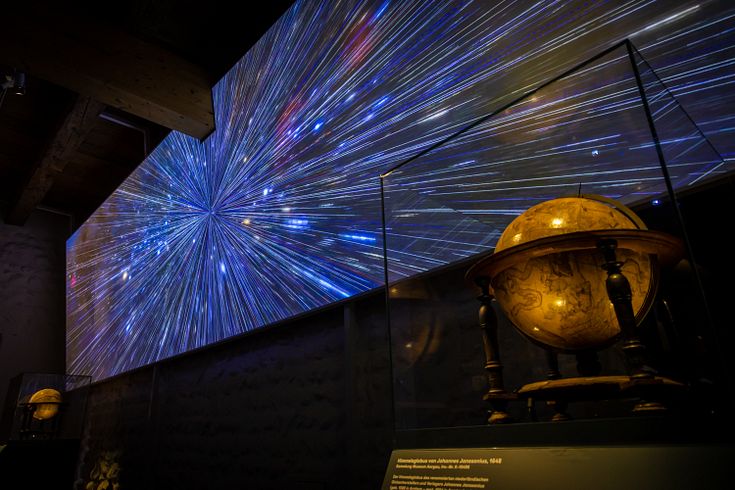
Permanent exhibition Admission Museum entrance fee Take a journey through the history of knowledge and belief At the Observatory, take a journey through the history of knowledge and belief in a cinematic installation. Together with a group of pupils from Wettingen Cantonal School, you will visit places that tell this story: from the earliest known cave paintings to the vastness of the World Wide Web. On this journey, you will discover how the monks of the Cistercian abbey understood knowledge in the Middle Ages – and how the expulsion of the monks from the abbey in 1841 was linked to new concepts of knowledge and power structures. Finally, you will return to the present day, amidst the challenges we now face in the "knowledge society". In addition, a timeline provides an insightful and varied account of the history of Wettingen Abbey. Selected objects also offer a glimpse into the collection of Museum Aargau. At the Observatory at Wettingen Abbey, take a journey through the history of knowledge and belief in a cinematic installation.

 
Wettingen Abbey

Medicinal garden

Admission Free of charge Tradition of monastic healing Today, medicinal herbs, spices, flowers and also certain vegetables grow in the medicinal garden of Wettingen Abbey. The garden showcases the long tradition of monastic medicine. The original location and design of the medicinal garden are not known in detail. It is assumed that, as in comparable abbey complexes, the Wettingen garden was located by the infirmary wing. The garden has been reconstructed at this location, based on the Hortulus book on gardening by the Reichenau abbot Walahfrid Strabo and the St. Gallen abbey plan from the 9th century. Medicinal garden on Wettingen Abbey. Tradition of monastic healing.

 
Wettingen Abbey

Cloister garden

Admission Museum entrance fee Idyllic garden in the heart of the abbey complex Experience a special monastic atmosphere in the cloister garden of Wettingen Abbey: the idyllic garden with its meadow, yew tree, water basin and path is located within the abbey walls and surrounded by the cloister quadrangle. Throughout the ages, the cloister garden was designed as a spiritual garden with a central solitary tree. In monastic culture, the tree is reminiscent of the forbidden tree of knowledge in the Garden of Eden. On the other hand, it stands for life, as a symbol of Christ and the cross. Today's cloister garden has been restored to how it was in around 1900. Cloister garden on Wettingen Abbey. Idyllic garden in the heart of the abbey complex.

 
Wettingen Abbey

Convent garden

Admission Free of charge English park, kitchen garden and plane tree avenue Discover secluded spots in the convent garden of Wettingen Abbey and stroll through the historic kitchen garden. A walk through the avenue, with its 200-year-old plane trees, is unforgettable. The convent garden – one of the first landscape gardens in Switzerland – extends from the abbey over three terraces down to the Limmat river. Fruit trees, a vineyard, a vegetable garden and a grotto invite you to stay a while. English park On the top terrace is the landscape garden designed according to the English model. The park is famous for its valuable tree population: some of them date back to the 19th century, when the convent garden was laid out in its present form. Settle down in the shade of these trees and enjoy the view of the kitchen garden and the Limmat river. Baroque kitchen garden The Baroque kitchen garden extends over the middle terrace of the convent garden. Almost forgotten vegetable varieties and ecologically valuable mixed cultures grow here. Today, the vegetables are processed in the refectory of the cantonal school or sold in the abbey shop. The kitchen garden is laid out symmetrically and, in its present form, dates back to the early 19th century. The monks and lay brothers experimented here with the cultivation and propagation of different useful plants. Great importance was attached to gardening back when the teacher training college was here. Avenue of plane trees with grotto Like a fairy tale: there is no other way to describe this dreamy avenue with its plane trees, some of which are 200 years old. The Limmat river flows beneath the mighty treetops. A grotto adds a touch of mysticism to the avenue. Convent garden on Wettingen Abbey. English park, kitchen garden and plane tree avenue.

 
Wettingen Abbey

Monks' church

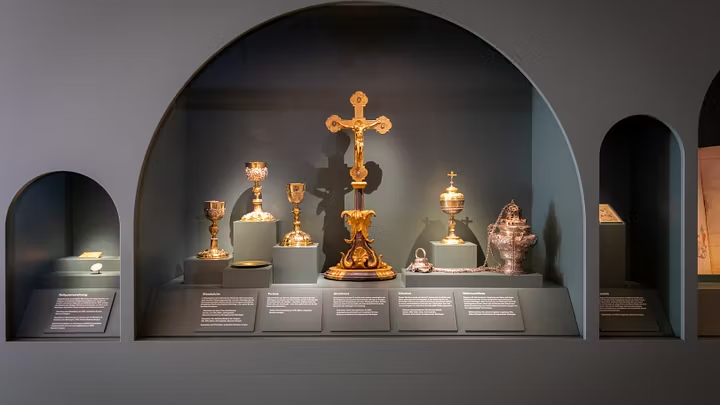
Permanent exhibition Admission Museum entrance fee 0 Renowned for its richly carved choir stalls The monks' church forms part of the abbey church and was once accessible only to monks and clergy. It is renowned for its richly carved choir stalls: their clean, angular design is in keeping with the Renaissance style. If you look closely, you will discover some surprising motifs – such as a dog playing the flute, or a cat covering its ears. Objects from the abbey's history In the monks' church, Museum Aargau is exhibiting selected items from its collection, supplemented by significant loans from the Roman Catholic parish of Wettingen. The exhibition focuses on precious items from the abbey's treasury, which offer a rare insight into the religious and cultural life of the monks. It traces the eventful history of Wettingen Abbey – from its foundation through to its dissolution, and on to its present-day role as a cantonal school. The monks' church at Wettingen Abbey is renowned for its richly carved choir stalls.

 
Wettingen Abbey

Abbey church

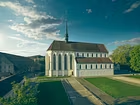
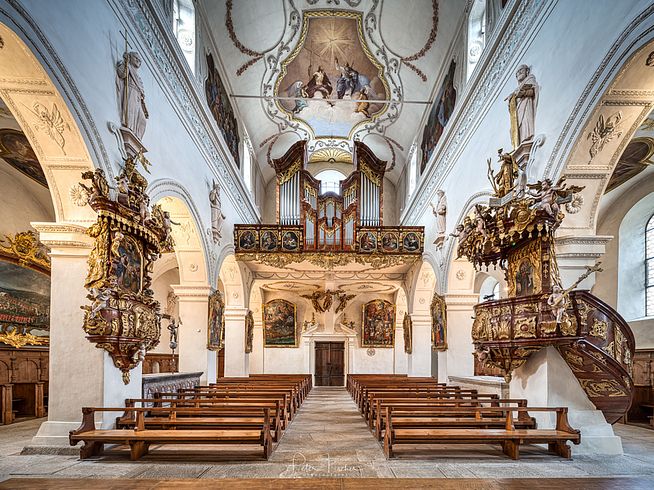
Price Admission free 0 An imposing 13th-century church Wettingen Abbey church was consecrated in 1256 and has been rebuilt several times. It is one of the few early and high medieval abbey churches in Switzerland that has retained its original structure. The church is divided into a sacred and a secular section by an imposing rood screen: the monks' church, with its famous carved choir stalls, was formerly reserved for monks and clergy. The lay church, the secular part of the monastery church, boasts magnificent altars and paintings. The abbey church can be visited during museum opening hours without paying the museum admission fee . The monks' church is part of the museum (admission fee applies). Wettingen Abbey church was consecrated in 1256 and has been rebuilt several times. It is one of the few early and high medieval abbey churches in Switzerland that has retained its original structure.

 
Wettingen Abbey

Museum and tours

Experience interactive exhibitions and tours at Wettingen Abbey. These activities are suitable for adults, families and schools. There are many ways to explore Wettingen Abbey (all tours start at the visitor centre): Exhibitions: a tour of the monks' church and cloister. The Parlatorium and Observatory offer a variety of perspectives on the themes of faith, power and knowledge. The restored abbot's house is also a real gem. "Historia" audio tour: interesting facts from 800 years of monastic history "The Hidden Message" puzzle tour (in German only): a challenging scavenger hunt for young and old alike Visit excluding the museum: an abbey brochure for a walk through the grounds is available at the visitor centre (price: CHF 6, in German only). Further details of these offers can be found below. Please also note our bookable offers for groups and schools . Opening hours 1 April to 1 November 2026 Tue – Sun, holidays: 10 am – 5 pm Mon: closed EXHIBITIONS Exhibition Abbey church Exhibition Monks' church Exhibition Cloister Exhibition Observatory Exhibition Abbot's house Exhibition Parlatorium COLLECTION Treasure trove of history Collection Site in German Collection online Egliswil Collection Centre Visit the collection Impressions

 
Lenzburg Castle

Children's museum and PLIRRK!

Children's museum and PLIRRK! Admission Museum entrance fee Notice The craft area closes at 4.30 pm. Children must be supervised. The paradise for knights and princesses! Children's museum The children's museum is located right up in the attic of Lenzburg Castle. There are lots of secret nooks and crannies, hidden staircases and oriels to explore. Children can dress up as knights or princesses, chase around the corridors and practise handicrafts and painting to their heart's content. Children's exhibition PLIRRK In the children's exhibition PLIRRK!, kids can immerse themselves in the world of explorers. They'll learn from the castle's last inhabitant, polar explorer Lincoln Ellsworth, about the hardships he had to endure on his 1925 North Pole expedition, and find out how to prevent vitamin deficiency on the high seas and navigate the open waters. The exhibition is made by children for children with financial support from the "Friends of Lenzburg" association. Fun and excitement guaranteed! Children's museum at Lenzburg Castle: The paradise for knights and princesses!

Gradian
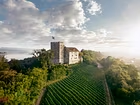
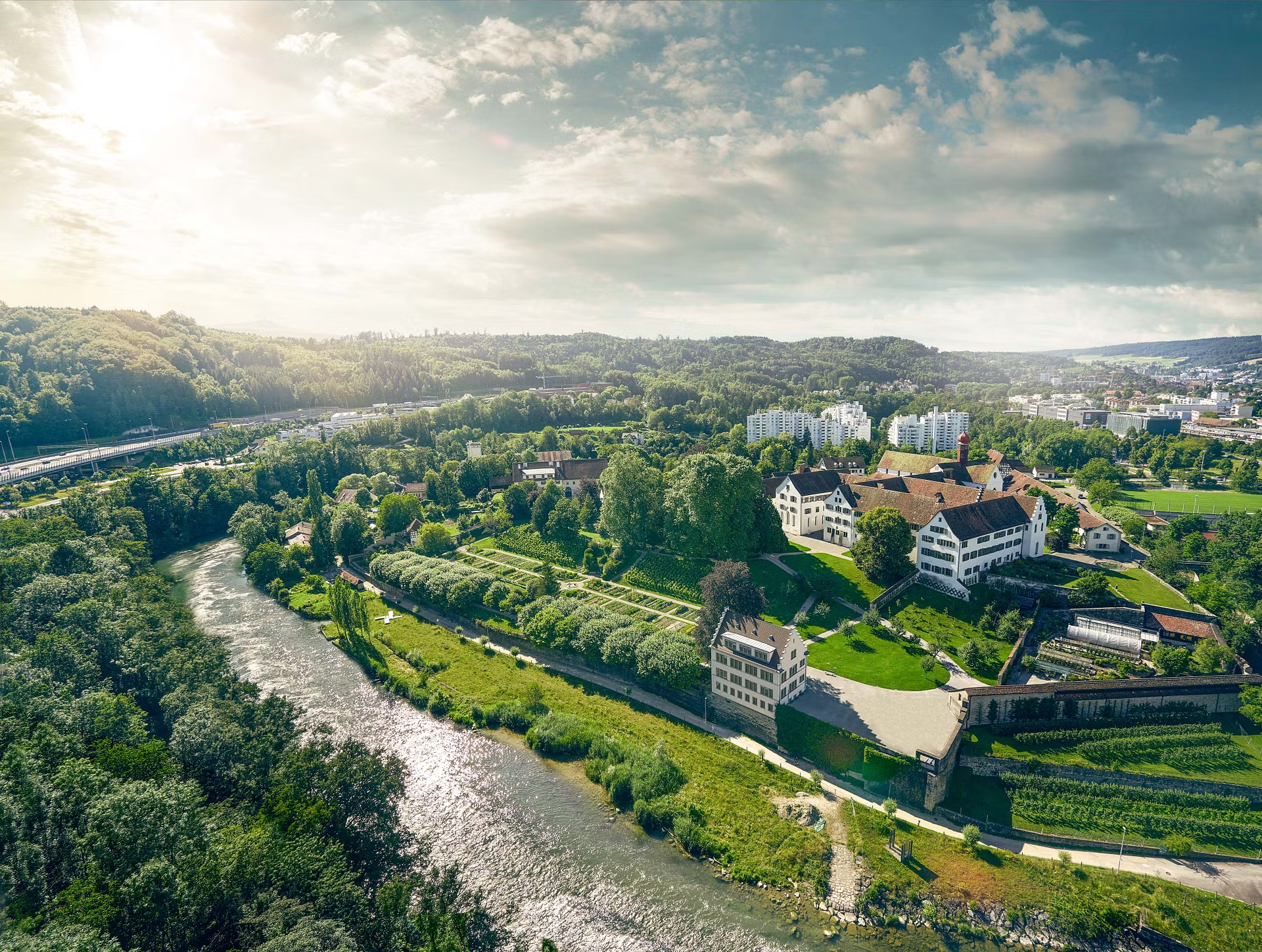
Luftaufnahme Klosterhalbinsel Wettingen im Gegenlicht mit dramatischen Wolken über dem Kloster.

Wettingen Abbey

Faith, power,
knowledge

Wettingen Abbey is a cultural asset of international standing. Culture, education, history and hospitality merge into one experience at this power spot on the river Limmat.
PLEASE NOTE: VISIT ON 5 SEPTEMBER 2026

On Saturday, 5 September 2026, a major event organised by the Cantonal School will take place at Wettingen Abbey. The museum, including the abbey church, will be open to visitors as usual, but visitors should expect some restrictions.
 

PLANNING YOUR VISIT

 
Ausstellung in der Mönchskirche Kloster Wettingen: Verschiedene Objekte in einer Vitrine, u.a. ein grosses Altarkreuz

Museum
and tours

Exhibitions, tours and collection  

 
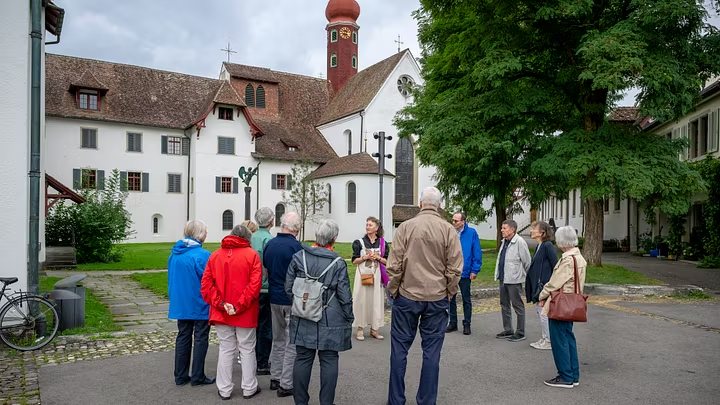
Eine Gästegruppe mit einer Museumsführerin steht vor der Kirche der Klosterhalbinsel Wettingen.

Events and
public tours

Calendar of events  

 
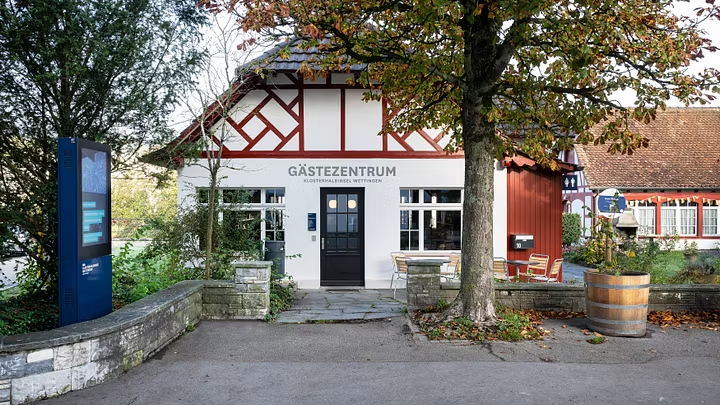
Aussenaufnahme Gästezentrum Klosterhalbinsel Wettingen mit Informationsbildschrim links

Opening hours
and entrance fees

Visit us from April to October  

 
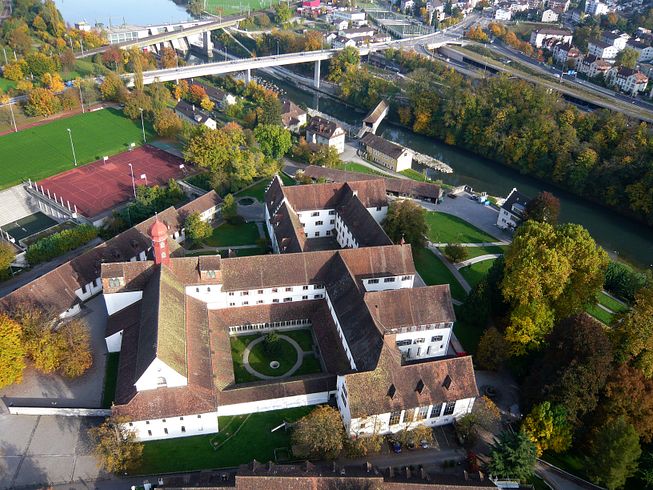
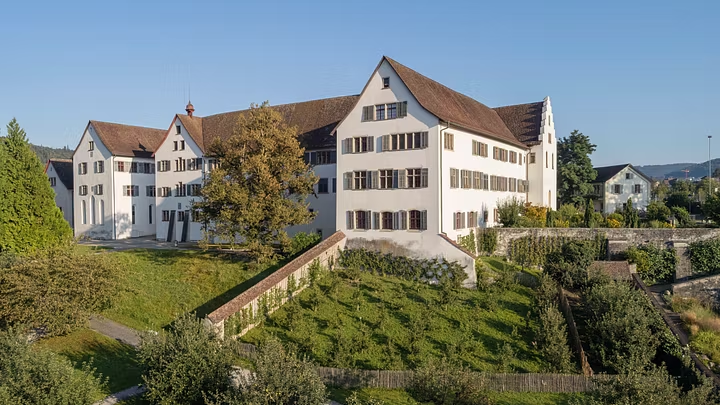
Luftaufnahme Kloster Wettingen mit Klosterpark im Vordergrund

Getting
here

Directions  

 
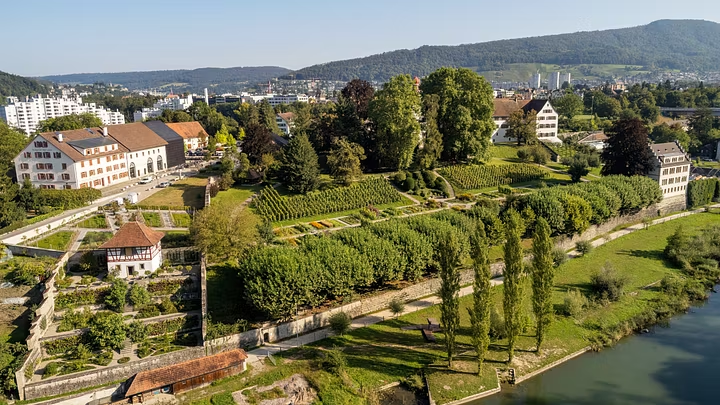
Luftaufnahme Konventgarten und Abtgarten auf der Klosterhalbinsel Wettingen mit Limmat

Abbey park
and gardens

Discover the historic gardens  

SCHOOLS, FAMILIES AND GROUPS

 
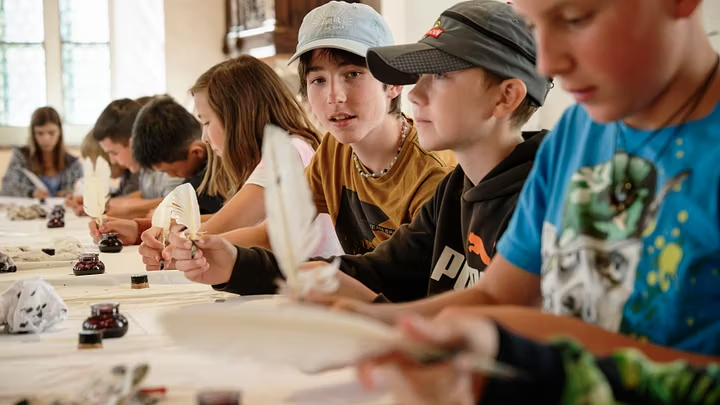
Eine Schulklasse beim Schreiben mit Tinte und Federkiel.

For
schools

Guided tours and puzzle tour  

 
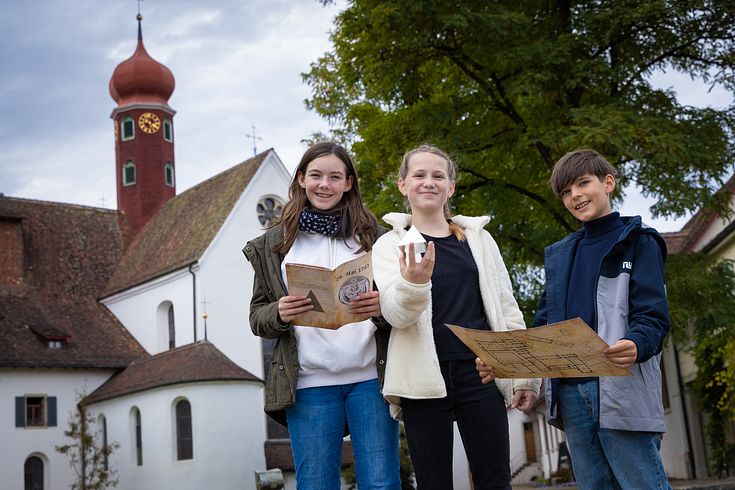
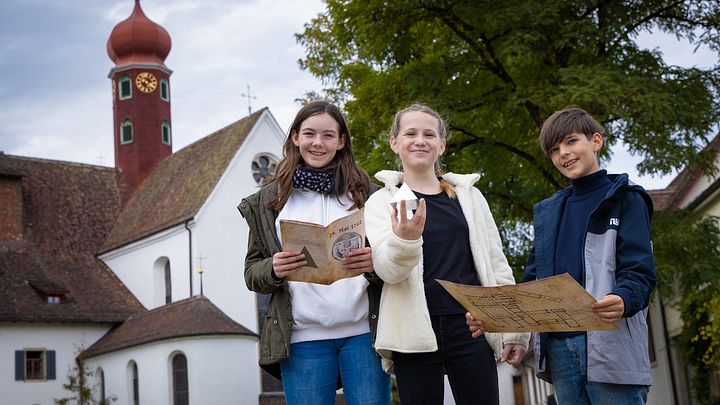
Zwei Mädchen und ein Bub stehen gemeinsam vor dem Kloster Wettingen und blicken direkt in die Kamera. Sie halten eine Landkarte, Broschüre sowie eine Pyramide in den Händen.

For
families

Puzzle tour through Wettingen Abbey  

 
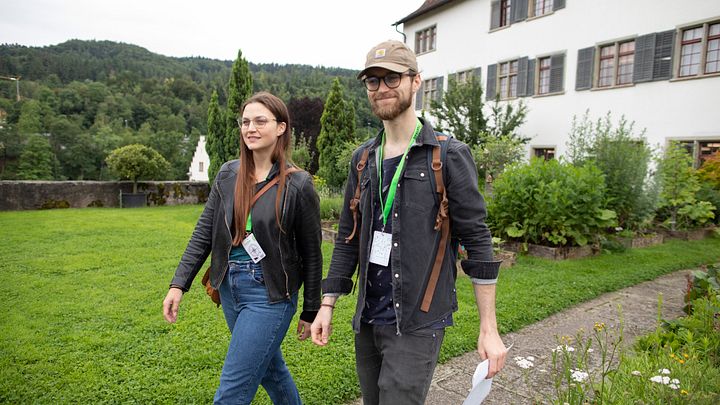
Eine Frau und ein Mann schreiten in Freizeitbekleidung durch den Garten der Klosterhalbinsel Wettingen (Foxtrail).

For
groups

Guided tours of the abbey and gardens  

HISTORY AND COLLECTION

 
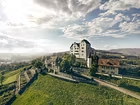
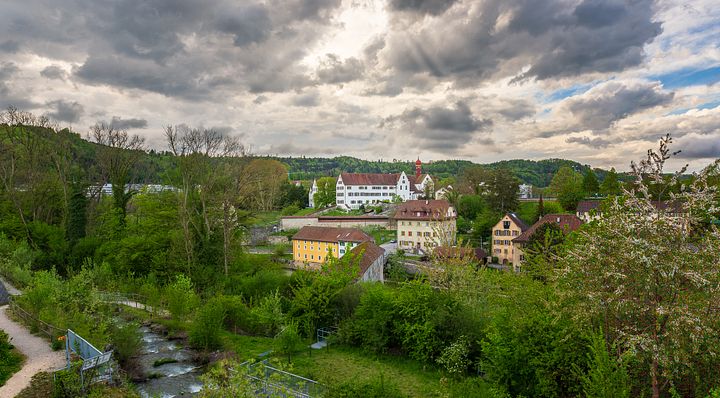
Luftaufnahme Klosterhalbinsel Wettingen mit dramatischen Wolken über dem Kloster

Wettingen Abbey and it's history

800 years of history  

 
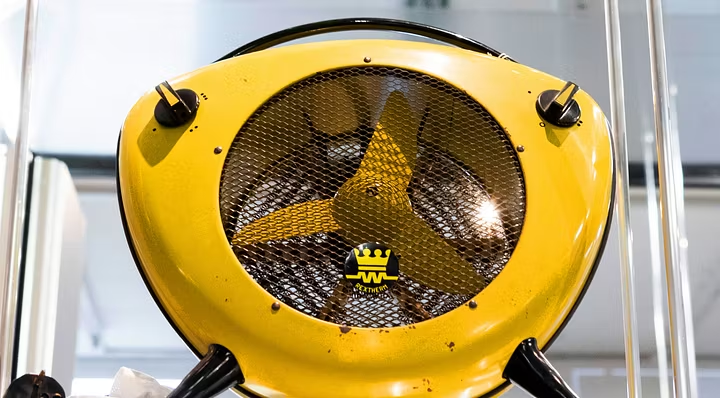
Ein gelber Heizlüfter, Objekt im Sammlungszentrum Egliswil

Collection

Treasure trove of Aargau's history  

 
Grosses Handy in der Hand eines Benutzers, auf dem Bildschirm ist die "Sammlung online" von Museum Aargau dargestellt.

Collection online

Site in German  

Impressions

Luftaufnahme Kloster Wettingen auf der Klosterhalbinsel, im Hintergrund die Limmat.
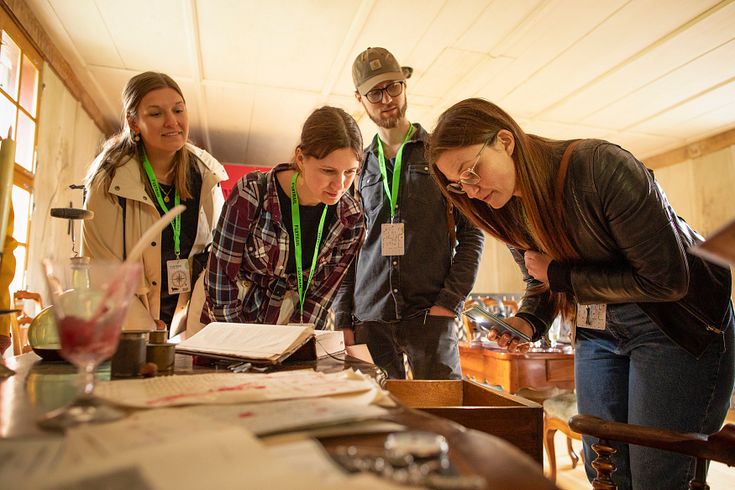
Mehrere Personen auf dem Foxtrail Klosterhalbinsel Wettingen. Sie beugen sich über einen antiken Bürotisch und blicken in eine Schublade.
Innenaufnahme Klosterkirche Wettingen (Konventkirche) mit Orgel im Hintergrund.
Blick in den Ausstellungsraum "Parlatorium" auf der Klosterhalbinsel Wettingen. Im Vordergrund ein Schild mit dem Text "Archiv der Fragen", im Hintergrund sitzen Schülerinnen und Schüler diskutierend beeinander.
Ausstellung "Observatorium" auf der Klosterhalbinsel Wettingen: Grosse Leinwand mit Sternenhimmel, davor ein grosser historischer Globus.
Zwei Mädchen und ein Bub stehen gemeinsam vor dem Kloster Wettingen und blicken direkt in die Kamera. Sie halten eine Landkarte, Broschüre sowie eine Pyramide in den Händen.
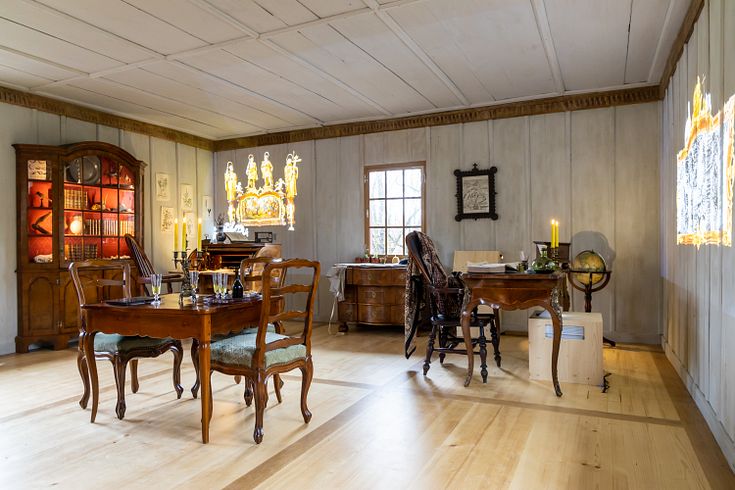
Innenraum vom Abthaus auf der Klosterhalbinsel Wettingen mit historischen Möbeln und einer Projektion an den Wänden.