Habsburg Castle

Permanent exhibition

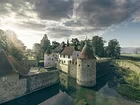
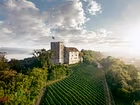
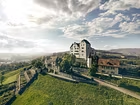
Permanent exhibition Admission Entrance free Construction and settlement history In the tower of the rear castle at Habsburg is a small exhibition on the buildings' construction and settlement history. A three-dimensional model as well as text and picture panels illustrate the structural development of Habsburg Castle. Objects and illustrations give an insight into everyday life in the castle, covering topics such as food, water supply and living conditions. Spread around the castle grounds there are also nine panels with information and sketches on the construction history, with interesting

 
Wettingen Abbey

Observatory

Permanent exhibition Admission Museum entrance fee Take a journey through the history of knowledge and belief At the Observatory, take a journey through the history of knowledge and belief in a cinematic installation. Together with a group of pupils from Wettingen Cantonal School, you will visit places that tell this story: from the earliest known cave paintings to the vastness of the World Wide Web. On this journey, you will discover how the monks of the Cistercian abbey understood knowledge in the Middle Ages – and how the expulsion of the monks from the abbey in 1841 was linked to new concepts

 
Wettingen Abbey

Medicinal garden

Admission Free of charge Tradition of monastic healing Today, medicinal herbs, spices, flowers and also certain vegetables grow in the medicinal garden of Wettingen Abbey. The garden showcases the long tradition of monastic medicine. The original location and design of the medicinal garden are not known in detail. It is assumed that, as in comparable abbey complexes, the Wettingen garden was located by the infirmary wing. The garden has been reconstructed at this location, based on the Hortulus book on gardening by the Reichenau abbot Walahfrid Strabo and the St. Gallen abbey plan from the 9th

 
Wettingen Abbey

Cloister garden

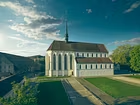
Admission Museum entrance fee Idyllic garden in the heart of the abbey complex Experience a special monastic atmosphere in the cloister garden of Wettingen Abbey: the idyllic garden with its meadow, yew tree, water basin and path is located within the abbey walls and surrounded by the cloister quadrangle. Throughout the ages, the cloister garden was designed as a spiritual garden with a central solitary tree. In monastic culture, the tree is reminiscent of the forbidden tree of knowledge in the Garden of Eden. On the other hand, it stands for life, as a symbol of Christ and the cross. Today's

 
Wettingen Abbey

Convent garden

Admission Free of charge English park, kitchen garden and plane tree avenue Discover secluded spots in the convent garden of Wettingen Abbey and stroll through the historic kitchen garden. A walk through the avenue, with its 200-year-old plane trees, is unforgettable. The convent garden – one of the first landscape gardens in Switzerland – extends from the abbey over three terraces down to the Limmat river. Fruit trees, a vineyard, a vegetable garden and a grotto invite you to stay a while. English park On the top terrace is the landscape garden designed according to the English model. The park is

 
Wettingen Abbey

Abbot's house

Permanent exhibition Admission Entrance free 0 Stately summer residence The stately abbot's house is situated to the south-west of the abbey, near the river Limmat. You can reach it by walking from the north through the front garden, which has been laid out in the traditional style. Built in 1726 by Abbot Alberich Beusch, the abbot's house served as a summer residence for him and his successors and as a place to receive guests. On the upper floor of the abbot's house, you'll find yourself in a charming living and study area, furnished with period pieces. An animated film projected onto the panelled

 
Wettingen Abbey

Abbot's garden

Admission Free of charge Stately summer residence of the head of the abbey Stroll through the abbot's garden at Wettingen Abbey, and imagine how the abbot once received his guests here. The garden extends over three terraces. Stone steps, walls, perennial beds and trellises give the "Gnädig-Herren-Garten" (as it is also called in Wettingen sources) a Mediterranean flair. The abbot's garden (or prelate's garden) was moved several times in the history of the abbey. At one time it was even located on the small island in the Limmat, until it was laid out at its present location as the garden of

 
Wildegg Castle

Living history museum and ancestral portrait gallery

Permanent exhibition Admission Museum entrance fee Former castle residents are waiting to chat with visitors! Wildegg Castle is the castle of talking portraits: in the ancestral portrait gallery and the living history museum, former castle residents are waiting to chat with visitors. They include Julie von Effinger, the last owner of Wildegg Castle, who recounts anecdotes from her everyday life. Throughout the castle, large portraits of the von Effinger family come to life and tell of the past in a lively and entertaining way. An impressive living history museum With its more than 30 beautifully

 
Lenzburg Castle

Domestic life museum and prison

Permanent exhibition Admission Museum entrance fee The museum of domestic life and prison reveal the lives of lords, rogues and scoundrels. The museum of domestic life and prison of Lenzburg Castle reveal the lives of lords, rogues and scoundrels. Come and explore! Domestic life museum: how lords and ladies lived In the museum of domestic life it feels as if the lords and masters had just left Lenzburg Castle. Filled with original furniture, it provides an insight into the different eras in which the castle was inhabited. In the late medieval kitchen, for example, you can look into the cooking

 
Lenzburg Castle

Knighthood and Nobility

Permanent exhibition Admission Museum entrance fee The "Knighthood and Nobility" exhibition focuses on the Middle Ages. Medieval fans will find plenty to interest them in the "Knighthood and Nobility" exhibition: discover how three great Swiss noble families organised their rule and the legacy they left behind. From the 11th to the 15th century, the Lenzburgs, Kyburgs and Habsburgs ruled Lenzburg Castle. This 400-year history of rule is presented in the residential and south tower, the oldest part of the castle. Audiovisual shadow plays show how the three great noble families fought out conflicts

Gradian
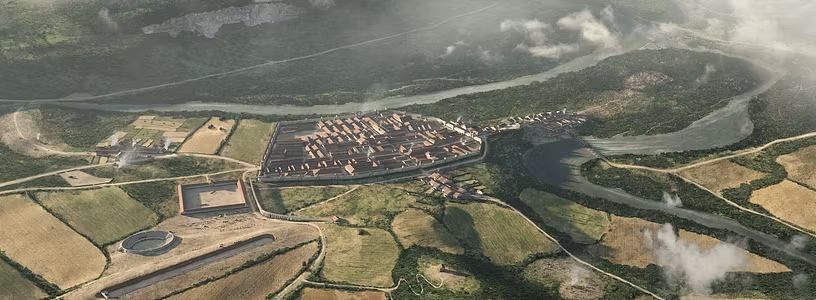
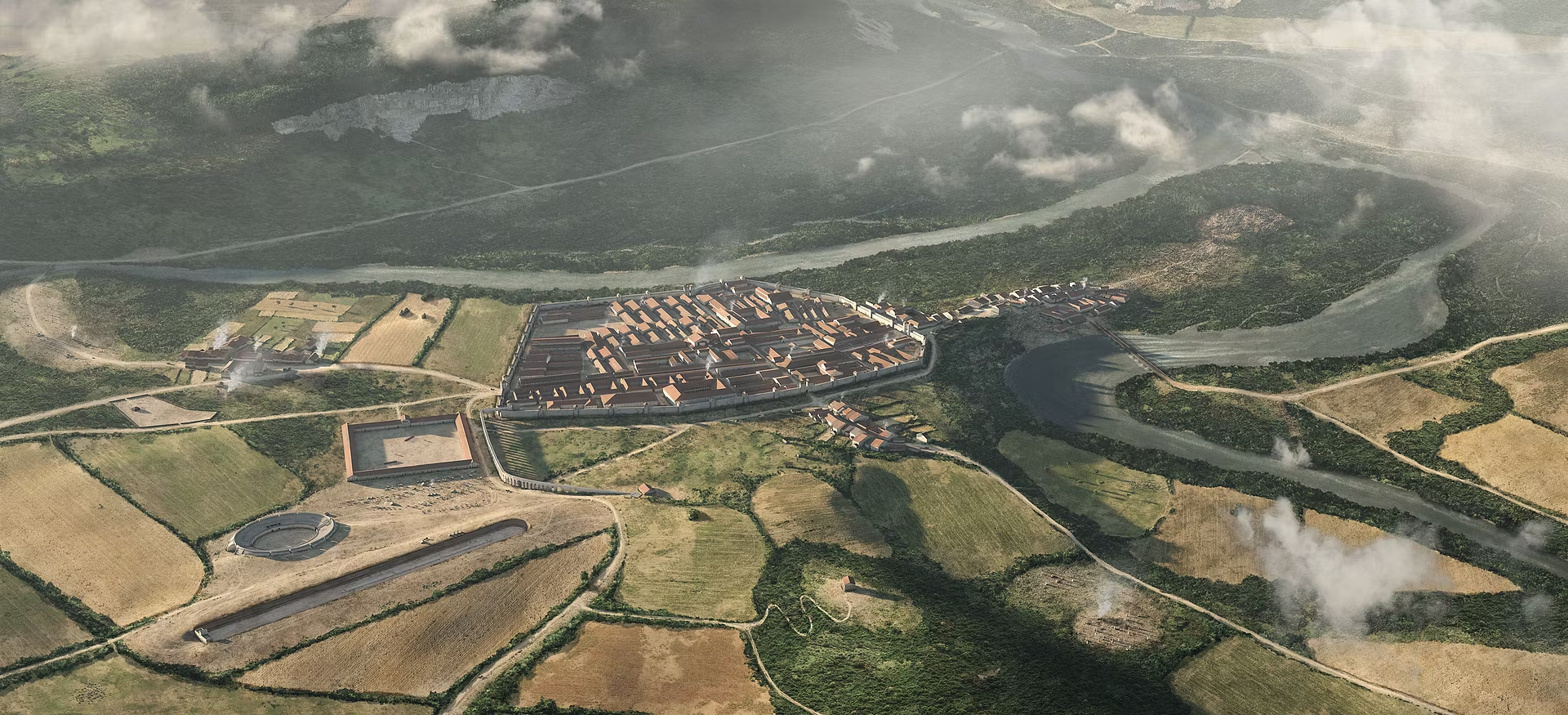
Visualisierung/Animation Antikes Vindonissa

Vindonissa

Vindonissa Legionary Trail and Vindonissa Museum

Experience the Romans in Vindonissa: the Vindonissa Legionary Trail (Windisch) and Vindonissa Museum (Brugg) offer tours, exhibitions, events and bookable offers in the former Vindonissa legionary camp.

MUSEUM SITES IN VINDONISSA

 
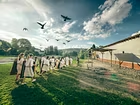
Kinder schreiten wie kleine Römer über das Areal vom Legionärspfad Vindonissa

Vindonissa
Legionary Trail

The Roman adventure park offers play/theme tours, events, roman overnight stays, guided tours and much more.  

 
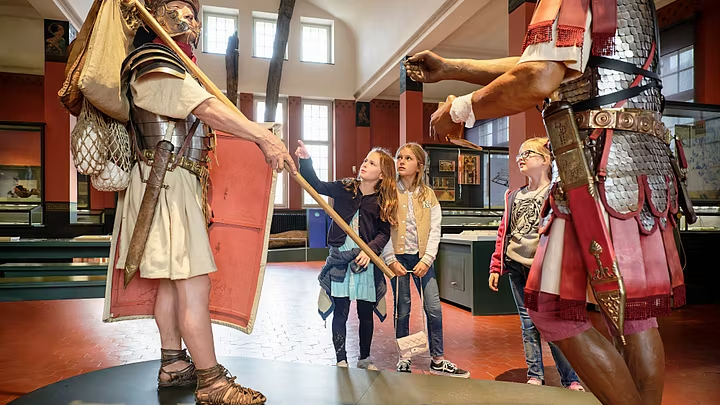
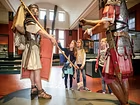
Drei Mädchen stehen in der Ausstellung im Vindonissa Museum. Vor ihnen stehen zwei lebensgrosse Legionäre (Figuren)

Vindonissa
Museum

The Vindonissa Museum in Brugg presents the most important finds from Vindonissa, the only Roman legionary camp in Switzerland.