Vindonissa Museum – Museum Aargau Museumstrasse 1 5200 Brugg Tel. 0848 871 200 Send a message Organisation Museum Aargau Management Member Contact Dr. Marco Sigg Director E-Mail Sibylla Fischer Head of Marketing & Communications E-Mail Rahel Göldi Head of Museum Programme E-Mail Andrea Lehner Head of Guest Services E-Mail Thomas Lüscher Head of Operations & Administration E-Mail Dr. Rudolf Velhagen Head of Collection & Conservation E-Mail
Sammlungszentrum Egliswil – Museum Aargau Binzenholzstrasse 10 5704 Egliswil Tel. 0848 871 200 Send a message Organisation Museum Aargau Management Member Contact Dr. Marco Sigg Director E-Mail Sibylla Fischer Head of Marketing & Communications E-Mail Rahel Göldi Head of Museum Programme E-Mail Andrea Lehner Head of Guest Services E-Mail Thomas Lüscher Head of Operations & Administration E-Mail Dr. Rudolf Velhagen Head of Collection & Conservation E-Mail
Experience the Vindonissa Museum at an event or public guided tour. Family afternoons take place regularly. Calendar of events (in German) Contact +41 (0)848 871 200 Send a message Telephone availability: Tuesday to Friday 9 am - 12 pm / 1 pm - 4:30 pm November to March only in the morning
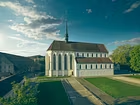
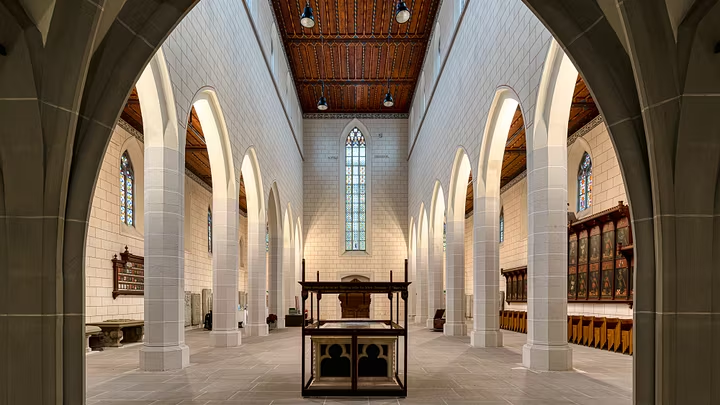
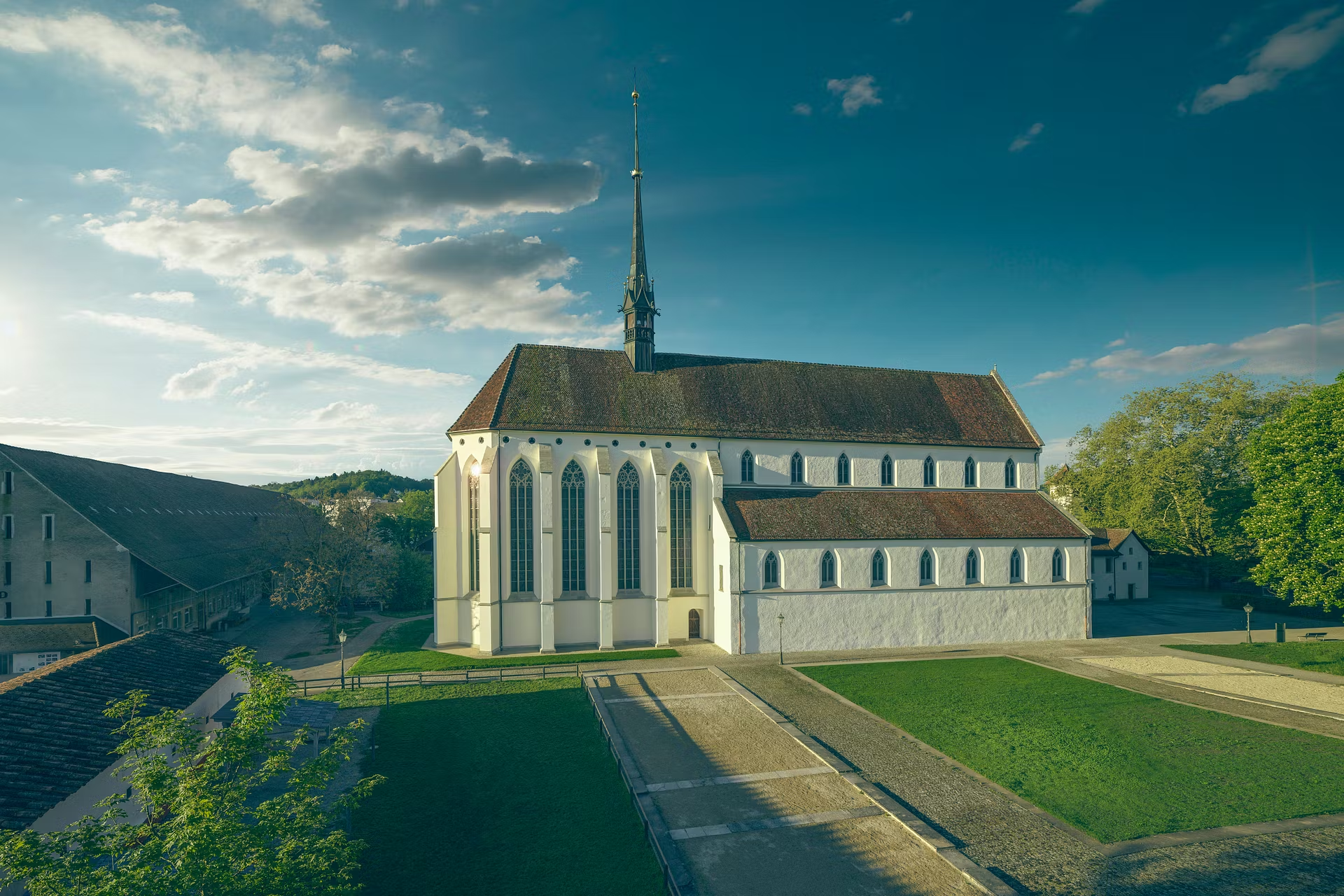
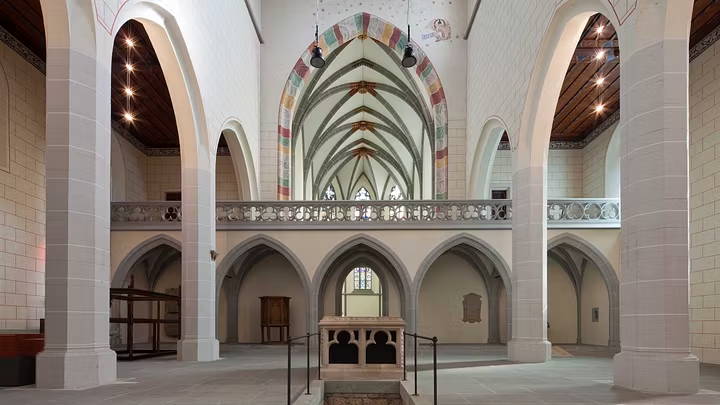
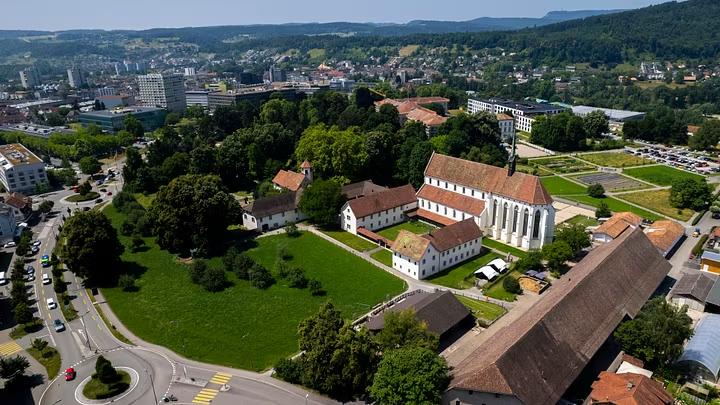
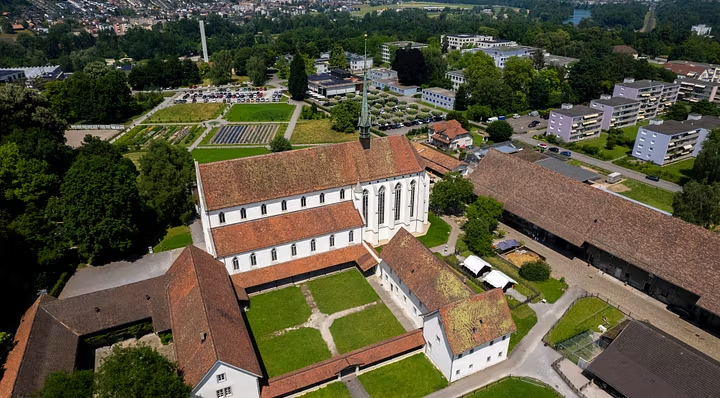
Königsfelden convent church was once the centrepiece of a large, substantial double monastery resided in by the mendicant orders of the Franciscans and the Clarists. Not only did the lives of the monks and nuns revolve around it, it was also planned as a place of commemoration for the murdered King Albrecht and the Habsburg dynasty. The convent church The Habsburg Queen Elisabeth of Carinthia, Gorizia and Tyrol founded Königsfelden Abbey more than 700 years ago. She did so in response to the murder of her husband, King Albrecht I of Habsburg, in the year 1308. The Abbey was built as a place of
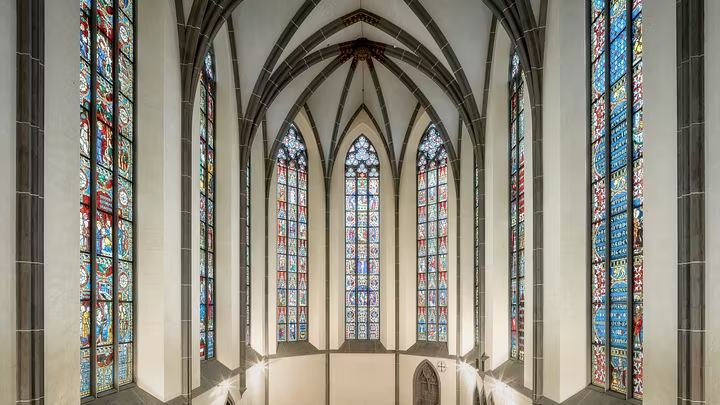
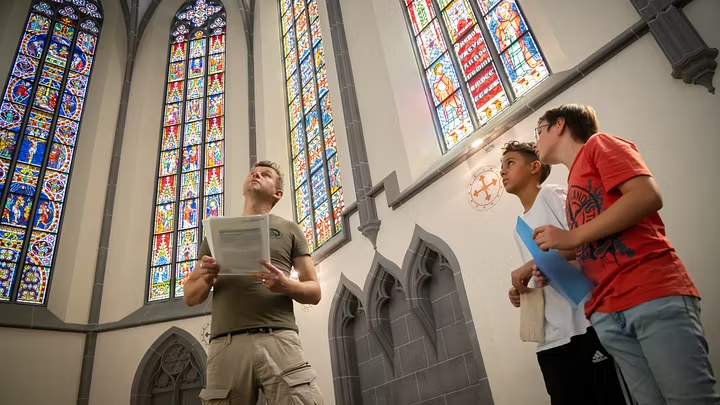
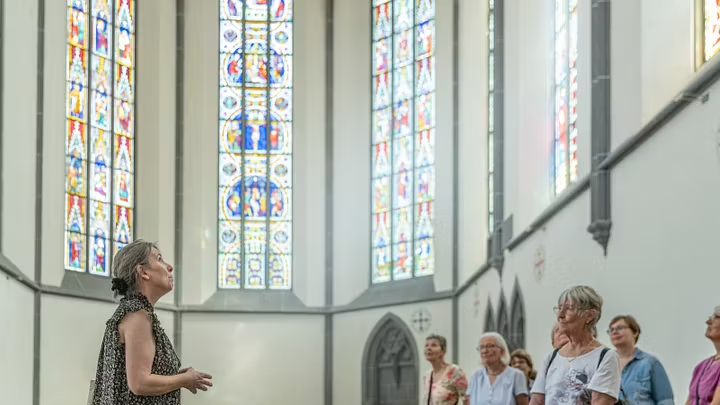
A place of commemoration for the Habsburg family was created at the scene of King Albrecht I's murder. The stained glass windows of the church of Königsfelden Abbey reflect the very highest level of craftsmanship at the time and contributed to the renown of the monastery as a whole. Created between 1320 and 1360, the windows are among the most outstanding specimens of European stained glass in the Late Middle Ages. The window cycle The chancel windows were donated by family members of the murdered King Albrecht I such as his wife Elisabeth, his daughter Agnes and his sons. Their images are to
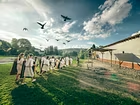
The accurately soldiers' quarters (contubernia) are absolutely unique in Europe and offer overnight stays for families, schools and groups. They have been reconstructed using wood, clay and limestone based on the methods that would have been deployed between 30 and 45 AD. During this period, the 13th Legion was stationed at Vindonissa with approx. 5,000 to 6,000 soldiers. The contubernia reproduced here were built entirely by hand – just as the legionaries themselves would have built the originals. The materials used, the construction techniques and the dimensions have been recreated as faithfully
A legionary camp had four camp gates (portae), through which the two main roads led into the camp: the front gate (porta praetoria), the rear gate (porta decumana) and the two side gates (portae principales). The West Gate at Vindonissa was much more elaborately designed than the North and South Gate, featuring two large polygonal side towers. This was due to its position: it was here that the main roads from Gaul, Italy and Germania led into the camp. The two towers, whose foundation walls still survive, were octagonal in shape and would probably have extended to a height of some 20 metres
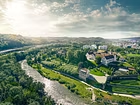
The discovery of the North Gate (porta decumana) in 1905 was a major breakthrough for early Vindonissa research. Any remaining doubts were finally dispelled: Vindonissa really had been a legionary camp and not a civil settlement. The gate is situated at the northern periphery of the Windisch plateau, directly above the slope running down to the River Aare. From here there is an impressive view to the north where the Aare cuts through the Jura Mountains. The Romans had clearly identified the outstanding strategic position of the plateau at the confluence of the Aare, Reuss and Limmat rivers and
The amphitheatre of Vindonissa is the oldest in Switzerland. It was erected by the 13th legion, initially being made of wood. After a fire, the 21st legion replaced it with the stone structure that survives today. The seating area (cavea) had a capacity of some 11,000 spectators while the oval arena in the centre measured 64x52 metres - the largest of the seven known amphitheatres on Swiss territory. The amphitheatre was a Roman invention that was widespread in the provinces and is regarded as the ultimate symbol of Roman culture. Animal hunting and slaying (venationes) and gladiator duels (munera
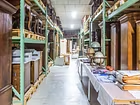
The Museum Aargau Collection has been assembled from various holdings since 1830. It consists of bequests from Aargau's castles and monasteries, numerous donations, objects acquired from company archives and targeted purchases. The Collection is constantly being expanded and documents Aargau's history in tangible form through objects that can be experienced. Collecting, preserving, researching Collecting, preserving and researching objects are among the core tasks of a museum. A collection strategy defines the criteria according to which objects are collected. When an object is added to the Collection
7 out of 20
Königsfelden Abbey
A Habsburg place of remembrance
Königsfelden Abbey is internationally renowned for its stained glass windows from the Middle Ages. Exhibitions, guided tours and events bring the 700-year-old abbey church back to life.