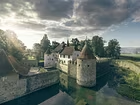
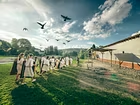
Permanent exhibition Admission Museum entrance fee 0 Mill island with grain mill and garden On the mill island next to the castle you see into the workings of the grain mill, which was essential for the survival of the people. Having control over the mill and transport routes meant power and income for the lords of Hallwyl. Mill of Hallwyl Casle. See into the workings of the grain mill.
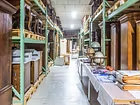
Permanent exhibition Admission Museum entrance fee Cigar-rollers in action In homage to Hansjakob Suter, the legendary curator of Hallwyl Castle in the 1970s, the granary displays the most important objects from his exhibition on customs and trade in the Seetal. In the granary, the focus is very much on tobacco and straw production in the Seetal, which experienced its heyday at the end of the 19th century. The fashionable straw hats became famous around the world and even made it all the way to New York. The exhibition also looks at midwinter customs from the village of Hallwil and traditional costumes from the Seetal. Every second Sunday in the month, cigar-rollers can be watched at work making genuine Hallwil "Flor de Hallwyl" cheroots. Exhibition in the granary of Hallwyl Castle. Cigar-rollers in action
Permanent exhibition Admission Museum entrance fee The museum of domestic life and prison reveal the lives of lords, rogues and scoundrels. The museum of domestic life and prison of Lenzburg Castle reveal the lives of lords, rogues and scoundrels. Come and explore! Domestic life museum: how lords and ladies lived In the museum of domestic life it feels as if the lords and masters had just left Lenzburg Castle. Filled with original furniture, it provides an insight into the different eras in which the castle was inhabited. In the late medieval kitchen, for example, you can look into the cooking pots, smell the exquisite spices or inspect the kitchen utensils of the time. You'll enter impressive rooms from the 18th century with hand-printed fabric wallpaper all around and a matching tiled stove. The bathroom with its golden taps bears witness to the luxurious life of the industrialist's wife Lady Mildred, who lived in the castle with her husband Augustus Edward Jessup from 1893 until the 20th century. Many other rooms display exquisite objects and give an impression of how the inhabitants of Lenzburg Castle have lived over the centuries. Prison: where rogues and crooks ended up The prison, by contrast, is cold and damp. Enter an original preserved cell from the 17th century and decipher the inscriptions carved into the wood by prisoners. Instruments of torture such as thumbscrews show the methods used in the penal system at that time. The execution sword, with which rogue king Bernhard Matter was the last person to be executed in Aargau in 1854, has been preserved in its original form. Domestic life museum and prison. Exhibition at Lenzburg Castle. The museum of domestic life and prison reveal the lives of lords, rogues and scoundrels.
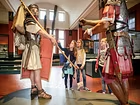
Permanent exhibition Admission Museum entrance fee The "Knighthood and Nobility" exhibition focuses on the Middle Ages. Medieval fans will find plenty to interest them in the "Knighthood and Nobility" exhibition: discover how three great Swiss noble families organised their rule and the legacy they left behind. From the 11th to the 15th century, the Lenzburgs, Kyburgs and Habsburgs ruled Lenzburg Castle. This 400-year history of rule is presented in the residential and south tower, the oldest part of the castle. Audiovisual shadow plays show how the three great noble families fought out conflicts, who played what role in the empire, and how they organised their dominion. Visitors can learn how noble youths were prepared for their future task as rulers, how they learned to handle weapons while hunting, and how they participated in the cultural life at court. Selected original objects bear witness to an eventful time. Knighthood and Nobility. Permanent exhibition at Lenzburg Castle. The "Knighthood and Nobility" exhibition focuses on the Middle Ages.
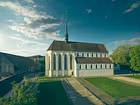
Permanent exhibition Admission Museum entrance fee Take a journey through the history of knowledge and belief At the Observatory, take a journey through the history of knowledge and belief in a cinematic installation. Together with a group of pupils from Wettingen Cantonal School, you will visit places that tell this story: from the earliest known cave paintings to the vastness of the World Wide Web. On this journey, you will discover how the monks of the Cistercian abbey understood knowledge in the Middle Ages – and how the expulsion of the monks from the abbey in 1841 was linked to new concepts of knowledge and power structures. Finally, you will return to the present day, amidst the challenges we now face in the "knowledge society". In addition, a timeline provides an insightful and varied account of the history of Wettingen Abbey. Selected objects also offer a glimpse into the collection of Museum Aargau. At the Observatory at Wettingen Abbey, take a journey through the history of knowledge and belief in a cinematic installation.
Admission Free of charge Tradition of monastic healing Today, medicinal herbs, spices, flowers and also certain vegetables grow in the medicinal garden of Wettingen Abbey. The garden showcases the long tradition of monastic medicine. The original location and design of the medicinal garden are not known in detail. It is assumed that, as in comparable abbey complexes, the Wettingen garden was located by the infirmary wing. The garden has been reconstructed at this location, based on the Hortulus book on gardening by the Reichenau abbot Walahfrid Strabo and the St. Gallen abbey plan from the 9th century. Medicinal garden on Wettingen Abbey. Tradition of monastic healing.
Admission Museum entrance fee Idyllic garden in the heart of the abbey complex Experience a special monastic atmosphere in the cloister garden of Wettingen Abbey: the idyllic garden with its meadow, yew tree, water basin and path is located within the abbey walls and surrounded by the cloister quadrangle. Throughout the ages, the cloister garden was designed as a spiritual garden with a central solitary tree. In monastic culture, the tree is reminiscent of the forbidden tree of knowledge in the Garden of Eden. On the other hand, it stands for life, as a symbol of Christ and the cross. Today's cloister garden has been restored to how it was in around 1900. Cloister garden on Wettingen Abbey. Idyllic garden in the heart of the abbey complex.
Admission Free of charge English park, kitchen garden and plane tree avenue Discover secluded spots in the convent garden of Wettingen Abbey and stroll through the historic kitchen garden. A walk through the avenue, with its 200-year-old plane trees, is unforgettable. The convent garden – one of the first landscape gardens in Switzerland – extends from the abbey over three terraces down to the Limmat river. Fruit trees, a vineyard, a vegetable garden and a grotto invite you to stay a while. English park On the top terrace is the landscape garden designed according to the English model. The park is famous for its valuable tree population: some of them date back to the 19th century, when the convent garden was laid out in its present form. Settle down in the shade of these trees and enjoy the view of the kitchen garden and the Limmat river. Baroque kitchen garden The Baroque kitchen garden extends over the middle terrace of the convent garden. Almost forgotten vegetable varieties and ecologically valuable mixed cultures grow here. Today, the vegetables are processed in the refectory of the cantonal school or sold in the abbey shop. The kitchen garden is laid out symmetrically and, in its present form, dates back to the early 19th century. The monks and lay brothers experimented here with the cultivation and propagation of different useful plants. Great importance was attached to gardening back when the teacher training college was here. Avenue of plane trees with grotto Like a fairy tale: there is no other way to describe this dreamy avenue with its plane trees, some of which are 200 years old. The Limmat river flows beneath the mighty treetops. A grotto adds a touch of mysticism to the avenue. Convent garden on Wettingen Abbey. English park, kitchen garden and plane tree avenue.
Permanent exhibition Admission Entrance free 0 Stately summer residence The stately abbot's house is situated to the south-west of the abbey, near the river Limmat. You can reach it by walking from the north through the front garden, which has been laid out in the traditional style. Built in 1726 by Abbot Alberich Beusch, the abbot's house served as a summer residence for him and his successors and as a place to receive guests. On the upper floor of the abbot's house, you'll find yourself in a charming living and study area, furnished with period pieces. An animated film projected onto the panelled walls transports you back to the time of Abbot Peter Kälin in the mid-18th century. On the south side of the abbot's house, the abbot's garden slopes down towards the Limmat in a series of three terraces. A central flight of steps leads down into the terraces, which feature ornamental flowerbeds and a fountain. The stately abbot's house at Wettingen Abbey served as a summer residence.
Admission Free of charge Stately summer residence of the head of the abbey Stroll through the abbot's garden at Wettingen Abbey, and imagine how the abbot once received his guests here. The garden extends over three terraces. Stone steps, walls, perennial beds and trellises give the "Gnädig-Herren-Garten" (as it is also called in Wettingen sources) a Mediterranean flair. The abbot's garden (or prelate's garden) was moved several times in the history of the abbey. At one time it was even located on the small island in the Limmat, until it was laid out at its present location as the garden of the abbot's house at the beginning of the 18th century. As the summer residence of the head of the abbey, the garden served as a place to receive visitors. Abbot's garden on Wettingen Abbey. Stately summer residence of the head of the abbey.
2 out of 20
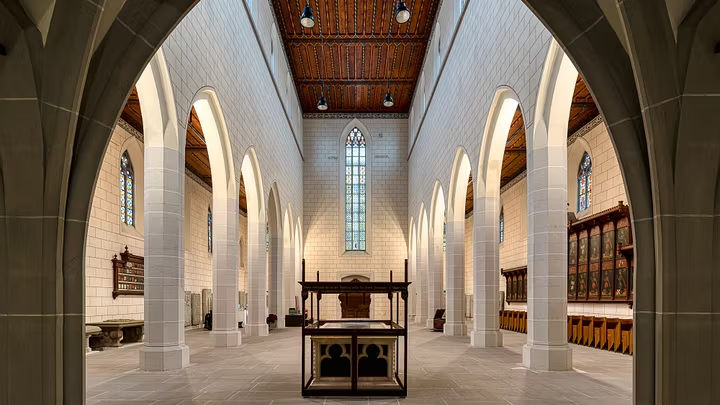
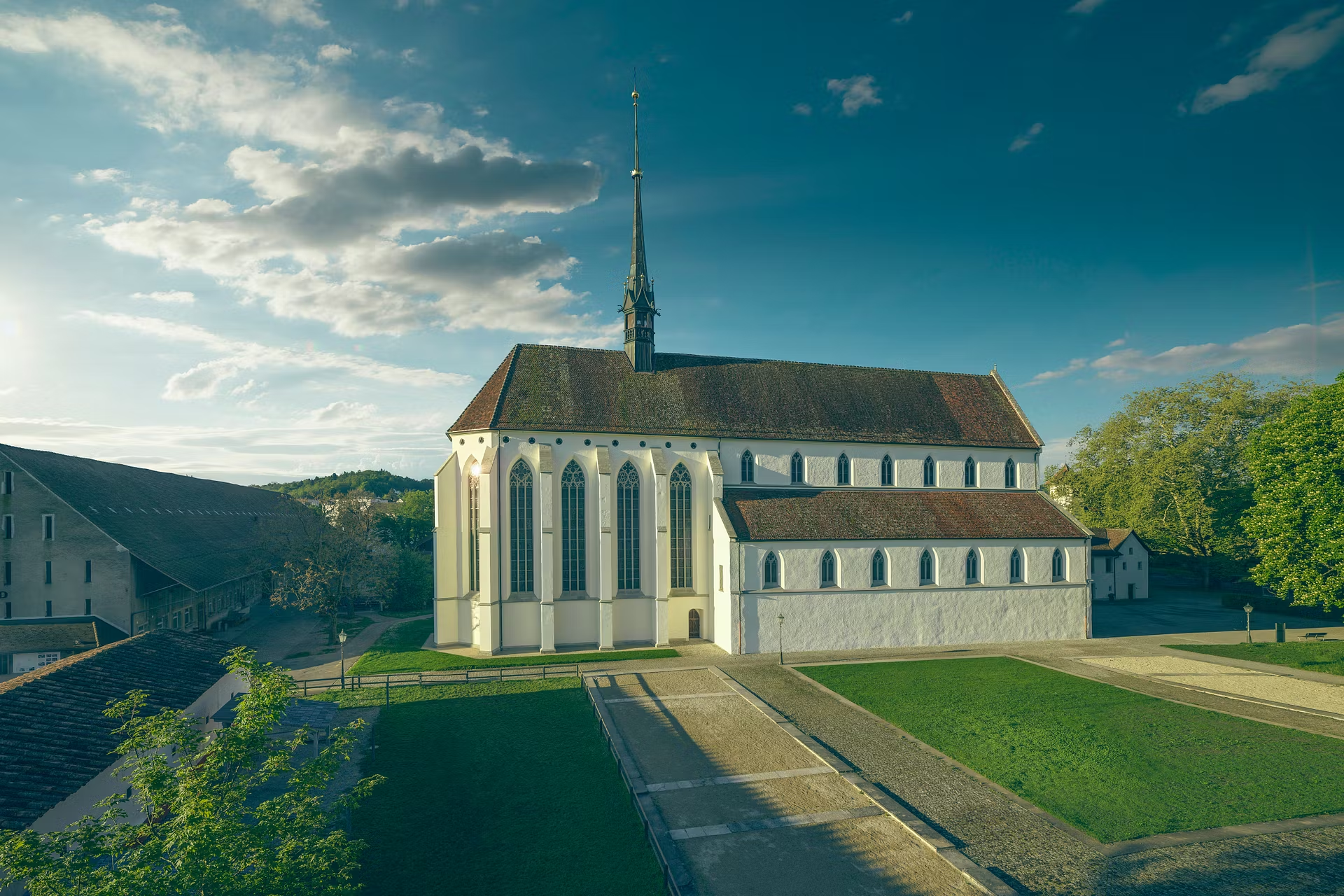
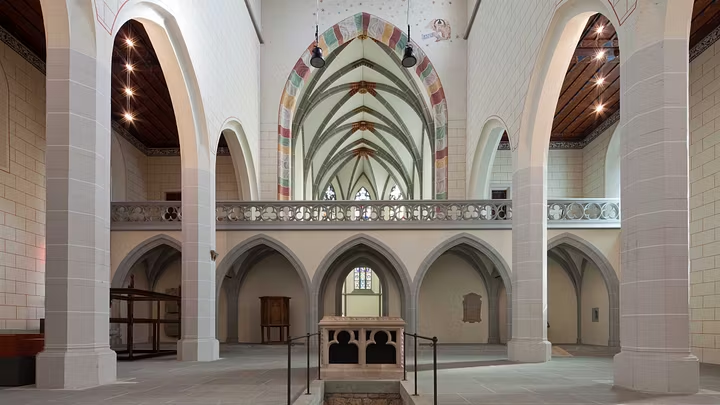
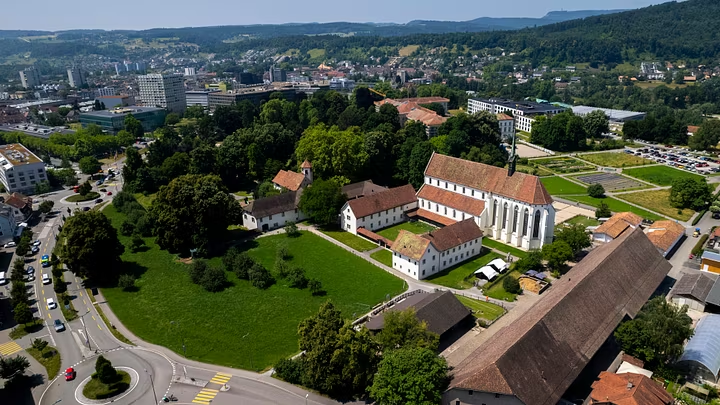
Königsfelden Abbey
A Habsburg place of remembrance
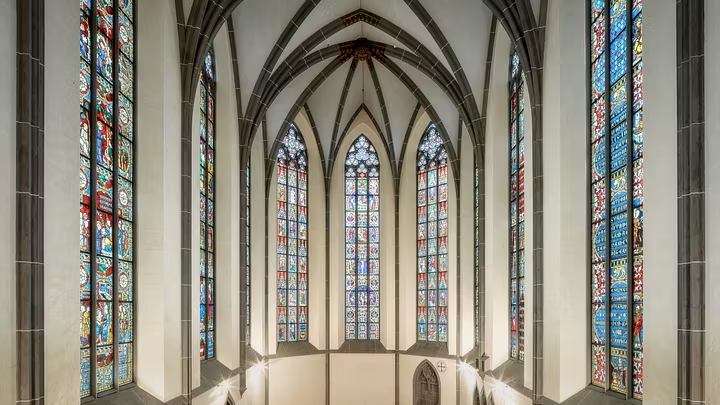
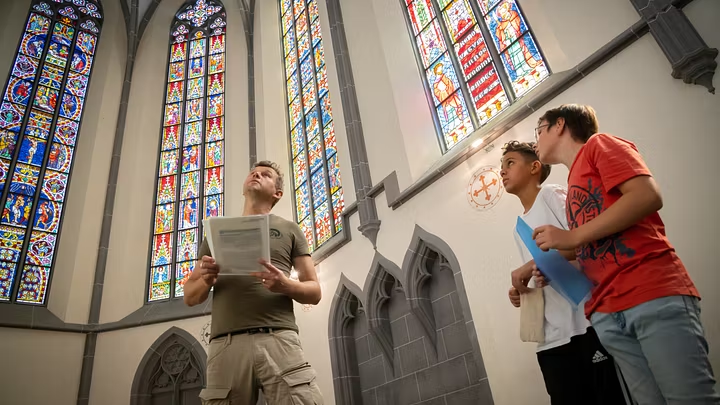
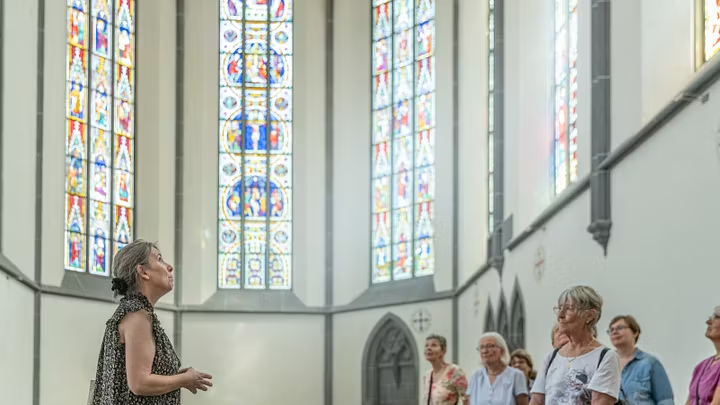
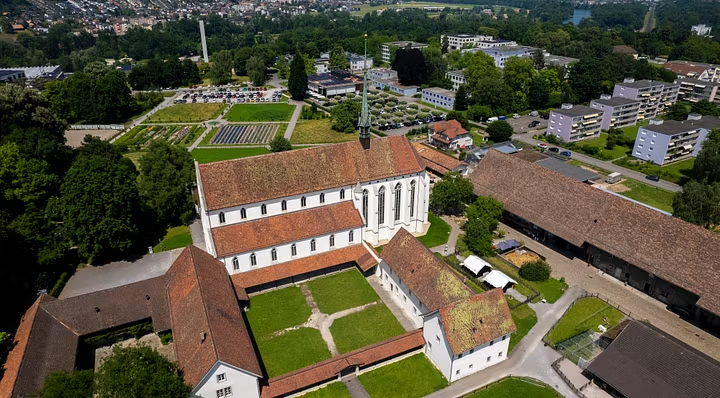
Königsfelden Abbey is internationally renowned for its stained glass windows from the Middle Ages. Exhibitions, guided tours and events bring the 700-year-old abbey church back to life.