Habsburg Castle

Excursions for families and children

Habsburg Castle offers great days out for families and children: discover secret corners and get to know former palace residents on the Habsburg Kings' Route! Habsburg Castle is an exciting destination for families and children whenever you visit: during the week, at weekends, in the holidays or on a rainy day. Well-equipped barbecue facilities in the nearby woods are the perfect place for a picnic. Opening hours 1 April to 1 November 2026 Tue – Sun, holidays: 10 am – 5 pm Mon: closed Winter: Open during restaurant opening hours Impressions

 
Hallwyl Castle

Contact

Address Schloss Hallwyl – Museum Aargau 5707 Seengen Tel. 0848 871 200 Send a message Organisation Museum Aargau Management Member Contact Dr. Marco Sigg Director E-Mail Sibylla Fischer Head of Marketing & Communications E-Mail Rahel Göldi Head of Museum Programme E-Mail Andrea Lehner Head of Guest Services E-Mail Thomas Lüscher Head of Operations & Administration E-Mail Dr. Rudolf Velhagen Head of Collection & Conservation E-Mail

 
Habsburg Castle

Museum and exhibitions

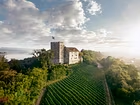
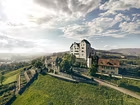
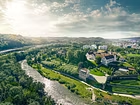
The Habsburgs exerted a profound influence on the history of Europe. From their ancestral castle in the canton of Aargau they created a global empire. Explore the castle and ruins and be inspired by this historic place. The original size of Habsburg Castle can only be guessed at today. The rear section of the former double castle still stands, but the remaining parts of the castle complex have largely fallen into disrepair over the centuries. An exhibition in the castle presents this construction and settlement history, as well as topics such as nutrition, water supply and living conditions. The Habsburg Kings' Route also offers a tour of the castle complex and audio points document the rise of the Habsburgs. Want to experience Habsburg Castle in its original state? Put on your VR glasses while you're here and experience a virtual 360-degree flight over the castle in around the year 1200! We recommend combining your visit with a royal meal in the Habsburg Castle restaurant (site in German). Opening hours 1 April to 1 November 2026 Tue – Sun, holidays: 10 am – 5 pm Mon: closed Winter: Open during restaurant opening hours COLLECTION Treasure trove of history Collection Site in German Collection online Egliswil Collection Centre Visit the collection Impressions

 
Hallwyl Castle

Collection

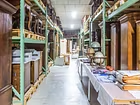
The Museum Aargau Collection has been assembled from various holdings since 1830. It consists of bequests from Aargau's castles and monasteries, numerous donations, objects acquired from company archives and targeted purchases. The Collection is constantly being expanded and documents Aargau's history in tangible form through objects that can be experienced. Collecting, preserving, researching Collecting, preserving and researching objects are among the core tasks of a museum. A collection strategy defines the criteria according to which objects are collected. When an object is added to the Collection, it is inventoried, documented and preserved for storage by experts. If necessary, it is restored. The objects thus form the basis for research and for exhibitions that use originals to make the past come alive. The items on show in the permanent and special exhibitions of Museum Aargau (including the castles) and other cultural institutions are a mere fraction of what is stored in the Egliswil Collection Centre. Numerous objects are waiting to be exhibited and shown off to the public in the coming years.

 
Habsburg Castle

Habsburg Castle restaurant

Enjoy fresh regional dishes in the Habsburg Castle restaurant. Dine like kings and queens! The Habsburg Castle restaurant offers a daily lunch menu and weekly dishes. In the evening the castle team will treat you to fine food and local wines by candlelight. The sunny terrace, with its view over the canton of Aargau, is popular in summer. Habsburg Castle restaurant (in German) Celebrate like kings and queens Looking for an exceptional location for your wedding, birthday party, seminar or other event? Habsburg Castle, with its restaurant, offers historic rooms for weddings, celebrations and seminars. Hire rooms Offers from Museum Aargau Enhance your event in the castle restaurant with a cultural journey back to the Middle Ages. Museum Aargau offers guided tours of the castle and a dinner with theatrical accompaniment. Hear exciting stories from illustrious former castle residents! Offers for groupes Enquiries and contact Habsburg Castle restaurant +41 56 441 16 73 Send a message Impressions

 
Habsburg Castle

Events

Experience Habsburg Castle! Events and public guided tours take place regularly at the castle. Calendar of events (in German) Contact +41 (0)848 871 200 Send a message Telephone availability: Tuesday to Friday 9 am - 12 pm / 1 pm - 4:30 pm November to March only in the morning

 
Hallwyl Castle

History

Construction history Residents Construction history The tower castle In the late 12th century the lords of Hallwyl am Aabach established a small castle complex 700 metres from the run-off at the northern end of Lake Hallwil. It consisted of a residential tower surrounded on three sides by a dry moat. Large boulders were placed at the outside of the tower walls, as is commonly found in castle towers in the region dating back to the same era or slightly later. There was also an inn serving the castle residents which was presumably older than the castle itself. As the Hallwyl family gradually grew in importance and reputation, the space afforded by the tower castle became too limited. This was remedied in around 1265 with the construction of the keep, which was erected directly on the bank of the stream east of the residential tower. Two rooms on the ground floor were used to store supplies. The first and second floors consisted of residential rooms. A bridge was built over the Aabach, possibly around the time the keep was constructed if not some time previously. More Less 12/13th c. The moated castle Johans I of Hallwyl (1305–1348) resided in the castle in the first half of the 14th century. He had the tower castle extended to create a moated castle with dual fortifications. In the marshes of the stream lowlands, an artificial island was banked up which had a curtain wall on three sides and was completely surrounded by moats. Newly erected features at this stage were the castle chapel, a wooden bakehouse and the circular tower which still stands today. After this, the Old Building was constructed: a large, two-storey residential edifice which was prestigious in character. The South Building - the predecessor to the Front Building - was also erected during this period. When Aargau was conquered by the Confederation in 1415, the castle was set on fire by Bernese troops. All that remained was the residential tower and some rooms in the keep at the rear of the castle. Reconstruction took several years and led directly to the extension of the complex. In around 1420/25 the keep was extended to the south on the rear island. More Less 1300-1425 Turrets, granary, western tract and northern tract In around 1500, Dietrich of Hallwyl (1462–1509) had turrets (dungeon tower, archive tower) built at the eastern corners of the rear island which had thick walls, arrow loops and embrasures. The Old Building was demolished in around 1520. Parts its walls were used to erect the granary that still stands today. At around the same time, the three-storey western tract was added to the Front Building. The two-storey northern tract was then added to the keep on the rear island in the third quarter of the 16th century. Burkhard III of Hallwyl (1535–1598) had extension work carried out from 1578 to 1590 to convert the castle into a manor house. Stair towers were built, facades were reconstructed and the festive hall in the rear section of the castle took on the form in which it still exists today. The castle barn likewise dates back to this period. More Less 1500-1590 The palace mill A mill was mentioned for the first time in the 14th century. Today's mill building dates back to 1637 and occupies a third island directly to the north of the castle complex. It consisted of a two-storey stone house with a gabled roof and was expanded in the 19th century. The grinding room was on the ground floor while the miller's residential quarters were on the upper floor. Today the grinding room with its three millstones is open to visitors as a museum. The modern building that replaced the former mill barn houses a transport ship dating back to the 16th century. More Less 17th c. The historicising reconstruction project Having already had various conversions and refurbishments carried out in the 1860s, Hans Theodor of Hallwyl (1835–1909) had the Front Building, the gateway tower and the western tract redesigned in neo-Gothic style from 1871 to 1873. When economic crisis forced him into bankruptcy in 1874, the interior decoration work was incomplete. Walther of Hallwyl acquired the family's ancestral home in order to preserve it. More Less 19th c. The architectural monument After being purchased by Walter of Hallwyl (1839–1921), who lived in Stockholm, Hallwyl Castle remained unused for three decades. Walter of Hallwyl's wife Wilhelmina, née Kempe, initiated an archaeological investigation, and from 1910 to 1916, the castle complex was restored according to the most advanced principles of monument preservation known at the time, including removal of the neo-Gothic conversions. Swedish archaeologist Nils Lithberg was commissioned to lead the excavations, while architect Anders Roland was entrusted with restoring the buildings. After the death of her husband, Wilhelmina of Hallwyl (1844–1930) established the Hallwil Foundation in 1925. This trustee organisation took on responsibility for the castle complex and opened it to the public. The castle museum In 1994 the castle was endowed to the canton of Aargau. It was in urgent need of general restoration and this was carried out under the supervision of a broadly based building commission from 1997 to 2004. The foremost principle of construction work was to preserve the historical fabric of the buildings. Wherever interference with the floors and historical structures was unavoidable, the canton's archaeological specialists conducted excavations and investigations beforehand. As construction work progressed, planning and realisation of the museum got underway. The permanent exhibition now illustrates the history of the Hallwyl family and its relations with the Seetal valley. More Less 1800-2004 Residents Johans I of Hallwyl Johans I (1305–1348) was a marshal, a guardian in Sundgau, and later a bailiff in Swabia and Alsace. He carried out important assignments for the Habsburg sovereigns and was the official educator of Duke Frederick. He later used his position to expand his power in Aargau. Johans I is regarded as the most powerful and most successful member of the Hallwyl family. It was he who had the Hallwyl tower castle enlarged to create a prestigious castle complex. More Less 14th c. Hans of Hallwyl Hans (1434–1504) had fought under the Habsburgs as well as under the Kings of Bohemia and Hungary. On 22 June 1476 he led the Bernese troops to victory at Murten against Charles the Bold, Duke of Burgundy, and went down in history as the Hero of Murten. More Less 15th c. Dietrich of Hallwyl Dietrich (1462–1509) established a farm and cultivated the land belonging to Hallwyl Castle himself. He had a fish pond created in the Schlatt and maintained a sound income from the sale of carp. More Less 15/16th c. Hartmann III of Hallwyl Hartmann III (1503–1573) studied theology under Wolfgang Capito in Basel and later went to the universities of Mainz and Leipzig. He welcomed Luther's revolutionary ideas, gave up his plans to become a priest and took up service as an envoy and emissary for the City of Bern. In 1546/47 he was an emissary of Bern in the Schmalkaldic War.Hartmann III (1503–1573) studied theology under Wolfgang Capito in Basel and later went to the universities of Mainz and Leipzig. He welcomed Luther's revolutionary ideas, gave up his plans to become a priest and took up service as an envoy and emissary for the City of Bern. In 1546/47 he was an emissary of Bern in the Schmalkaldic War. More Less 16th c. Burkhard III of Hallwyl Burkhard III (1533–1598) collected medical recipes, researched into his family's history and had several extensions and conversions carried out in Hallwyl Castle. He owned an experimental laboratory with distillation apparatus and supplies of medicines similar to that of an apothecary. In around 1580 he compiled more than 2,500 recipes in the 'Hallweil Book of Medicines' including the 'Genuine Hallwyl Magic Potion'. More Less 16th c. Johann Georg of Hallwyl At the instigation of his father Dietrich, Johann Georg (1544–1604) obtained a sinecure at the cathedral chapter in Basel in 1579. His training and his later period of office as bishop were influenced by the Jesuits: he was said to be strictly devout, eager for reform and unselfish. In 1601 he was unanimously voted bishop of the largest bishopric in the German-speaking region by the cathedral chapter of Constance. More Less 16/17th c. Bernhardine of Hallwyl Bernhardine, née Diesbach (1728–1779), came from a wealthy Bern family and married the 55-year-old Johannes of Hallwyl when she was aged 16. After the latter's death, she suffered considerably due to the loss of her daughter, fear for her sick sons and her own infirmity. More Less 18th c. Franziska Romana of Hallwyl Franziska Romana, née Hallwyl (1758–1836), married her cousin Abraham Johannes and was Lady of the Castle as a widow for more than 50 years. Born into a period of upheaval, she witnessed the downfall of the Ancien Régime, the French Revolution and the foundation of the canton of Aargau. She followed all these developments with great interest. More Less 18/19th c. Karl Franz Rudolf of Hallwyl Karl Franz Rudolf (1777–1852) served under the Russian Tsar and became a captain in the artillery battalion of the Imperial Guard. After his return to Hallwyl Castle he was Lord of the Castle for 40 years, becoming a citizen and colonel of Aargau as well as being voted onto the Grand Council. The family lost many of its privileges in the aftermath of the Helvetic Revolution. Karl Franz Rudolf fought countless legal battles to defend his family's rights, causing him to amass considerable debt. In 1833 he was finally forced to sell the castle mill. More Less 18/19th c. Wilhelmina of Hallwyl The wife of Walter of Hallwyl (1839–1921) was the daughter of a Swedish industrialist. During the course of her life she assembled an extensive collection of paintings, porcelain, silver, weapons and utility objects. These can be viewed by the public today at Hallwyl Museum in Stockholm. Wilhelmina of Hallwyl (1844–1930) invested most of her large inheritance in the restoration and documentation of Hallwyl Castle from 1910 to 1916. After her husband's death she established the Hallwil Foundation in 1925. This trustee organisation took on responsibility for the castle complex and opened it to the public. More Less 18/19th c.

 
Hallwyl Castle

Excursions for families and children

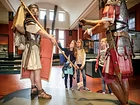
Hallwyl Castle offers great days out for families and children. Discover secret corners and solve tricky puzzles. Hallwyl Castle is an exciting destination for families whenever you decide to visit: during the week, at the weekend, in the holidays or on a rainy day. All exhibitions are also suitable for children. There are barbecue facilities in the surrounding area for a picnic. Offers for children (in German) Opening hours 1 April to 1 November 2026 Tue – Sun, holidays: 10 am – 5 pm Mon: closed Impressions

 
Lenzburg Castle

Collection

The Museum Aargau Collection has been assembled from various holdings since 1830. It consists of bequests from Aargau's castles and monasteries, numerous donations, objects acquired from company archives and targeted purchases. The Collection is constantly being expanded and documents Aargau's history in tangible form through objects that can be experienced. Collecting, preserving, researching Collecting, preserving and researching objects are among the core tasks of a museum. A collection strategy defines the criteria according to which objects are collected. When an object is added to the Collection, it is inventoried, documented and preserved for storage by experts. If necessary, it is restored. The objects thus form the basis for research and for exhibitions that use originals to make the past come alive. The items on show in the permanent and special exhibitions of Museum Aargau (including the castles) and other cultural institutions are a mere fraction of what is stored in the Egliswil Collection Centre. Numerous objects are waiting to be exhibited and shown off to the public in the coming years.

 
Hallwyl Castle

Bistro

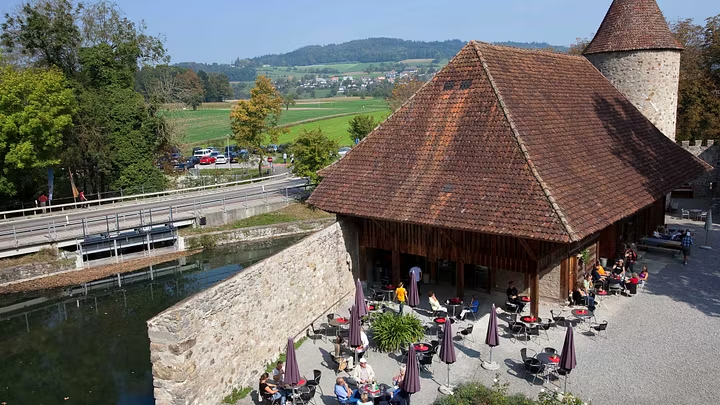
Enjoy the unique atmosphere of Hallwyl Castle in the bistro or in the atmospheric courtyard. We use regional and Swiss products wherever possible. The café at Hallwyl Castle is also a great spot for a break on your walk by the lake. You can visit the castle bistro with admission to the courtyard or museum . CHF as well as credit cards (including Postcard, Maestro, Visa and Mastercard) are accepted. Download Drinks and menu (in German) Bistro offers for groups For groups (6 to 25 persons) we offer individual selections in the bistro to order. Download Offers in the bistro for groups (in German) Book a guided tour too Round off your visit to the bistro with a guided tour of Hallwyl Castle. Our advice & sales team will be happy to advise you. Contact us !

Gradian
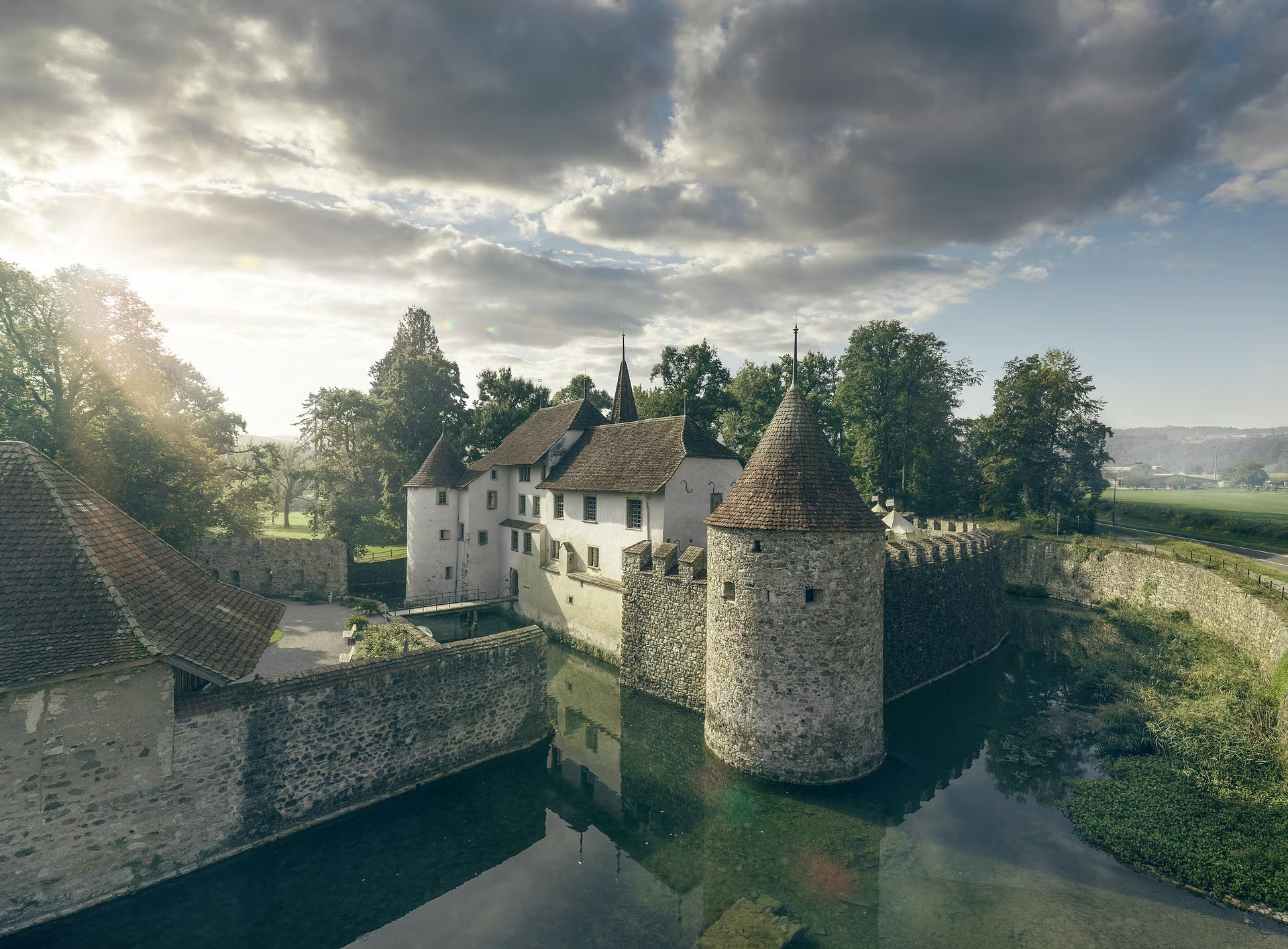
Aussenaufnahme Schloss Hallwyl

Hallwyl Castle

Where culture
meets nature

Discover Hallwyl Castle on Lake Hallwil! The moated castle in the canton of Aargau is one of the most beautiful castles in Switzerland.
PLANNING YOUR VISIT

 
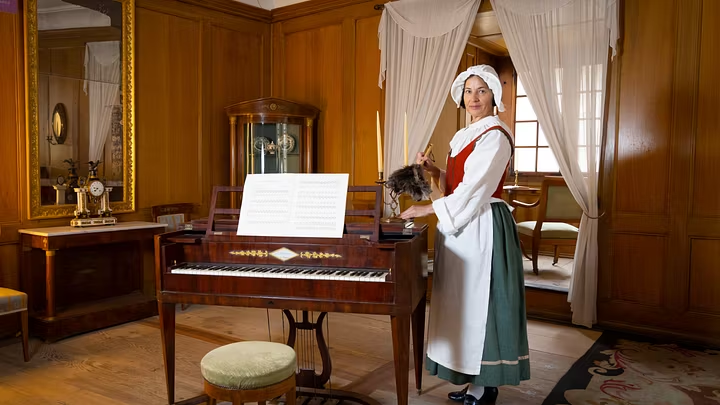
Eine mittelalterlich gekleidete Magd steht in einem eingerichteten Wohnzimmer im Museum von Schloss Hallwyl

Museum and
exhibitions

Museum of the history of the von Hallwyl family  

 
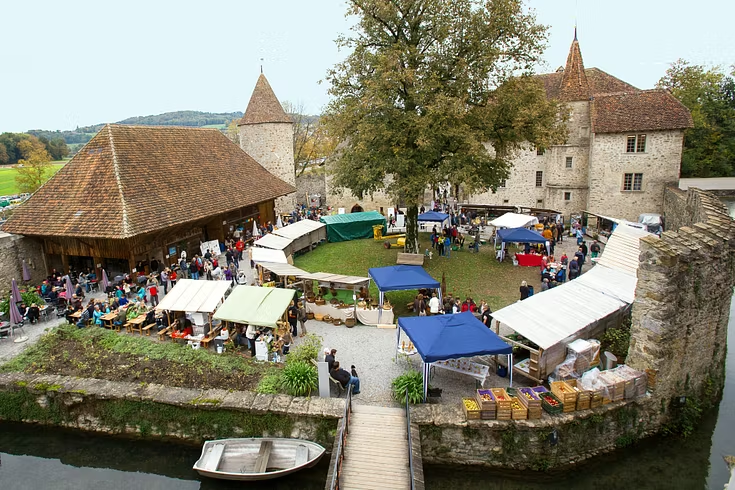
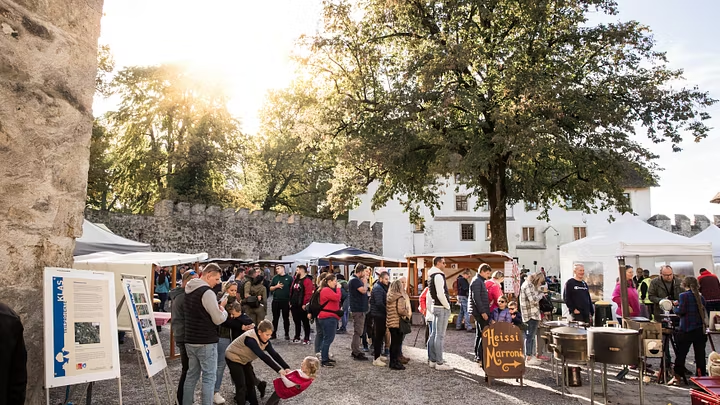
Blick in den Innenhof von Schloss Hallwyl an den Mosttagen. Viel Volk rund um Marktstände.

Events and public
guided tours

Calendar of events (in German)  

 
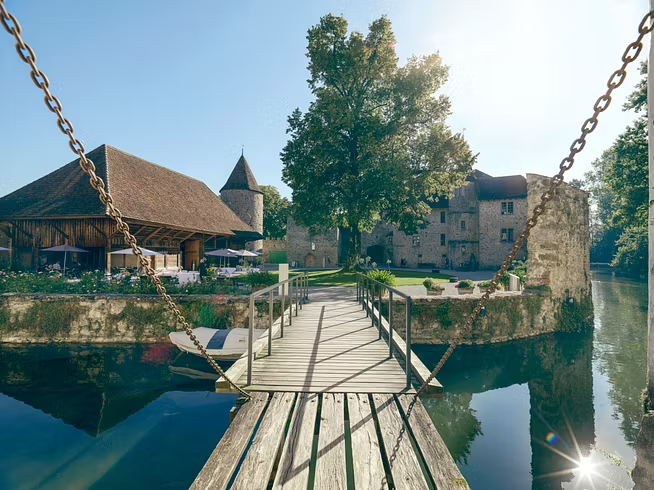
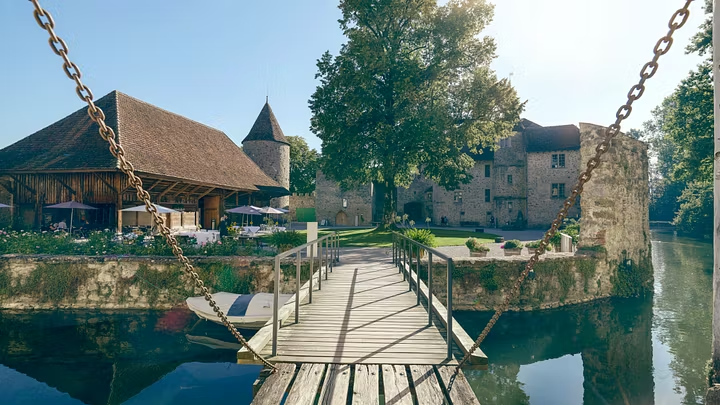
Brücke zum wunderschön Schlosshof Schloss Hallwyl

Opening hours
and entrance fees

Open from April to October  

 
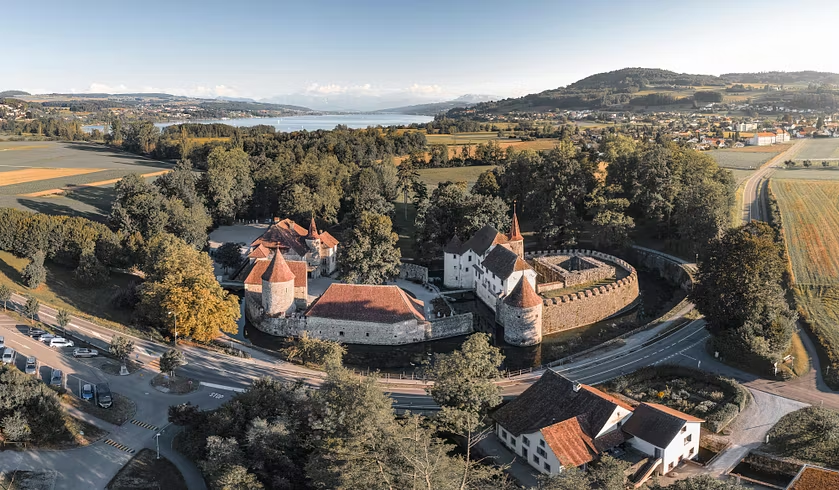
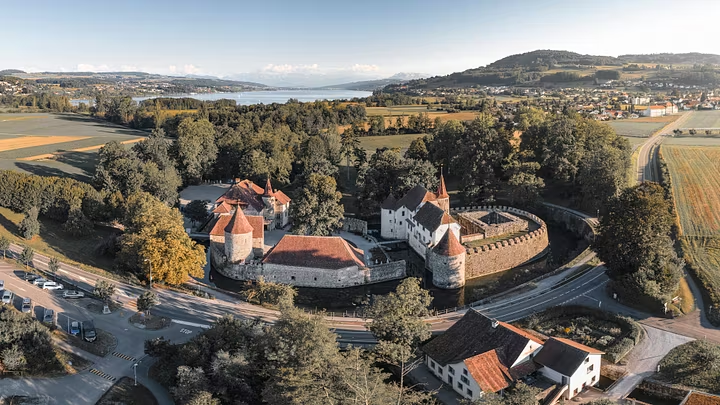
Luftaufnahme von Schloss Hallwyl mit Hallwilersee im Abendlicht

Getting
here

Directions  

SCHOOLS, FAMILIES AND GROUPS

 
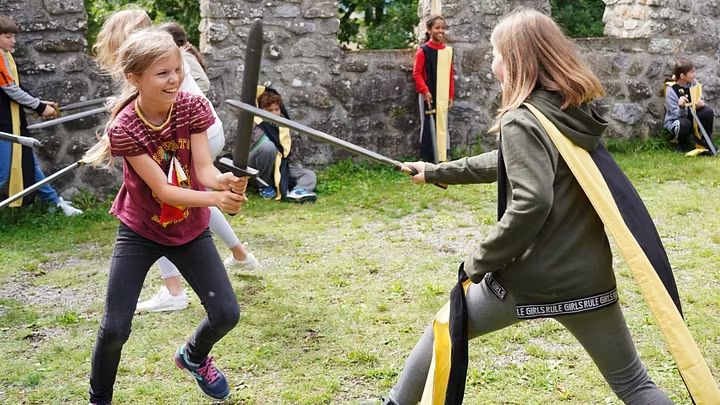
Workshop "Feste Burg Schloss Hallwyl" Kinder haben zusammen spass im Schwertkampf mit Zinnen im Hintergrund

For
schools

Tours and workshops  

 
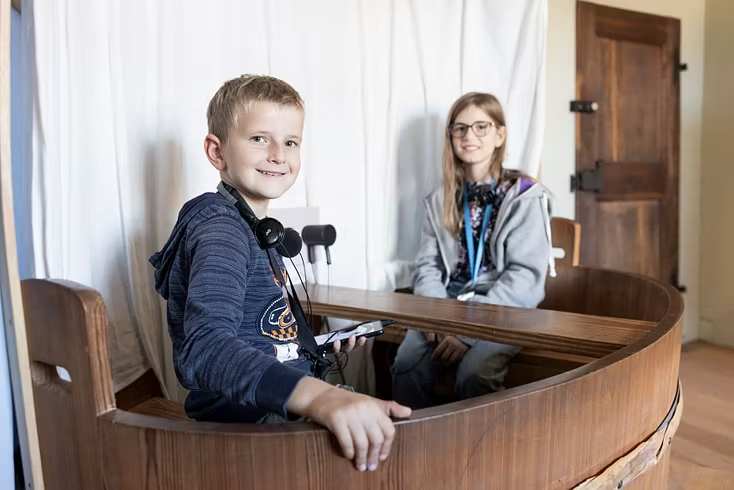
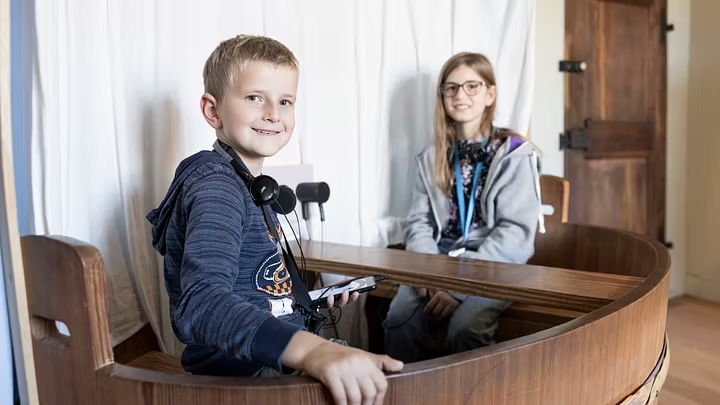
Ein Bub und ein Mädchen sitzen mit Kopfhörern in einem kleinen Schiff in der Ausstellung von Schloss Hallwyl. Der Bub blickt direkt in die Kamera.

For
families

Secret corners and tricky puzzles  

 
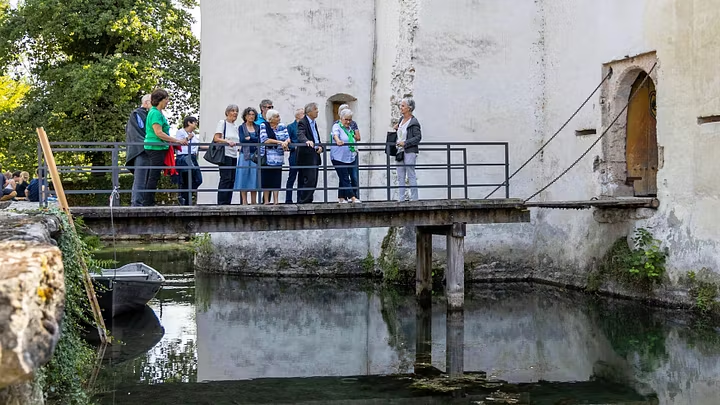
Führung auf Schloss Hallwyl: Eine Besuchergruppe steht auf einer Brücke zwischen Hof und dem Eingang zu Schloss Hallwyl, unter der Brücke Wasser des Schlossgrabens und ein Boot.

For
groups

Tours and workshops  

HISTORY AND COLLECTION

 
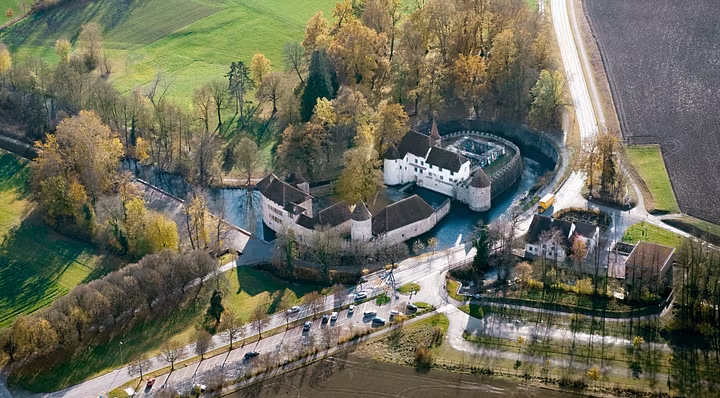
Luftaufnahme Schloss Hallwyl mit Aabach

History

800 years of history  

 
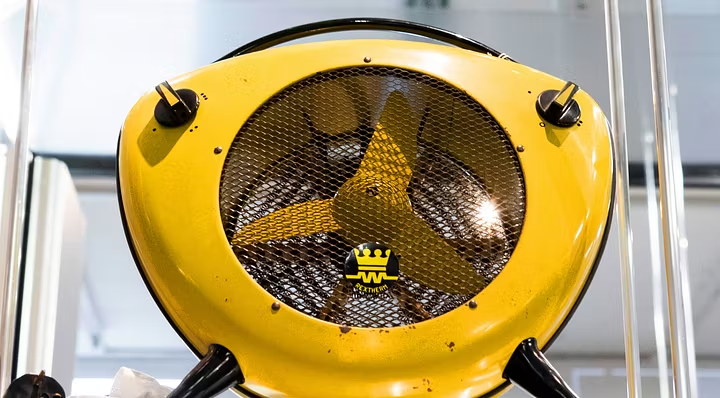
Ein gelber Heizlüfter, Objekt im Sammlungszentrum Egliswil

Collection

Treasure trove of Aargau's history  

 
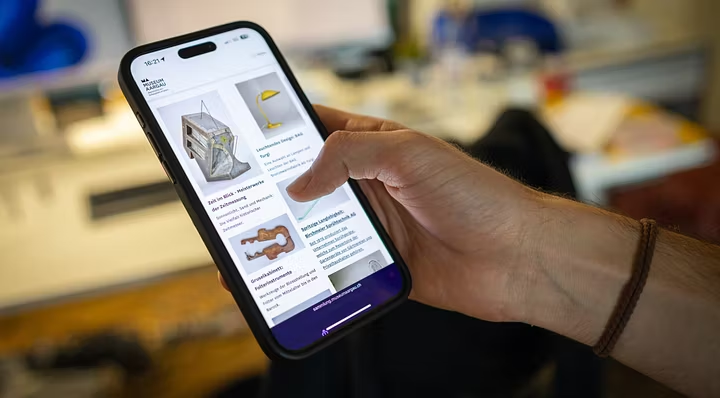
Grosses Handy in der Hand eines Benutzers, auf dem Bildschirm ist die "Sammlung online" von Museum Aargau dargestellt.

Collection online

Site in German  

Impressions

Luftaufnahme von Schloss Hallwyl mit Hallwilersee im Abendlicht
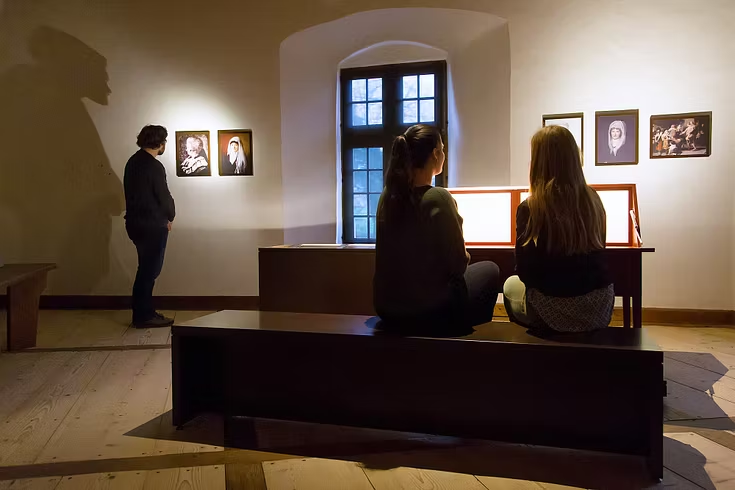
Besucher und Besucherinnen in der Dauerausstellung Schloss Hallwyl
Brücke zum wunderschön Schlosshof Schloss Hallwyl
Ein Bub und ein Mädchen sitzen mit Kopfhörern in einem kleinen Schiff in der Ausstellung von Schloss Hallwyl. Der Bub blickt direkt in die Kamera.
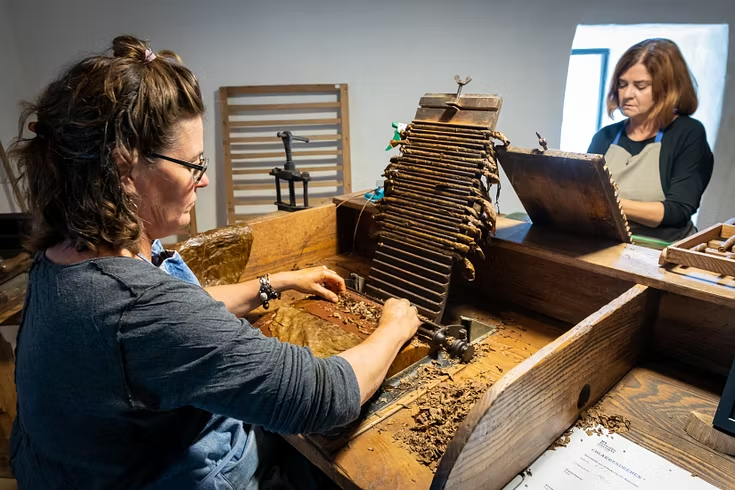
Zwei Frauen rollen auf Schloss Hallwyl Zigarren.
Luftaufnahme Mosttage Schloss Hallwyl: Viele Marktstände und Menschen im Hof.