Directions to Vindonissa Museum Address Vindonissa Museum – Museum Aargau Museumstrasse 1 5200 Brugg Tel. 0848 871 200 Contact Arrival by public transport and car Arriving by train and bus The Vindonissa Museum is well served by public transport. For larger events especially, we recommend travelling by train and bus. There are direct train connections from Zurich, Basel and Bern to Brugg. There are several bus lines to the museum. The nearest bus stop is "Brugg, Eisi", which is served by line 374 from the railway station. The Vindonissa Museum can be reached on foot in about 7 minutes. To the SBB
Legionärspfad Vindonissa – Museum Aargau Königsfelderstrasse 265 5210 Windisch Tel. 0848 871 200 Send a message Organisation Museum Aargau Management Member Contact Dr. Marco Sigg Director E-Mail Sibylla Fischer Head of Marketing & Communications E-Mail Rahel Göldi Head of Museum Programme E-Mail Andrea Lehner Head of Guest Services E-Mail Thomas Lüscher Head of Operations & Administration E-Mail Dr. Rudolf Velhagen Head of Collection & Conservation E-Mail
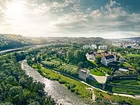
The discovery of the North Gate (porta decumana) in 1905 was a major breakthrough for early Vindonissa research. Any remaining doubts were finally dispelled: Vindonissa really had been a legionary camp and not a civil settlement. The gate is situated at the northern periphery of the Windisch plateau, directly above the slope running down to the River Aare. From here there is an impressive view to the north where the Aare cuts through the Jura Mountains. The Romans had clearly identified the outstanding strategic position of the plateau at the confluence of the Aare, Reuss and Limmat rivers and
The residential building of a high-ranking officer with a surface area of some 1,100 m2 was situated directly on the main camp road running from east to west (via principalis). In pre-Roman times a huge trench from a Celtic fortification had been located here. The Romans removed the fortification wall and filled the trench so as to be able to build their camp on it. As the centuries passed the fill layers in the Celtic ditch gradually sunk down, causing the excavation layers from Roman times to subside as well. Go underground and explore this roman site Today, visitors to the Legionary Trail go
The aqueduct of Vindonissa now supplies a water fountain, making it the oldest structure in Switzerland that still performs its original function. Using innovative surveying technology, the legionaries were able to construct the aqueduct over a stretch of 2.4 kilometres with a gradient of just 4‰. The fresh water system supplied water for drinking, cooking and other domestic purposes for some 6,000 legionaries, auxiliary troops, horses and mules. It would not have been possible to live in the legionary camp without this fresh water supply. The aqueduct is a technological masterpiece: groundwater
Directly at the intersection of the two main roads (Via principalis and Via praetoria) was the staff building (principia), the largest building within the camp. One of its central rooms was the flag shrine. In front of it was a portico that led to a large courtyard where there was an altar and a water basin, which was probably used for washing during sacrificial rites. Dazzling emblems The standards were placed in the flag shrine. These included the unit standards, adorned with dazzling decorations, and the flags (vexilla) for smaller units and cavalry. Of particular importance was the image of
The large sewer ran along the western front of the legionary camp, immediately adjacent to the camp wall. It lay under the road parallel to the camp wall (via sagularis) and formed part of an extensive subterranean sewage system. The system as a whole is estimated to have been more than five kilometres long, running through the entire camp. Built out of stone, the drains were used for the latrines, thermal baths and well overflows, also ensuring fast drainage of water from the roofs and roads when it rained. The large sewer collected the effluent from the smaller side drains, allowing it to flow
The accurately soldiers' quarters (contubernia) are absolutely unique in Europe and offer overnight stays for families, schools and groups. They have been reconstructed using wood, clay and limestone based on the methods that would have been deployed between 30 and 45 AD. During this period, the 13th Legion was stationed at Vindonissa with approx. 5,000 to 6,000 soldiers. The contubernia reproduced here were built entirely by hand – just as the legionaries themselves would have built the originals. The materials used, the construction techniques and the dimensions have been recreated as faithfully
A legionary camp had four camp gates (portae), through which the two main roads led into the camp: the front gate (porta praetoria), the rear gate (porta decumana) and the two side gates (portae principales). The West Gate at Vindonissa was much more elaborately designed than the North and South Gate, featuring two large polygonal side towers. This was due to its position: it was here that the main roads from Gaul, Italy and Germania led into the camp. The two towers, whose foundation walls still survive, were octagonal in shape and would probably have extended to a height of some 20 metres
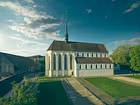
Königsfelden convent church was once the centrepiece of a large, substantial double monastery resided in by the mendicant orders of the Franciscans and the Clarists. Not only did the lives of the monks and nuns revolve around it, it was also planned as a place of commemoration for the murdered King Albrecht and the Habsburg dynasty. The convent church The Habsburg Queen Elisabeth of Carinthia, Gorizia and Tyrol founded Königsfelden Abbey more than 700 years ago. She did so in response to the murder of her husband, King Albrecht I of Habsburg, in the year 1308. The Abbey was built as a place of
12 out of 20
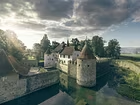
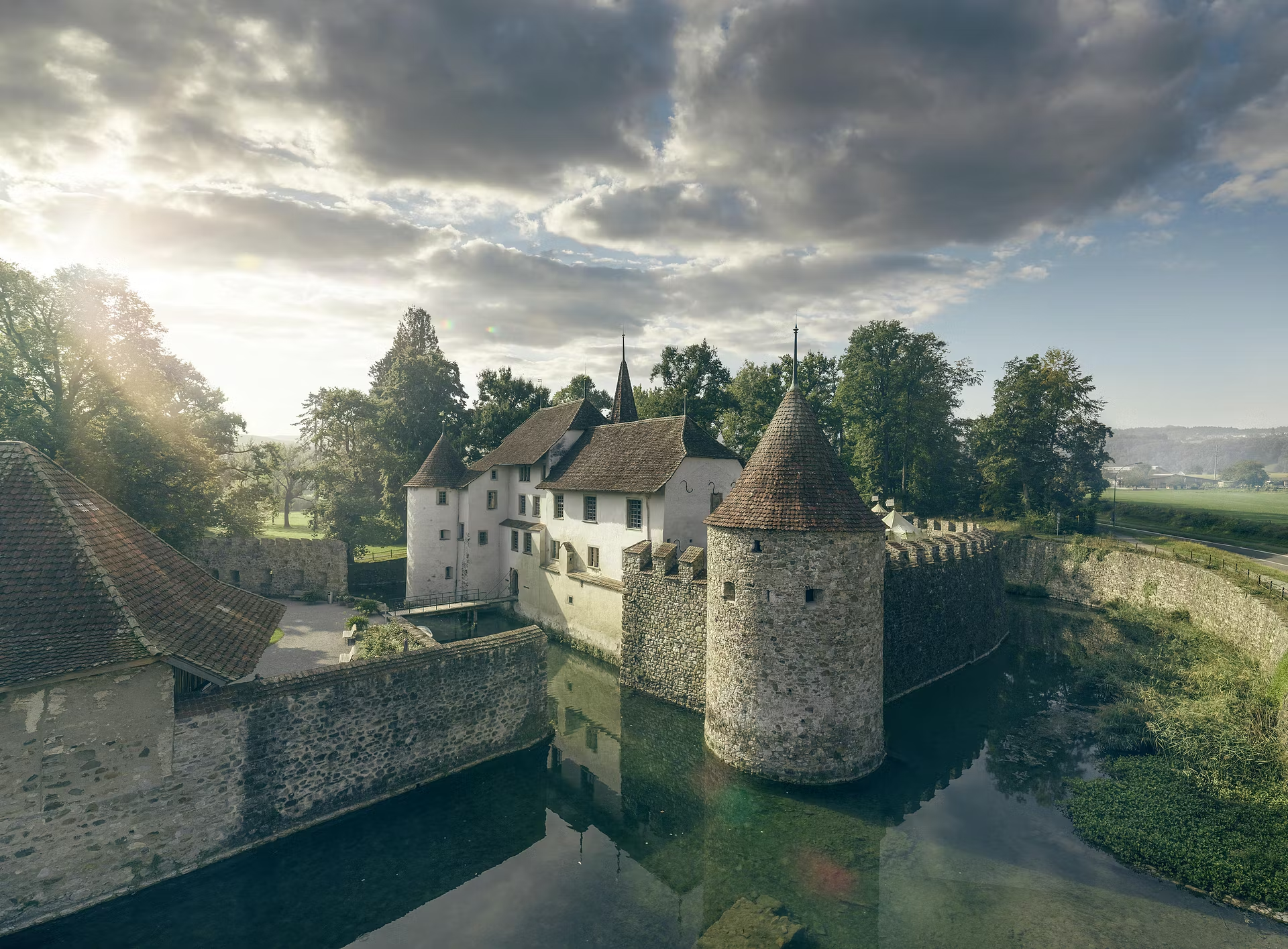
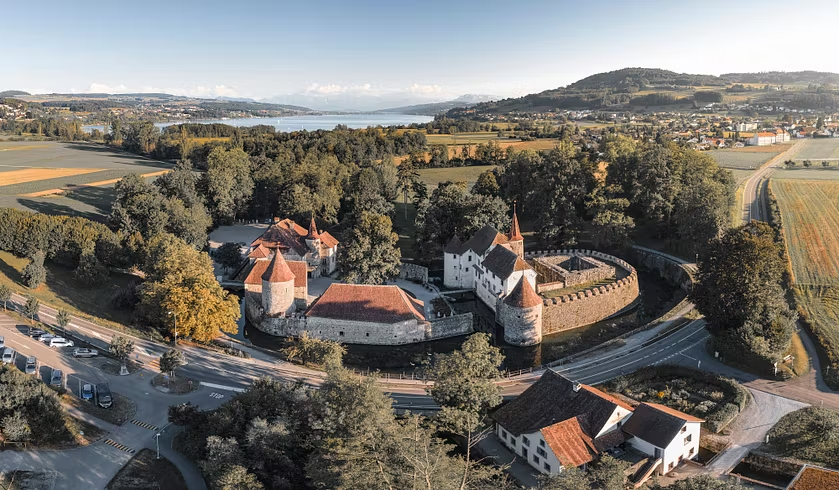
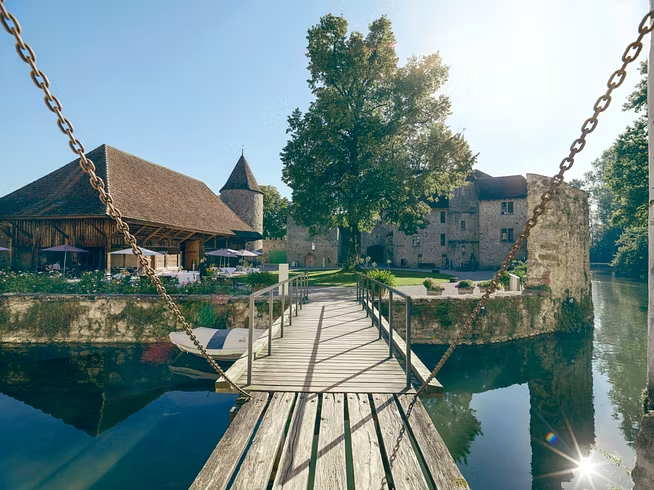
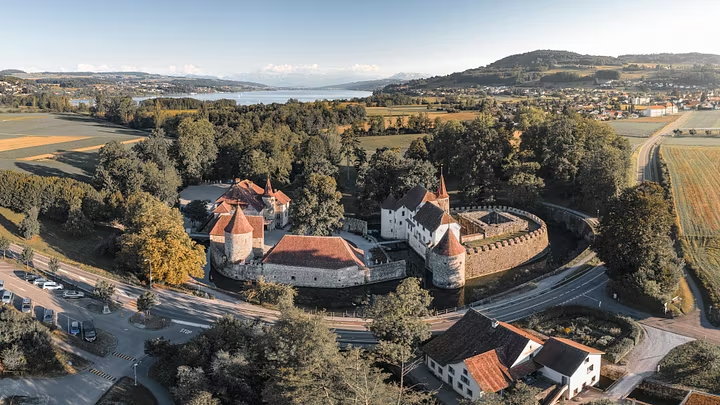
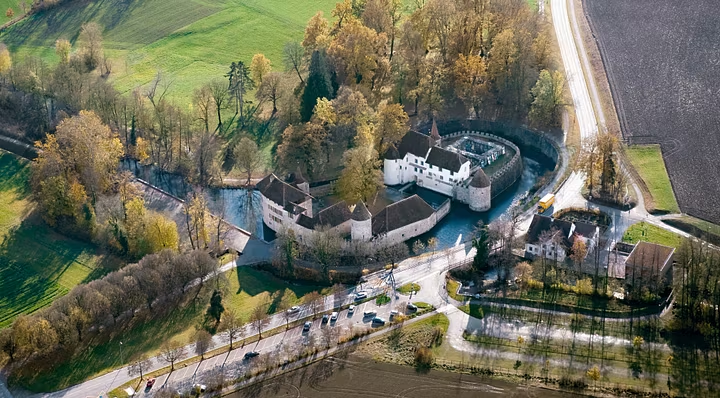
Hallwyl Castle
Where culture meets nature
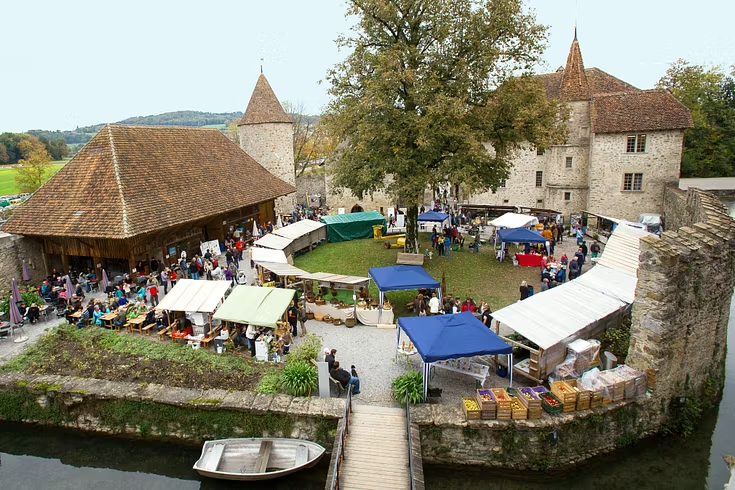
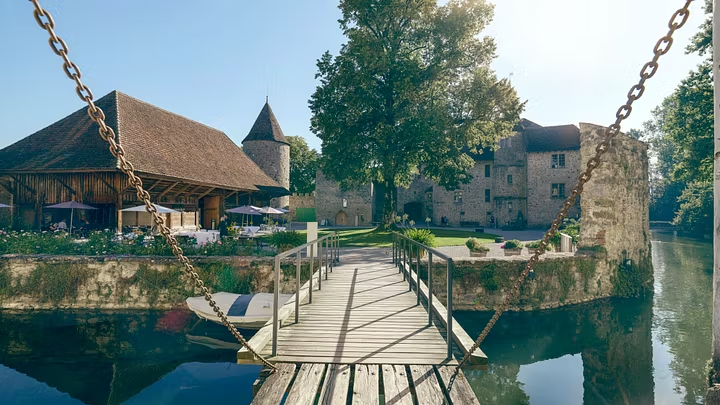
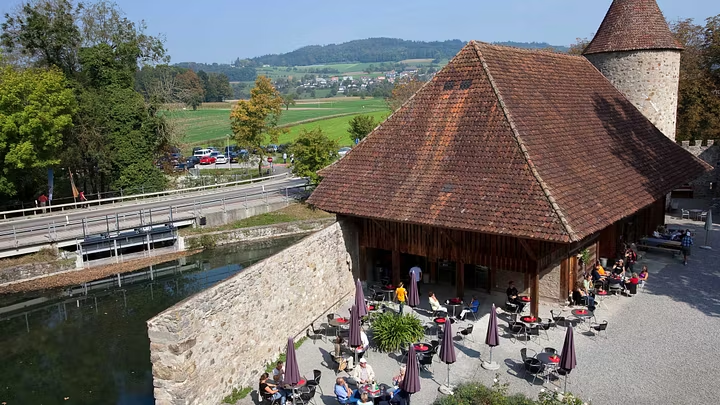
Discover Hallwyl Castle on Lake Hallwil! The moated castle in the canton of Aargau is one of the most beautiful castles in Switzerland.