Königsfelden Abbey

Sammlung

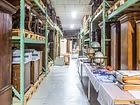
The Museum Aargau Collection has been assembled from various holdings since 1830. It consists of bequests from Aargau's castles and monasteries, numerous donations, objects acquired from company archives and targeted purchases. The Collection is constantly being expanded and documents Aargau's history in tangible form through objects that can be experienced. Collecting, preserving, researching Collecting, preserving and researching objects are among the core tasks of a museum. A collection strategy defines the criteria according to which objects are collected. When an object is added to the Collection, it is inventoried, documented and preserved for storage by experts. If necessary, it is restored. The objects thus form the basis for research and for exhibitions that use originals to make the past come alive. The items on show in the permanent and special exhibitions of Museum Aargau (including the castles) and other cultural institutions are a mere fraction of what is stored in the Egliswil Collection Centre. Numerous objects are waiting to be exhibited and shown off to the public in the coming years.

 
Königsfelden Abbey

Abbey complex

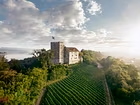
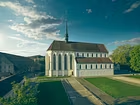
Königsfelden convent church was once the centrepiece of a large, substantial double monastery resided in by the mendicant orders of the Franciscans and the Clarists. Not only did the lives of the monks and nuns revolve around it, it was also planned as a place of commemoration for the murdered King Albrecht and the Habsburg dynasty. The convent church The Habsburg Queen Elisabeth of Carinthia, Gorizia and Tyrol founded Königsfelden Abbey more than 700 years ago. She did so in response to the murder of her husband, King Albrecht I of Habsburg, in the year 1308. The Abbey was built as a place of commemoration in order to attain the salvation of King Albrecht and other deceased family members. This can still be seen today in the cenotaph with the vault beneath it, though the latter no longer contains any tombs. Ten other Habsburgs were buried here after Queen Elisabeth. The church is a basilica. This type of building comprises a nave that is divided into three sections: the raised central aisle, illuminated with its own windows, and two smaller aisles. The nave leads into the chancel, in front of which there is a barrier or rood screen. The chancel is the central climax of the church structure - not only due to the stained glass windows but also in architectural terms. The keystone at the centre of the ceiling shows Jesus Christ with the inscription "Rex Albertus" (King Albrecht) on the side. The high altar of the monastery church once stood below this. The murdered king is therefore present at the very sanctum of the church. A basin - the so-called piscina - is mounted on the right in the south wall: this was used for liturgical hand washing. Alongside this, the seats of the priests are hewn in stone. Some parts of the chancel floor are original and date back to the 14th century. Missing sections have been replaced in the same style. Other features A very rare object is to be seen immediately next to the cenotaph. It is a mobile wooden pulpit which was analysed in 2011. It dates back to the foundation period of the Abbey 1314–1330). There are very few pulpits of this kind that are still preserved today. The nave contains numerous tomb slabs. Most of these date back to the period of Bernese rule, some of them to the Middle Ages. A painted panel dating back to the 17th century can be seen on the wall of the northern side aisle. At the centre it shows Duke Leopold III of Habsburg. He is flanked by 27 knights, all of whom fell with him at the Battle of Sempach in 1386. Leopold III was the last to be buried in the Habsburgs' Königsfelden vault. On the opposite wall here is another panel with the coat of arms of the Bernese administrators or Hofmeister who were in charge of the monastery when Habsburg rule came to an end. If you look from the chancel down the nave, you will see a walled up door on the left under the window near the entrance. It used to link the women's convent to the church, leading to a nun's gallery which no longer exists. The gallery enabled the nuns to take part in mass in the church. The Abbey complex A walk around the convent church leads through the monastery estate where Franciscan monks and Clarist nuns once lived. Originally the church had a convent on each side: to the north was the Franciscan convent, of which only the so-called archive vault was spared demolition in 1870, though the actual purpose of this room is still not known. It contains wall paintings showing the knights who fell at the Battle of Sempach in 1386. These paintings provided the basis for the wooden panels made in the 17th century that can now be seen in the nave of the convent church. The remaining sections of the Franciscan convent are marked by means of stone slabs inserted in the floor. Parts of the nuns' convent are still standing to the south of the church, such as the cloister. The extent of the surrounding buildings as they stand today only gives an approximate impression of the monastery buildings that once stood on this side. Returning back to the church, the walk leads through a former inn which consists of various structures. These were newly built in the Bernese period or else entirely overhauled: they are the Administrator's Residence (Hofmeisterei) with its striking stair tower and the Renaissance gateway. In the Middle Ages, the entire area west of the church facade was surrounded by ancillary buildings belonging to the grand Königsfelden Abbey.

 
Königsfelden Abbey

Stained glass windows

A place of commemoration for the Habsburg family was created at the scene of King Albrecht I's murder. The stained glass windows of the church of Königsfelden Abbey reflect the very highest level of craftsmanship at the time and contributed to the renown of the monastery as a whole. Created between 1320 and 1360, the windows are among the most outstanding specimens of European stained glass in the Late Middle Ages. The window cycle The chancel windows were donated by family members of the murdered King Albrecht I such as his wife Elisabeth, his daughter Agnes and his sons. Their images are to be found on certain windows. In spite of some damage on the south side of the chancel, none of the windows has been entirely lost. Königsfelden Abbey thus possesses a virtually complete series of images. The chancel windows The image series in the chancel is structured in pairs on opposite sides. On the northern side (left) the windows show scenes from the lives of St. Anna and St. Francis, founder of the Franciscan order. These correspond to the figures on the southern side (right): St. Clare, founder of the Clarists, and next to her St. Nicholas. These are followed by images of the apostles on opposite sides. The Franciscans were very much oriented towards the apostles as direct witnesses of the life of Jesus. There then follows the pair of windows showing St. Paul and Mary as well as John the Baptist and St. Catherine. Since it reflects diverse and in some cases shared connections between the founder family and the order, the programme was probably compiled by order theologians and Habsburg scholars. The apse The central point and culmination of the chancel is the Passion of Christ – the crucifixion. To the left of this we see Jesus' childhood up to his baptism by John the Baptist. The resurrection and the miracle of Pentecost are shown on the right. Preservation and restoration The stained glass windows did not survive such an eventful history unscathed. Various conversions and installations in the nave led to the destruction of the windows there: these showed selected representatives of the House of Habsburg. The chancel windows were also affected by this. However, they were either renewed according to contemporary practice or replaced with different panes. Glass painter Richard Nüscheler undertook a thorough renewal of the windows between 1896 and 1900. He reconstructed the windows as best he could based on the original conception. The extensive restoration and conservation of the chancel windows carried out from 1988 to 2002 followed this reconstruction with a few exceptions. The window cycle (in German) (2 MB)

 
Wettingen Abbey

Collection

The Museum Aargau Collection has been assembled from various holdings since 1830. It consists of bequests from Aargau's castles and monasteries, numerous donations, objects acquired from company archives and targeted purchases. The Collection is constantly being expanded and documents Aargau's history in tangible form through objects that can be experienced. Collecting, preserving, researching Collecting, preserving and researching objects are among the core tasks of a museum. A collection strategy defines the criteria according to which objects are collected. When an object is added to the Collection, it is inventoried, documented and preserved for storage by experts. If necessary, it is restored. The objects thus form the basis for research and for exhibitions that use originals to make the past come alive. The items on show in the permanent and special exhibitions of Museum Aargau (including the castles) and other cultural institutions are a mere fraction of what is stored in the Egliswil Collection Centre. Numerous objects are waiting to be exhibited and shown off to the public in the coming years.

 
Wettingen Abbey

Excursions for families and children

Wettingen Abbey offers great attractions for children and families: discover secret corners and solve the mystery of an incident in the year 1762. Offers for children (in German) Opening hours 1 April to 1 November 2026 Tue – Sun, holidays: 10 am – 5 pm Mon: closed

 
Wettingen Abbey

Abbey church

Wettingen Abbey church is divided by an imposing rood screen into a spiritual and a secular area: The converse church (rear part of the nave) was already open to the public when the abbey still existed. The red-brown rood screen, with its magnificent altars and paintings, provides a ceremonial setting for church services, concerts or weddings. The monks' church (front section of the nave) was reserved for the monks and clergy. The abbey church can be visited freely, and church services are held here regularly. The monks' church is part of the museum (admission fee payable). For more information, see Opening hours and admission fees . Museum Aargau also offers guided tours for groups and schools . The church can be rented for church weddings and baptisms as well as other events (including concerts). Exterior appearance of the abbey church The exterior of the church still preserves much of its sober early Gothic layout from the 13th century, but shows the interventions of modern times. The portal on the porch, renewed in 1760, adds a special Baroque touch, with a group of figures of Our Lady and the founders of the order, St. Bernard and Robert of Molesme. The ridge turret crowned by an onion dome dates from the same period. Next to the main portal is a plaque in honour of Alberich Zwyssig, composer of the Swiss Psalm and Cistercian monk. Converse church (lay church) The basic Gothic structure of the church can still be seen in the ribbed vaulting of the side aisles and the row of columns with pointed arches. The interior of the Romanesque-Gothic basilica has been fitted out in the Baroque style. Ornamental bands and stucco figures of saints, on the other hand, are later additions. The rich illustration follows clear rules. View into the converse church. (Wettingen Cantonal School) The abbey owes its name and coat of arms to its founding legend (see abbey history ). The large panel painting also refers to this legend. This hangs on the west wall of the lay church and depicts the "stormy sea voyage" as well as the appearance of the Stella Maris. In the centre of each of the two side aisles is an image related to the transfer of the relics of Marianus and Getulius in 1651. In the north aisle, the grisaille painting by the artist Rudolf Schwerter from Baden, created around that time, is a direct reminder of the transfer. The anonymous painting of monumental proportions on the opposite side commemorates the 100th anniversary of the transfer. This celebration was one of the most magnificent Baroque festivities in Aargau. From this time on, the church was also open to the general public for the first time. Also in the converse church are two stone sarcophagi of the houses of Kyburg and Habsburg, as well as floor grave slabs from the 13th century. Monks' church The centre of the high altar is the scene of an Assumption, against the background of light falling through the windows. The chapel altars, the abbot's throne and celebrants' seats form a coherent whole with the high altar. Choir stalls The richly carved choir stalls are especially celebrated. Their rectangular arrangement is entirely Renaissance. Gothic features can still be seen in the elongated robed figures beneath the column arcades. In the carvings, a humorous artist's fantasy unfolds in tendril friezes, animals, grimaces, arabesques and fruit hangings. The imposing monks' church in Wettingen Abbey. (Wettingen Cantonal School) Bells In the abbey church of Wettingen there are a total of eight bells that form a complete C major scale. The bells are located behind the blinds, which are clearly visible to the naked eye from the outside. In the onion dome itself there are four bells. As is common practice, the bells strike every quarter of an hour. Swinging bells are only rung early on Saturday evenings and on Sundays, as well as on request for official occasions such as christenings, weddings for the entrance and exit of the bride and groom, or for funerals.
 
Wettingen Abbey

Getting here by train, bus and car

How to find Wettingen Abbey Address Museum Aargau Klosterhalbinsel Wettingen (Wettingen Abbey) Klosterstrasse 10 5430 Wettingen Tel. 0848 871 200 Contact Getting here by public transport and car Getting here by train and bus Wettingen Abbey is well served by public transport. For larger events in particular, we recommend travelling by train and bus. Train and bus connections SBB direct trains run from Zurich main station, Olten, Aarau and Baden to Wettingen. From Wettingen station you can reach the abbey on foot in 5 minutes. The signposted path runs through the station underpass towards the south-west / Limmat river. RVBW bus line 4 (Baden–Spreitenbach) runs every quarter of an hour via Wettingen Abbey (bus stop "Wettingen, Kloster"). RVBW bus lines 8 (Wettingen–Neuenhof) and 12 (Dättwil Kantonsspital–Wettingen Tägi) also run via Wettingen Abbey. Alternatively, you can reach the abbey via the RVBW stop Neuenhof-Klosterrüti (line 2). Please also note our information for people with disabilities . To the SBB timetable To the RVBW timetable (Regionale Verkehrsbetriebe Baden-Wettingen; in German) Getting here by car Wettingen Abbey is located right next to motorway exit 55 at Neuenhof (A1 Bern–Zurich). Follow the signs to "Kloster". Calculate route with Google Maps Parking The Park+Ride facility (fee payable) at Wettingen train station offers sufficient parking spaces. From here you can reach Wettingen Abbey on foot in 5 minutes. Please also note our information for people with disabilities . Access and parking for touring cars Parking spaces are available for cars at the Wettingen hydroelectric power plant. The access road is signposted. The walk to the abbey takes about 10 minutes. Alternatively, coaches can drop off and pick up passengers above the abbey. Direct access to the abbey is not possible (entry not permitted for buses due to lack of turning facilities). Opening hours & entrance fees Dining & Drinking Accessibility

 
Wettingen Abbey

Accessibility

Getting here Arriving by car Visitors with limited mobility can drive up to the abbey complex (Klosterstrasse). However, there are no parking spaces available here. We kindly ask you to park your car in the general parking lot (P+Rail facility at Wettingen train station, 5 minutes’ walk from the abbey). Above the abbey there are also a small number of parking spaces for disabled persons. Getting here Arriving by train and bus Wettingen Abbey is well connected by public transport (for bus and train connections see Getting here ). The abbey is about 400 metres from Wettingen train station. The train station is wheelchair accessible. The paved and signposted path to the abbey leads through the station underpass in a south-westerly direction / towards the Limmat river. The bus stop "Wettingen, Kloster" (RVBW lines 4, 8 and 12) is about 300 metres north of the abbey. RVBW buses are step-free and can be lowered for boarding and alighting. The path from the bus stop to the abbey is level and wheelchair-accessible. The route via the bus stop "Neuenhof-Klosterrüti" (RVBW line 2) is not suitable for guests with walking disabilities, because of steps. SBB timetable (in German) RVBW timetable (in German) Access to the abbey Abbey and exhibitions Guests in wheelchairs: Some of the exhibition rooms are not wheelchair accessible. Blind and visually impaired: The exhibition is not suitable for the blind and visually impaired. There is no Braille labelling. Hearing impaired: The exhibition does not have an induction-loop system. People with intellectual disabilities: There are no labels in simple language. Museum and exhibitions Park and gardens The abbey park is only partially accessible to people with reduced mobility, because of steps. However, it is possible to drive via Kanzlerrainstrasse to the lower park entrance at the abbey's plant nursery. Please park your vehicle afterwards in one of the official parking spaces. Most of the paths in the abbey park are gravelled. Abbey park Toilets A handicapped-accessible toilet is located at Klosterstrasse 20 (access badge can be obtained from the visitor centre). Opening hours & entrance fees Getting here Dining & Drinking

 
Wildegg Castle

Collection

The Museum Aargau Collection has been assembled from various holdings since 1830. It consists of bequests from Aargau's castles and monasteries, numerous donations, objects acquired from company archives and targeted purchases. The Collection is constantly being expanded and documents Aargau's history in tangible form through objects that can be experienced. Collecting, preserving, researching Collecting, preserving and researching objects are among the core tasks of a museum. A collection strategy defines the criteria according to which objects are collected. When an object is added to the Collection, it is inventoried, documented and preserved for storage by experts. If necessary, it is restored. The objects thus form the basis for research and for exhibitions that use originals to make the past come alive. The items on show in the permanent and special exhibitions of Museum Aargau (including the castles) and other cultural institutions are a mere fraction of what is stored in the Egliswil Collection Centre. Numerous objects are waiting to be exhibited and shown off to the public in the coming years.

 
Wettingen Abbey

Dining & Drinking

RESTAURANTS AND BEER GARDEN Restaurant Gasthof Sternen Restaurant Klosterparkgässli Beer garden Biergarten Lägerebräu Restaurant Ristorante Alpini

Gradian
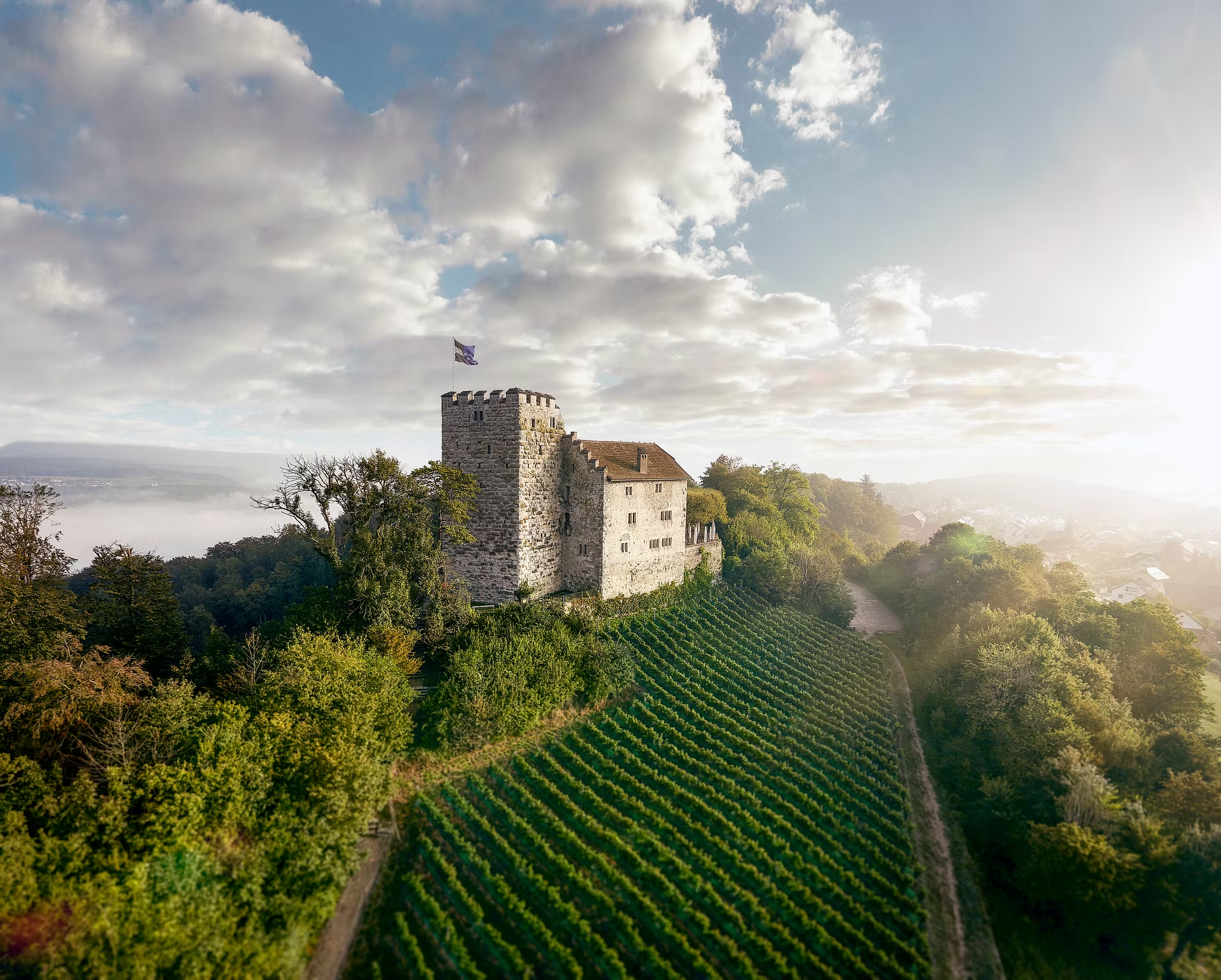
Luftaufnahme vom Schloss Habsburg von Michel Jaussi

Habsburg Castle

Ancestral Seat of a Global Dynasty

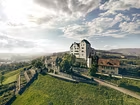
The foundation stone of what was to become the Habsburg dynasty was laid at Habsburg Castle in around 1030. Exhibitions, guided tours and events present the history of the legendary castle and its noble family.

PLANNING YOUR VISIT

 
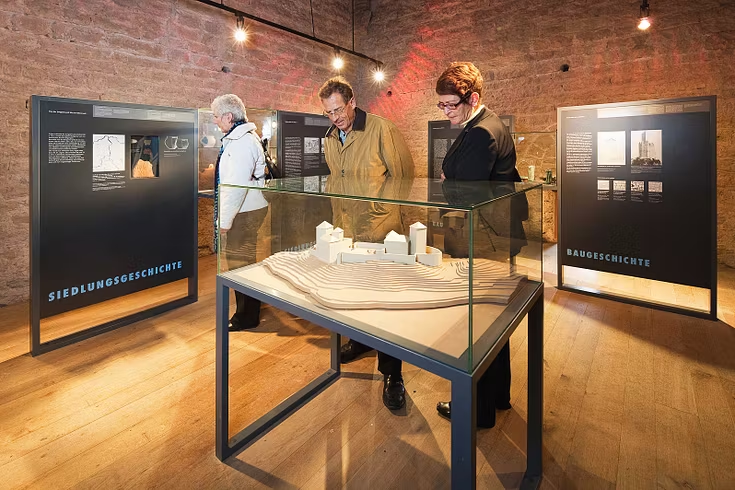
Besucher in der Dauerausstellung Schloss Habsburg

Museum and
exhibitions

Explore the castle and ruins  

 
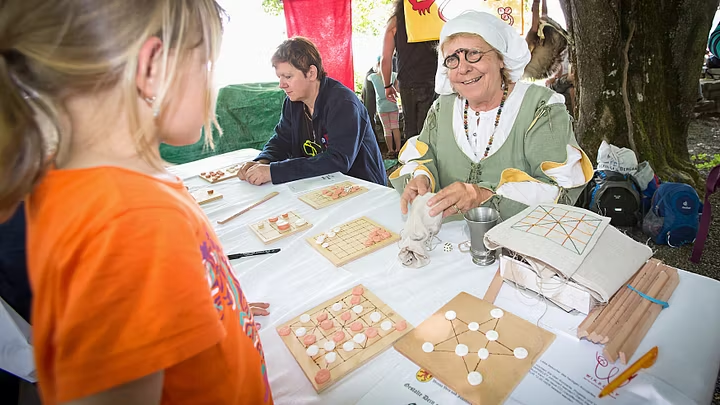
Mädchen bastelt am Familiensonntag am Schloss Habsburg

Events and public
guided tours

Calendar of events (in German)  

 
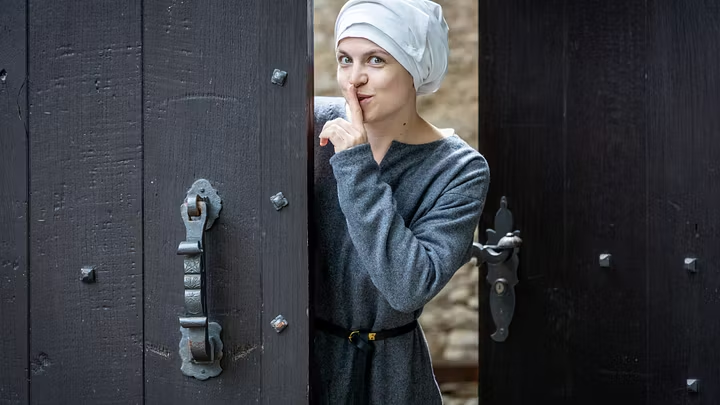
Eine mittelalterlich gekleidete Magd blickt durch das offene Tor von Schloss Habsburg in die Kamera. Sie hält verschwörerisch den linken Zeigfinger vor dem Mund ("nichts verraten!")

Opening hours
and entrance fees

Open all year round  

 
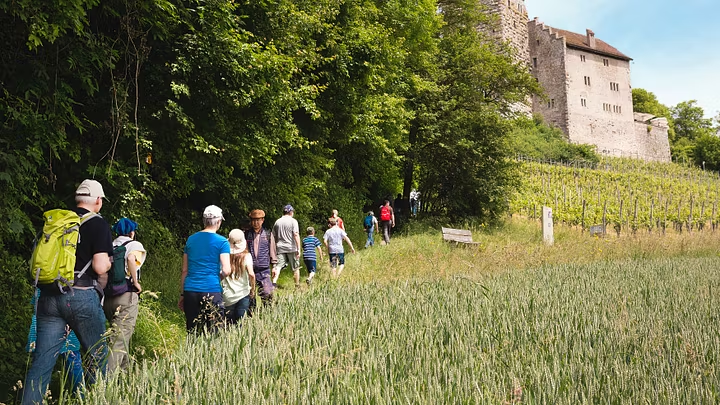
Wanderer auf dem Weg zum Schloss Habsburg

Getting
here

Directions  

 
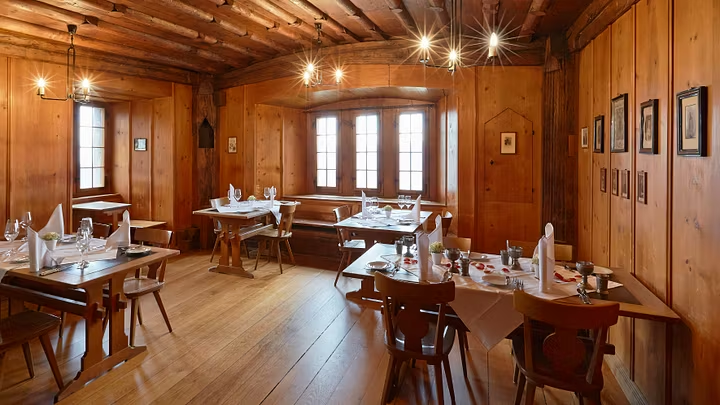
Gotische Stube Schloss Habsburg: Rustikaler Raum mit viel Holz und schön gedeckten Tischen.

Food and
drinks

Castle restaurant  

SCHOOLS, FAMILIES AND GROUPS

 
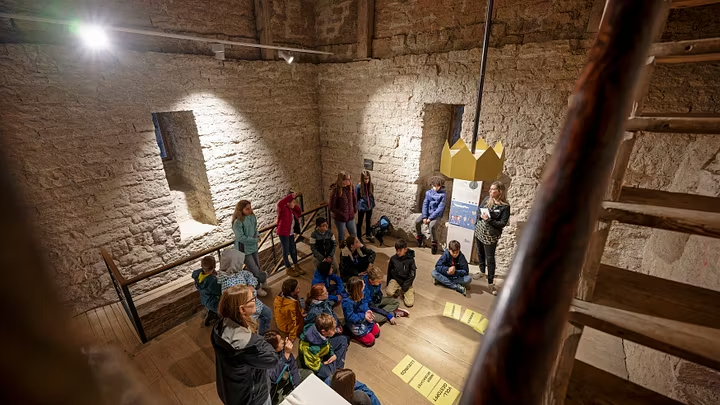
Eine Schulklasse sitzt im Kreis im Innern von Schloss Habsburg; am Boden liegen Blätter mit Texten.

For
schools

Guided tours and workshops  

 
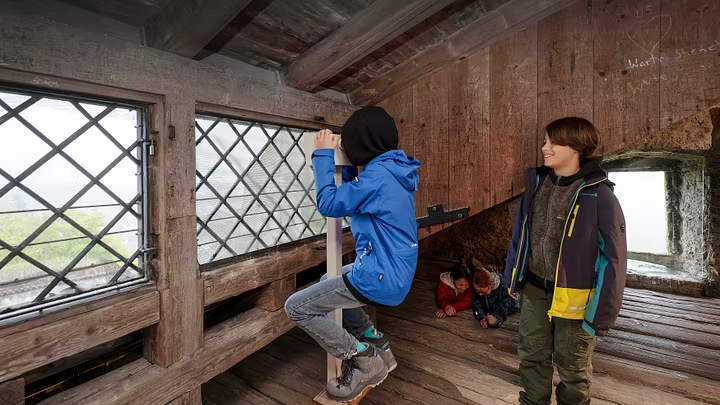
Zwei Schüler unter dem Dach von Schloss Habsburg; ein Bub blickt durch ein Fernrohr ins Weite.

For
families

For young knights and princesses  

 
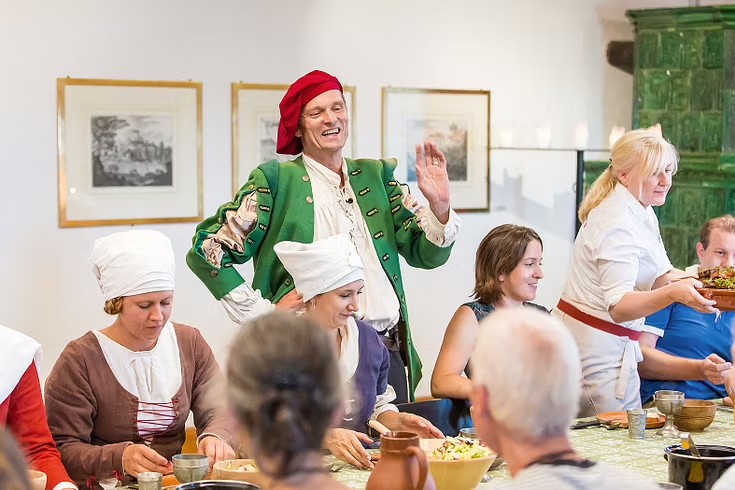
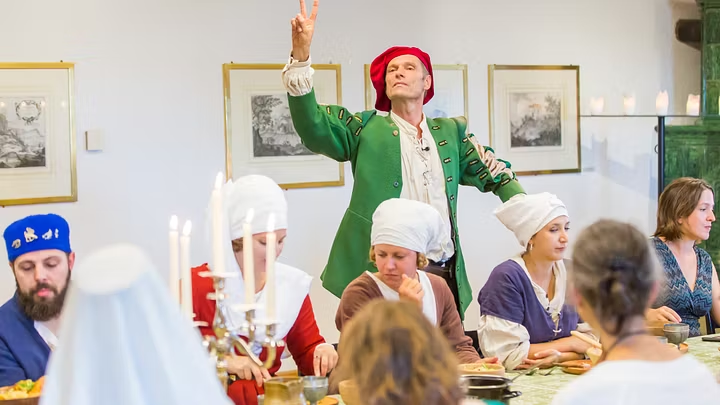
Verkleideter Museumsführer erzählt im Esstheater den dinierenden Gästen am Esstisch Anekdoten auf Schloss Habsburg

For
groups

Guided tours and workshops  

HISTORY AND COLLECTION

 
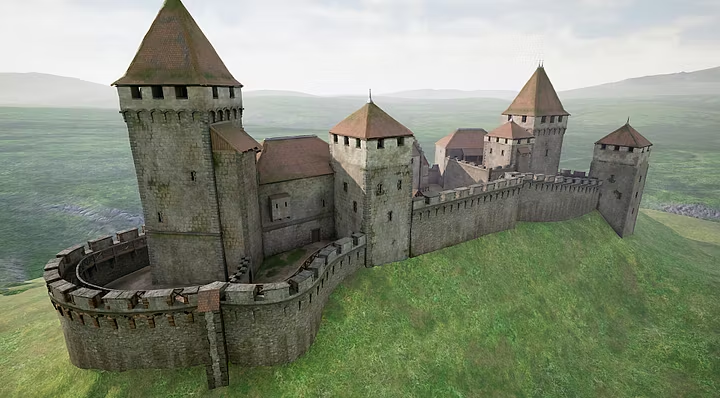
Virtuelles Schloss Habsburg

History

Residents and construction history  

 
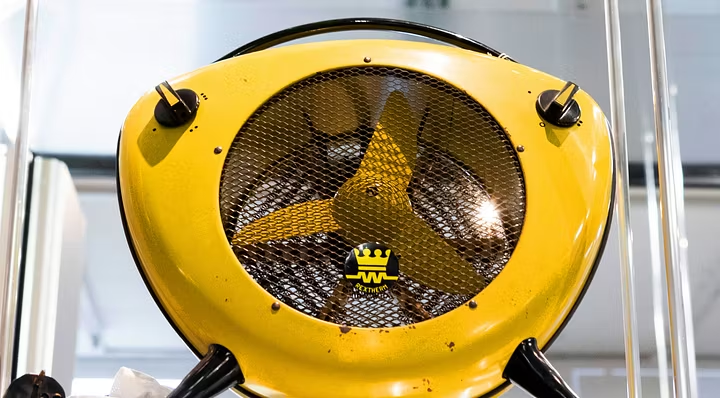
Ein gelber Heizlüfter, Objekt im Sammlungszentrum Egliswil

Collection

Treasure trove of Aargau's history  

 
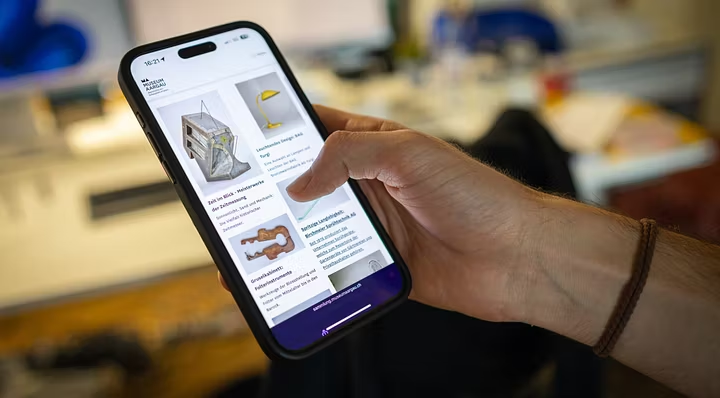
Grosses Handy in der Hand eines Benutzers, auf dem Bildschirm ist die "Sammlung online" von Museum Aargau dargestellt.

Collection online

Site in German  

Impressions

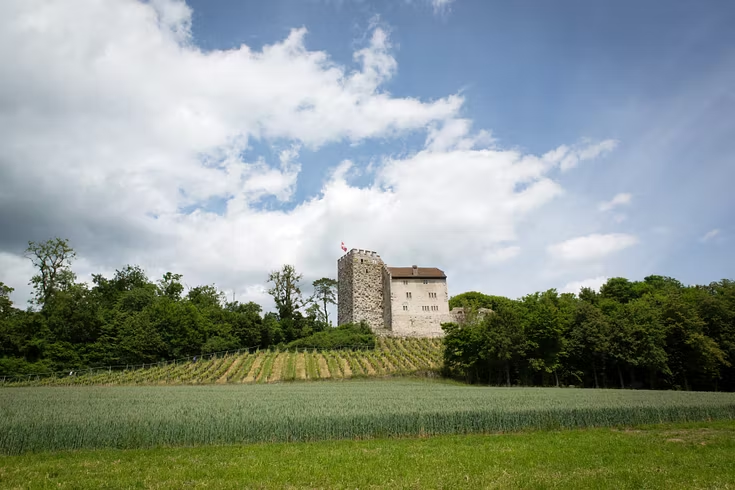
Aussenaufnahme mit mächtigen Wolken über Schloss Habsburg
Besucher in der Dauerausstellung Schloss Habsburg
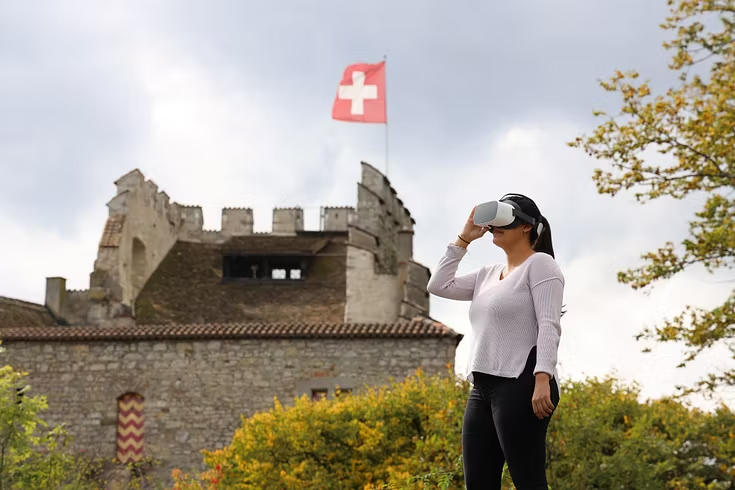
Besucherin vor dem Schloss Habsburg mit der VR-Brille
Mädchen bastelt am Familiensonntag am Schloss Habsburg
Verkleideter Museumsführer erzählt im Esstheater den dinierenden Gästen Anekdoten auf Schloss Habsburg
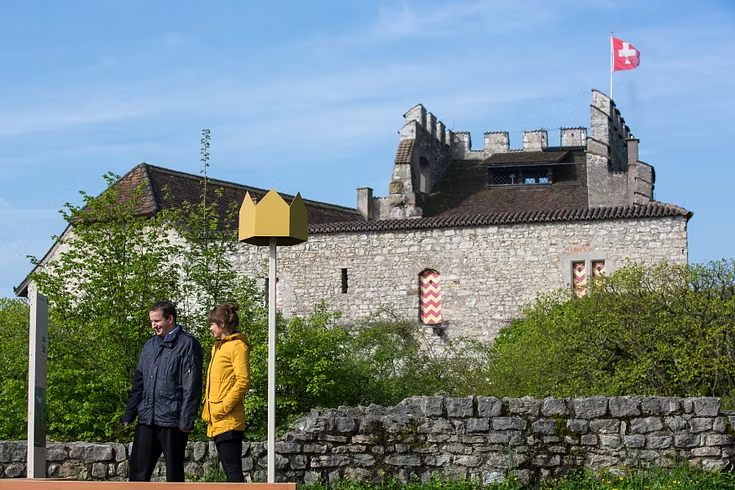
Besucherinnen und Besucher auf dem Königsweg mit dem Schloss Habsburg im Hintergrund
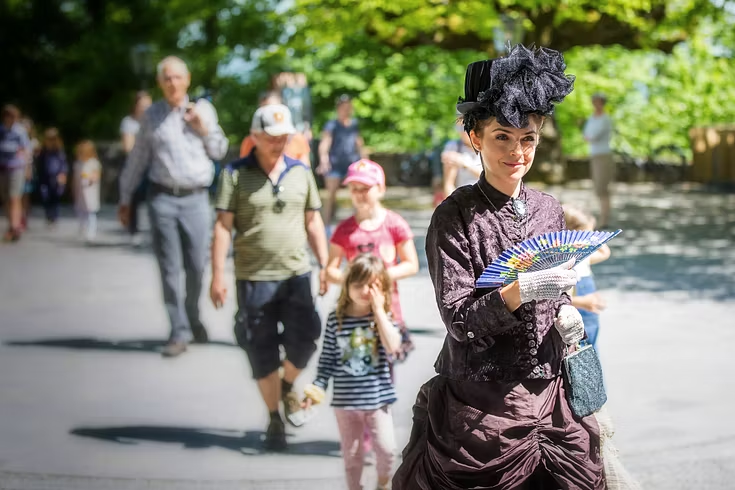
Eine als Kaiserin Sisi gekleidete Museumsführerin führt eine Gruppe Besucherinnen und Besucher durch das Schloss Habsburg.