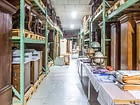
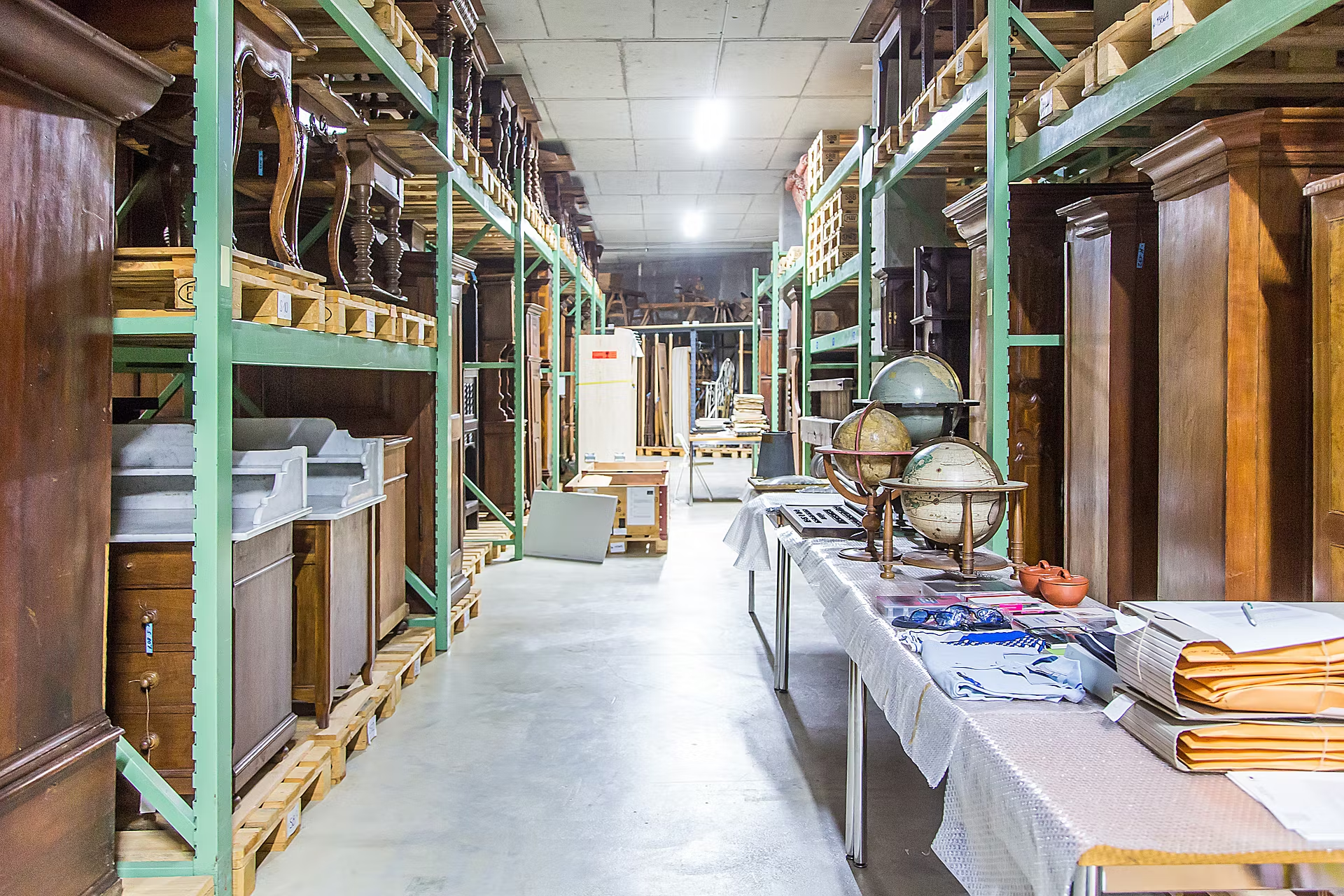
Directions to Egliswil Collection Centre Address Sammlungszentrum Egliswil – Museum Aargau Binzenholzstrasse 10 5704 Egliswil Contact Arrival by public transport and car Arriving by train and bus The Egliswil Collection Centre is well served by public transport. The bus stop "Egliswil, Industrie" is only a few hundred meters away. The bus stop is served by bus lines 390 and 395, which run every half hour between Lenzburg railway station and the Seetal. To the SBB timetable Arriving by car The collection centre is located on the edge of the village of Egliswil in the direction of Seon. A limited number of parking spaces are available for visitors. We recommend arriving by public transport. Calculate route with Google Maps The Collection Guided tours & events Contact
Directions to Vindonissa Museum Address Vindonissa Museum – Museum Aargau Museumstrasse 1 5200 Brugg Tel. 0848 871 200 Contact Arrival by public transport and car Arriving by train and bus The Vindonissa Museum is well served by public transport. For larger events especially, we recommend travelling by train and bus. There are direct train connections from Zurich, Basel and Bern to Brugg. There are several bus lines to the museum. The nearest bus stop is "Brugg, Eisi", which is served by line 374 from the railway station. The Vindonissa Museum can be reached on foot in about 7 minutes. To the SBB timetable Arriving by car The Vindonissa Museum in Brugg is accessible via the A3 motorway: From Zurich: A3 motorway, Brugg exit From Bern: A3 motorway, Brugg exit From Basel: A3 motorway, Frick exit Calculate route with Google Maps Parking Paid parking is available in the Eisi car park next to the Vindonissa Museum (approx. 2 minutes' walk). Coach parking There are no parking spaces for coaches at the Vindonissa Museum. Opening hours & entrance fees Accessibility
The Vindonissa Museum's exhibitions showcase the most important original finds from the excavations at Vindonissa. The permanent exhibition is translated into English. The only Roman legionary camp on Swiss soil was at Vindonissa. Excavations and research have been carried out here for around 100 years. The most important finds and discoveries can be seen in the exhibitions at the Vindonissa Museum. The museum is internationally renowned for the largest collection of Roman writing tablets, the most commonly used writing material of the Roman period. Other highlights include rare finds of leather and wood as well as well-preserved equipment belonging to Roman soldiers. Opening hours Open all year Tuesday to Friday: 1 - 5 pm Sunday and public holidays: 1 - 5 pm Monday and Saturday: closed
The Vindonissa Legionary Trail offers unforgettable experiences for children: discover the Roman sites of Vindonissa on your own or solve the riddle of the great oracle as a family in a play tour. Some of these offers are available in English. Families can discover the Legionary Trail on a self-guided tour. Most of the texts at the Roman sites are translated into English. There are also several picnic areas along the way. The Vindonissa Legionary Trail also offers the challenging " Becoming a Roman " (audio guide) play tour in English. This is suitable for families. Special events for children take place regularly on Sundays. Opening hours 1 April to 1 November 2026 Tue – Fr: 9 am – 5 pm Sat/Sun, holidays: 10 am – 6 pm Mon: closed
Experience the Vindonissa Museum at an event or public guided tour. Family afternoons take place regularly. Calendar of events (in German) Contact +41 (0)848 871 200 Send a message Telephone availability: Tuesday to Friday 9 am - 12 pm / 1 pm - 4:30 pm November to March only in the morning
The depots and archives now contain hundreds of thousands of items and archaeological information that sheds light on the world of the Romans in Vindonissa. Some of this treasure trove is now on show at the Vindonissa Museum in Brugg. In Windisch it is possible to view the structural remains dating back to the time of the legionary camp in the form of stations along the Legionary Trail. The terrain in Windisch and Brugg continues to yield spectacular archaeological discoveries to this day. The most recent examples are the site of the eastern camp gate discovered by archaeologists of the canton of Aargau in 2014 and the previously unknown burial ground in Brugg-Remigersteig, which was unearthed in 2012. The burial ground at the foot of Bruggerberg was situated on the main road to Augusta Raurica. In addition to more than 140 graves, the excavations also brought to light an excellently preserved burial monument and the gravestone to go with it. The latter tells us that the grave belonged to Maxsimila from Bologna, who died at the age of 40, and her 10-year-old slave Heuprosinis. Current excavations Canton archaeologists are involved in a number of research projects relating to the Vindonissa excavation site. The Vindonissa Professorship for Roman Provincial Archaeology at the University of Basel Department of Classical Studies also makes an important contribution to research into the Roman site. A key focus here is collaboration with neighbouring scientific disciplines such as archaeobotany and archaeozoology. For more information on current excavations in Vindonissa and elsewhere in Canton Argovia see Kantonsarchäologie Aargau (in German).
Vindonissa Museum – Museum Aargau Museumstrasse 1 5200 Brugg Tel. 0848 871 200 Send a message Organisation Museum Aargau Management Member Contact Dr. Marco Sigg Director E-Mail Sibylla Fischer Head of Marketing & Communications E-Mail Rahel Göldi Head of Museum Programme E-Mail Andrea Lehner Head of Guest Services E-Mail Thomas Lüscher Head of Operations & Administration E-Mail Dr. Rudolf Velhagen Head of Collection & Conservation E-Mail
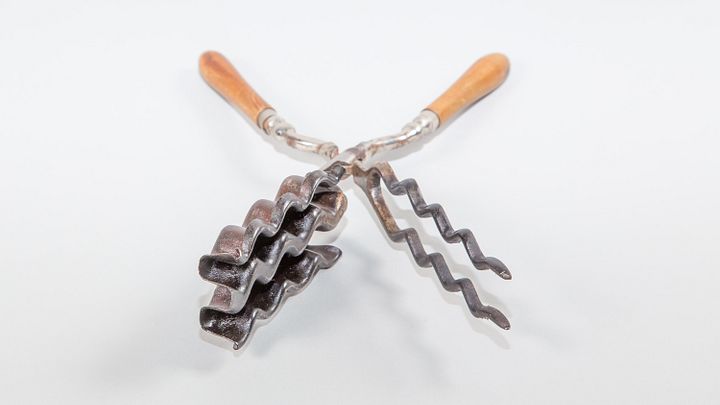
Switzerland's first ever military hospital was built 2,000 years ago at Vindonissa. The 60 sick rooms enabled the provision of medical care for up to 300 legionaries. At the camp hospital (valetudinarium), military doctors and medical orderlies treated battle injuries, everyday illnesses and work accidents. In addition to the infirmary, the Romans also invented the world's first ever medical service. The military hospital is approx. 4,500 m2 in size and was discovered in 1936. Built first out of wood and later stone, it was situated at the centre of the camp, directly on one of the main camp roads (via decumana). The sick rooms were arranged on each side of a corridor around a large courtyard. The hospital area was archaeologically investigated but has since been entirely covered with modern buildings. In mobile marching camps and probably during the early days of Vindonissa, soldiers were looked after in tents. An authentically reconstructed and fully equipped field infirmary of this type made of goatskin leather is on display here. Surgical instruments as discovered in great numbers in Vindonissa as well as herbs, ointments and scrolls with ancient prescriptions impressively convey how Roman doctors performed surgery, blood-letting and other healing techniques. The second tent contains three camp beds. Here, three legionaries tell visitors about their own personal medical history. Even judging by today's standards, Roman healing methods were quite sophisticated. Medicine was based on a holistic approach that encompassed nutrition, pharmacy and surgery. However, the gods had an important role to play when it came to health issues, too – such as Asclepius, the god of healing, and his daughter Hygieia: Roman doctors (medici) swore the famous Hippocratic oath by both of them. The military hospital can be visited with museum admission.
The aqueduct of Vindonissa now supplies a water fountain, making it the oldest structure in Switzerland that still performs its original function. Using innovative surveying technology, the legionaries were able to construct the aqueduct over a stretch of 2.4 kilometres with a gradient of just 4‰. The fresh water system supplied water for drinking, cooking and other domestic purposes for some 6,000 legionaries, auxiliary troops, horses and mules. It would not have been possible to live in the legionary camp without this fresh water supply. The aqueduct is a technological masterpiece: groundwater was captured in an elaborately constructed, subterranean stone channel in Hausen and transported to Windisch. The legionaries used a special watertight mortar to ensure the water was not lost on the way. Once it had arrived in the camp, the fresh water was further distributed in pipes made of clay, lead and wood. Roman engineers applied highly precise surveying methods and ingenious construction techniques to create such facilities. Unknown in this area in pre-Roman times, the aqueduct is regarded as the Roman's most important civilisatory feat - along with their baths and infirmaries. The water system continued to be used by Königsfelden Monastery in the Middle Ages. The story goes that during construction of the monastery, a monk was "shown by God where water could be found". A document dating back to 1363 provides evidence that the aqueduct was endowed to the monastery by Duke Rudolf IV of Austria. Up until 1897 it was the only supply of drinking water serving the population of Windisch, and even today it feeds the fountain in front of the main building of Königsfelden psychiatric clinic. This roman site can be visited with museum admission.
The large sewer ran along the western front of the legionary camp, immediately adjacent to the camp wall. It lay under the road parallel to the camp wall (via sagularis) and formed part of an extensive subterranean sewage system. The system as a whole is estimated to have been more than five kilometres long, running through the entire camp. Built out of stone, the drains were used for the latrines, thermal baths and well overflows, also ensuring fast drainage of water from the roofs and roads when it rained. The large sewer collected the effluent from the smaller side drains, allowing it to flow directly out of the camp to the River Aare in the north. A functional drainage system was required so as to prevent the spread of disease and epidemics in the legionary camp. Together with the troop toilets, thermal baths and camp infirmary, the drainage system was one of the most important hygienic facilities in keeping the approx. 6,000 legionaries healthy and therefore fit for action. The large sewer was discovered as long ago as 1899. It was investigated once again in 1907 and the excavator at the time named it the "Cloaca Maxima of Vindonissa" – in reference to the monumental drainage system in Rome itself. In order to make the large sewer accessible to the public in the early 20th century, a section measuring at least 20 metres in length was preserved. After this the "Cloaca Maxima" was neglected. It was not until some 100 years later that it was possible to open up the drain to Legionary Path visitors: measuring two metres in height and one metre in width, it can be conveniently accessed. The large sewer can be visited with museum admission.