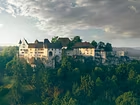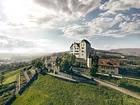

Wildegg Castle

Living history museum and ancestral portrait gallery

Permanent exhibition Admission Museum entrance fee Former castle residents are waiting to chat with visitors! Wildegg Castle is the castle of talking portraits: in the ancestral portrait gallery and the living history museum, former castle residents are waiting to chat with visitors. They include Julie von Effinger, the last owner of Wildegg Castle, who recounts anecdotes from her everyday life. Throughout the castle, large portraits of the von Effinger family come to life and tell of the past in a lively and entertaining way. An impressive living history museum With its more than 30 beautifully furnished rooms, Wildegg Castle offers a fascinating insight into the lives of the nobility and their servants. The banqueting hall, salon and dining room – complete with tables set for meals – state rooms as well as the kitchens and maids' quarters – as described by Sophie von Erlach-Effinger in the castle chronicle – can all be visited. You can also explore the narrow confines of the servants' rooms under the roof, visit the maid in the entrance hall, or sit on the windowsill like Julie von Effinger and gaze into the magnificent palace garden. Exhibition on Wildegg Castle: Living history museum and ancestral portrait gallery. Former castle residents are waiting to chat with visitors!

 
Wildegg Castle

Rose garden

Rose garden Admission Entrance free A major attraction for rose lovers The rose garden of Wildegg Castle is a major attraction for rose lovers. Numerous historical roses with rose arches, as well as English roses and hybrid tea roses, can be found here. Laid out in around 1830 it's a magnificent sight, especially during the main flowering period in June, replete with carefully tended, historical and rare roses. For weddings, the rose garden is a popular backdrop for photo shoots. It's also the perfect place to sit on a bench and read a gripping detective story. The small park near the historic wine cellar has been maintained free of charge for many years by the Aargau Regional Group of the Society of Swiss Rose Enthusiasts. Rose garden on Wildegg Castle: A major attraction for rose lovers!

 
Wildegg Castle

Vineyard path

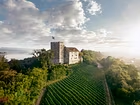
Permanent exhibition Price Museum/garden admission 0 Nine interactive stations about viticulture The Wildegg Castle vineyard trail tells the story of the hard but rewarding work of winegrowers in centuries past. At nine interactive stations, built from old wine barrels, visitors discover the challenges of winegrowing: from tending the vines in winter to the dangers posed by weather, pests and diseases, right through to the grape harvest in autumn. Special attention is paid to the Effinger family, who used viticulture as their economic basis for centuries. Rebpfad Schoss Wildegg: Ausstellung über Weinbau

 
Wildegg Castle

Children's area and stables

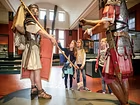
Permanent exhibition Admission Museum entrance fee Saddle up the horses in the stables! Wildegg Castle is a paradise for families: children can play and paint in the castle barn, or saddle up the horses in the stables! Children's area: books, games and billiards There's never a dull moment in the children's area at Wildegg Castle! Here, kids can dress up as knights, set the table in the children's castle, browse through books on the elegant sofa or try out old games. They can even play a game of billiards – just as the residents of Wildegg Castle once did. Stables: saddle up the horses! In the old stables, Albert von Effinger talks to his favourite horse, while his hunting dog gives a running commentary! The wooden horses are waiting to be fed and groomed. In this exhibition, children learn what horses like to eat, how they were used in the past – and can even meet a talking horse. Sit side-saddle yourself, climb aboard the carriage, or race for the finishing line as a jockey! Exhibition on Wildegg Castle: Children's area and stables. Saddle up the horses in the stables!

 
Wettingen Abbey

Parlatorium

Discussion Lab Admission Museum entrance fee Registration Not required (recommended for schools) Hundreds of questions in one room Built around 1600, the Parlatorium was one of the few rooms in the abbey where speaking was once permitted. Today, Museum Aargau invites visitors here to engage in conversation about faith, power and knowledge – and poses hundreds of questions on these topics. Choose one of them and embark on a journey of discovery through the Parlatorium: through conversation, play, or via interactive text, image and film installations. The exhibition was developed in collaboration with pupils from the Wettingen Cantonal School, which is also based on the monastery peninsula. Their perspectives on the themes of faith, power and knowledge build bridges between this place's past and the present day. At the weekend, school pupils usually welcome visitors to the Parlatorium. They have been trained as hosts for this role. The Parlatorium at Wettingen Abbey was one of the few rooms in the abbey where speaking was once permitted.

 
Wettingen Abbey

Cloister

Permanent exhibition Admission Museum entrance fee 0 A place of meditation with a significant series of stained-glass windows The well-preserved cloister, with its Romanesque and Gothic tracery, evokes the tranquillity that once characterised life within these walls. Small gravestones of monks buried here are set into the flagstone floor. At the heart of the cloister lies the idyllic cloister garden. The cycle of stained-glass windows in the cloister is particularly valuable. Private donors, friendly abbeys and the Swiss cantons have all donated these significant cabinet windows to Wettingen Abbey. The earliest examples date back to the 13th century. Cloister Chapel with the Wettingen Christ Child Above the altar of the Cloister Chapel hangs the sacred image of the "Wettingen Christ Child". The wooden painting miraculously survived the devastating abbey fire on White Sunday in 1507. The monks saw this as a sign from heaven. The "Christ Child", marked by burn holes, has been venerated ever since. The cloister at Wettingen Abbey: a significant series of stained-glass windows. An exhibition by Museum Aargau.

 
Wettingen Abbey

Observatory

Permanent exhibition Admission Museum entrance fee Take a journey through the history of knowledge and belief At the Observatory, take a journey through the history of knowledge and belief in a cinematic installation. Together with a group of pupils from Wettingen Cantonal School, you will visit places that tell this story: from the earliest known cave paintings to the vastness of the World Wide Web. On this journey, you will discover how the monks of the Cistercian abbey understood knowledge in the Middle Ages – and how the expulsion of the monks from the abbey in 1841 was linked to new concepts of knowledge and power structures. Finally, you will return to the present day, amidst the challenges we now face in the "knowledge society". In addition, a timeline provides an insightful and varied account of the history of Wettingen Abbey. Selected objects also offer a glimpse into the collection of Museum Aargau. At the Observatory at Wettingen Abbey, take a journey through the history of knowledge and belief in a cinematic installation.

 
Wettingen Abbey

Medicinal garden

Admission Free of charge Tradition of monastic healing Today, medicinal herbs, spices, flowers and also certain vegetables grow in the medicinal garden of Wettingen Abbey. The garden showcases the long tradition of monastic medicine. The original location and design of the medicinal garden are not known in detail. It is assumed that, as in comparable abbey complexes, the Wettingen garden was located by the infirmary wing. The garden has been reconstructed at this location, based on the Hortulus book on gardening by the Reichenau abbot Walahfrid Strabo and the St. Gallen abbey plan from the 9th century. Medicinal garden on Wettingen Abbey. Tradition of monastic healing.

 
Wettingen Abbey

Monks' church

Permanent exhibition Admission Museum entrance fee 0 Renowned for its richly carved choir stalls The monks' church forms part of the abbey church and was once accessible only to monks and clergy. It is renowned for its richly carved choir stalls: their clean, angular design is in keeping with the Renaissance style. If you look closely, you will discover some surprising motifs – such as a dog playing the flute, or a cat covering its ears. Objects from the abbey's history In the monks' church, Museum Aargau is exhibiting selected items from its collection, supplemented by significant loans from the Roman Catholic parish of Wettingen. The exhibition focuses on precious items from the abbey's treasury, which offer a rare insight into the religious and cultural life of the monks. It traces the eventful history of Wettingen Abbey – from its foundation through to its dissolution, and on to its present-day role as a cantonal school. The monks' church at Wettingen Abbey is renowned for its richly carved choir stalls.

 
Wettingen Abbey

Abbey church

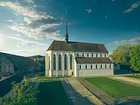
Price Admission free 0 An imposing 13th-century church Wettingen Abbey church was consecrated in 1256 and has been rebuilt several times. It is one of the few early and high medieval abbey churches in Switzerland that has retained its original structure. The church is divided into a sacred and a secular section by an imposing rood screen: the monks' church, with its famous carved choir stalls, was formerly reserved for monks and clergy. The lay church, the secular part of the monastery church, boasts magnificent altars and paintings. The abbey church can be visited during museum opening hours without paying the museum admission fee . The monks' church is part of the museum (admission fee applies). Wettingen Abbey church was consecrated in 1256 and has been rebuilt several times. It is one of the few early and high medieval abbey churches in Switzerland that has retained its original structure.

Gradian
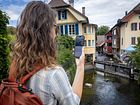
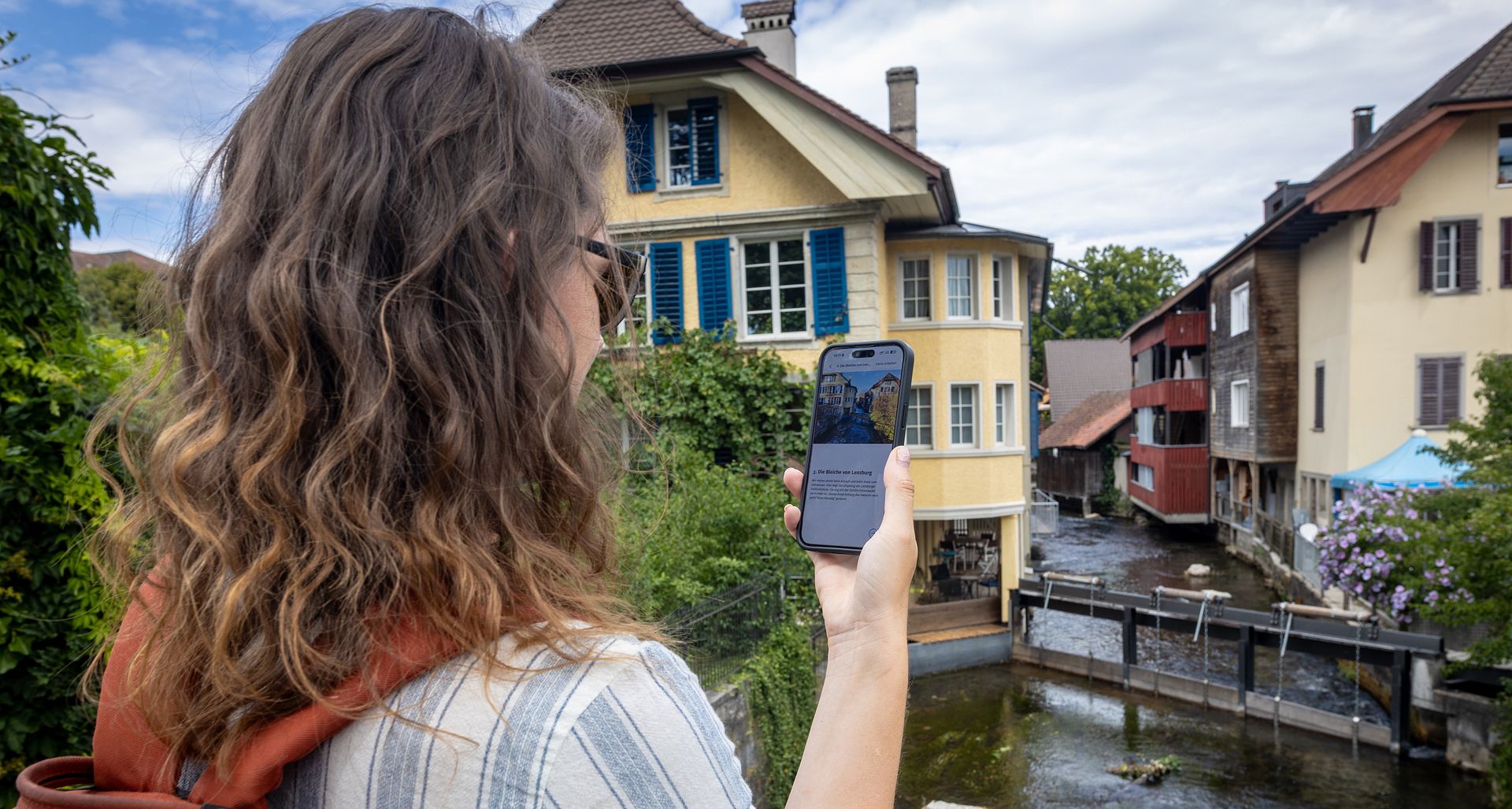
Eine Frau steht mit einem Handy in der Hand an einem Fluss.

IndustriekulTOUR Aabach

A Virtual Tour of Industrial History

Experience the industrial culture on the Aabach with your smartphone: the IndustriekulTOUR Aabach is the first virtual museum space in the canton of Aargau. The digital offering is available in German.

Start an exciting tour along the Aabach in Lenzburg, Wildegg and Niederlenz with your smartphone and experience the industrial history of the canton of Aargau at the original locations.

Download the app now

A cooperative project

IndustriekulTOUR Aabach is a cooperation between Museum Aargau, the Museum Burghalde and the Verein Industriekultur Aabach (both websites in German).

Enquiries and contact

+41 (0)848 871 200
museumaargau@ag.ch
Telephone availability
Tuesday to Friday
9 am – 12 midday