Hallwyl Castle

Granary

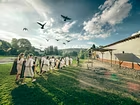
Permanent exhibition Admission Museum entrance fee Cigar-rollers in action In homage to Hansjakob Suter, the legendary curator of Hallwyl Castle in the 1970s, the granary displays the most important objects from his exhibition on customs and trade in the Seetal. In the granary, the focus is very much on tobacco and straw production in the Seetal, which experienced its heyday at the end of the 19th century. The fashionable straw hats became famous around the world and even made it all the way to New York. The exhibition also looks at midwinter customs from the village of Hallwil and traditional costumes from the Seetal. Every second Sunday in the month, cigar-rollers can be watched at work making genuine Hallwil "Flor de Hallwyl" cheroots. Exhibition in the granary of Hallwyl Castle. Cigar-rollers in action

 
Lenzburg Castle

Domestic life museum and prison

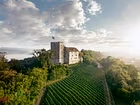
Permanent exhibition Admission Museum entrance fee The museum of domestic life and prison reveal the lives of lords, rogues and scoundrels. The museum of domestic life and prison of Lenzburg Castle reveal the lives of lords, rogues and scoundrels. Come and explore! Domestic life museum: how lords and ladies lived In the museum of domestic life it feels as if the lords and masters had just left Lenzburg Castle. Filled with original furniture, it provides an insight into the different eras in which the castle was inhabited. In the late medieval kitchen, for example, you can look into the cooking pots, smell the exquisite spices or inspect the kitchen utensils of the time. You'll enter impressive rooms from the 18th century with hand-printed fabric wallpaper all around and a matching tiled stove. The bathroom with its golden taps bears witness to the luxurious life of the industrialist's wife Lady Mildred, who lived in the castle with her husband Augustus Edward Jessup from 1893 until the 20th century. Many other rooms display exquisite objects and give an impression of how the inhabitants of Lenzburg Castle have lived over the centuries. Prison: where rogues and crooks ended up The prison, by contrast, is cold and damp. Enter an original preserved cell from the 17th century and decipher the inscriptions carved into the wood by prisoners. Instruments of torture such as thumbscrews show the methods used in the penal system at that time. The execution sword, with which rogue king Bernhard Matter was the last person to be executed in Aargau in 1854, has been preserved in its original form. Domestic life museum and prison. Exhibition at Lenzburg Castle. The museum of domestic life and prison reveal the lives of lords, rogues and scoundrels.

 
Lenzburg Castle

Knighthood and Nobility

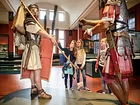
Permanent exhibition Admission Museum entrance fee The "Knighthood and Nobility" exhibition focuses on the Middle Ages. Medieval fans will find plenty to interest them in the "Knighthood and Nobility" exhibition: discover how three great Swiss noble families organised their rule and the legacy they left behind. From the 11th to the 15th century, the Lenzburgs, Kyburgs and Habsburgs ruled Lenzburg Castle. This 400-year history of rule is presented in the residential and south tower, the oldest part of the castle. Audiovisual shadow plays show how the three great noble families fought out conflicts, who played what role in the empire, and how they organised their dominion. Visitors can learn how noble youths were prepared for their future task as rulers, how they learned to handle weapons while hunting, and how they participated in the cultural life at court. Selected original objects bear witness to an eventful time. Knighthood and Nobility. Permanent exhibition at Lenzburg Castle. The "Knighthood and Nobility" exhibition focuses on the Middle Ages.

 
Lenzburg Castle

Fauchi and the dragon research station

Permanent exhibition Admission Museum entrance fee Visit Fauchi, the castle dragon! What would Lenzburg Castle be without Fauchi! The castle dragon is loved by all young visitors. At the dragon research station you can find out all about the castle's legendary inhabitant. Fauchi: are you brave enough? Anyone with enough courage can visit the castle dragon Fauchi at Lenzburg Castle. Enter his dark cave full of hissing, smoke and ominous rumbling. It's an unforgettable experience for castle visitors of all ages! According to legend, the castle dragon Fauchi hatched from a dragon egg many years ago on the castle hill. He is far less frightening than his ancestors, but meeting him can still be a little scary! Dragon research station If you want to know what the legendary dragon likes, how he lives, what his dragon skin feels like or how long his claws are before you visit Fauchi, the dragon research station is the place to go. There, young researchers can examine a collection of teeth, claws and bones, learn about the different types of dragons, and discover the secret of Fauchi's origins. Fauchi and the dragon research station. Exhibition on Lenzburg Castle. Visit Fauchi, the castle dragon!
 
Hallwyl Castle

Exhibitions

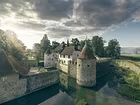
Experience the impressive history of the von Hallwyl family at the Museum of Hallwyl Castle. Over the course of more than 800 years, this minor noble family distinguished itself in many ways: on Swiss battlefields, at European courts, in science, politics and trade, and in the world of finance. On the audio-guided tour, members of the family recount their lives. Ordinary people such as the farmers and subjects of the Hallwyl estate also have their say. The eerie cries of prisoners can still be heard today in the tower where they were imprisoned. Opening hours 1 April to 1 November 2026 Tue – Sun, holidays: 10 am – 5 pm Mon: closed COLLECTION Portrait Collection Museum Aargau Site in German Collection online Egliswil Collection Centre Visit the collection Impressions

 
Hallwyl Castle

Events

Experience Hallwyl Castle! Events and public guided tours take place regularly at the castle. Calendar of events (in German) Contact +41 (0)848 871 299 Send a message Telephone availability: Tuesday to Friday 9 am - 12 pm / 1 pm - 4:30 pm November to March only in the morning Impressions

 
Vindonissa Legionary Trail

Events

Experience the Romans live! Events, public guided tours and family Sundays take place regularly on the Vindonissa Legionary Trail. Calendar of events (in German) Contact +41 (0)848 871 200 Send a message Telephone availability: Tuesday to Friday 9 am - 12 pm / 1 pm - 4:30 pm November to March only in the morning Impressions

 
Königsfelden Abbey

Opening hours and entrance fees

Opening hours 1 April to 1 November 2026 Monday closed Tuesday – Sunday, public holidays* 10 am – 5 pm * Open on the following public holidays: Easter (Good Friday, Easter Sunday and Easter Monday), Whitsun (Whit Sunday and Whit Monday), Ascension Day, National Holiday (August 1) Note: There may be brief closures between 12:15 p.m. and 12:45 p.m. Entrance fees Entire abbey complex Category p.P. from 10 p. Adults CHF 7 CHF 5 Vocational trainees and students (up to age 26) CHF 5 CHF 4 Children (6–16 years) CHF 4 CHF 3 Combined ticket with Vindonissa Visit the Königsfelden Abbey in Windisch, the Vindonissa Legionary Trail in Windisch and the Vindonissa Museum in Brugg at a special price. The combined ticket "Vindonissa - Kloster Königsfelden" includes one admission to each of the three sites of Museum Aargau. The ticket is valid one year. Category p.P. from 10 p. Adults CHF 24 CHF 17 Vocational trainees and students (up to age 26) CHF 17 CHF 14 Children (6–16 years) CHF 13 CHF 10 Family ticket A (2 adults + max. 5 children) CHF 58 - Family ticket B (1 adult + max. 5 children) CHF 40 - Discounts Free admission: Swiss Museum Pass, Raiffeisen MemberPlus, Museums-PASS-Musées, VMS, ICOM Reduced admission: Schools, families and groups of 10 or more (see admission prices for details), Kulturlegi (50% off the regular museum entrance fee), Guests with disabilities (reduced group admission price, 1 accompanying person free of charge) Schools in the canton of Aargau benefit from a 50% reduction on travel, admission and the education programme ( "Kultur macht Schule" grant). This offer should be booked directly through Museum Aargau. Gift Vouchers Gift vouchers are available at the ticket office and online (in German). Tickets are available at the ticket office and online (in German). Payment can be made in CHF. Credit cards (including Maestro, Visa and Mastercard), Postcard, Twint and Reka-Card are also accepted. Admission prices may vary for special events (in German). All prices in CHF, prices subject to change. Notes on visiting Königsfelden Abbey Dogs on the grounds Dogs are not allowed in the buildings of Königsfelden Abbey, except assistance dogs for people with disabilities. Prams in the Abbey Prams are permitted in the exhibition rooms. Small bags and rucksacks Small bags up to size A4 are permitted in the exhibition rooms. Larger bags and rucksacks must be deposited at the reception of Königsfelden Abbey. Lost and found Have you lost or forgotten something at the Abbey? Please contact reception or Museum Aargau customer service .

 
Königsfelden Abbey

Getting here by train, bus and car

Directions to Königsfelden Abbey Address Kloster Königsfelden – Museum Aargau Königsfelderstrasse 5210 Windisch Tel. 0848 871 200 Contact Arrival by public transport and car Arriving by train and bus Königsfelden Abbey is easily accessible by public transport. For larger events especially, we recommend travelling by train and bus. From Brugg railway station, bus lines 361 (towards Windisch) and 362 (towards Mellingen Heitersberg) run to the "Windisch, Zentrum" stop. The journey takes about 4 minutes, followed by a walk of about 5 minutes to the convent church. From Brugg railway station you can also reach Königsfelden Abbey on foot: from the station the underpass leads towards Windisch. Follow the signs to the Campus car park. When you arrive there, cross the road and continue in the direction of the Königsfelden Psychiatric Clinic, from where the convent church is signposted. The walk from the train station to the Abbey takes about 10 minutes. To the SBB timetable Arriving by car Königsfelden Abbey can be reached from the A3 motorway (Brugg exit) via the expressway in around 10 minutes. When you arrive in Windisch, the church is signposted at the junction with the main road (Brugg-Baden). Calculate route with Google Maps Parking Paid parking spaces are available at the Campus car park on Bahnhofstrasse in Brugg. From there it is about 10 minutes to Königsfelden Abbey. Visitors with reduced mobility can park at the Aargau Psychiatric Services meeting centre. From there it is about 4 minutes to the convent church. Coach parking Two coach parking spaces are available on the grounds of Königsfelden Psychiatric Services (at the Villa Rägebogen day-care centre), close to Königsfelden Abbey. Groups are advised to inform the Museum Aargau sales & advice team when arriving by coach so that parking can be guaranteed.

 
Königsfelden Abbey

Accessibility

Getting here Arriving by car Visitors with reduced mobility can park at the meeting centre of Königsfelden Psychiatric Services. From there it is about 4 minutes to the convent church on a level path. Getting here Arriving by train and bus From Brugg railway station, bus lines 361 (towards Windisch) and 362 (towards Mellingen Heitersberg) run to the "Windisch, Zentrum" stop. The journey time is about 4 minutes, followed by a flat route to the convent church taking about 5 minutes. This route involves crossing roads. Getting here Access to the Abbey Abbey and exhibition Wheelchair users : The exhibition rooms in the abbey church are wheelchair-accessible. Blind and visually impaired: Audio guides are available. Some objects can be touched by blind and visually impaired visitors. There is no Braille labelling. Hearing impaired: The exhibition does not have an induction loop system. Audio guides are available. A display copy of a publication containing texts on the exhibits can be borrowed from the ticket office. People with intellectual disabilities: There are no labels in simple language. Museum and exhibition Toilet facilities There is a disabled WC at the entrance to the convent church.

Gradian
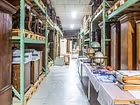
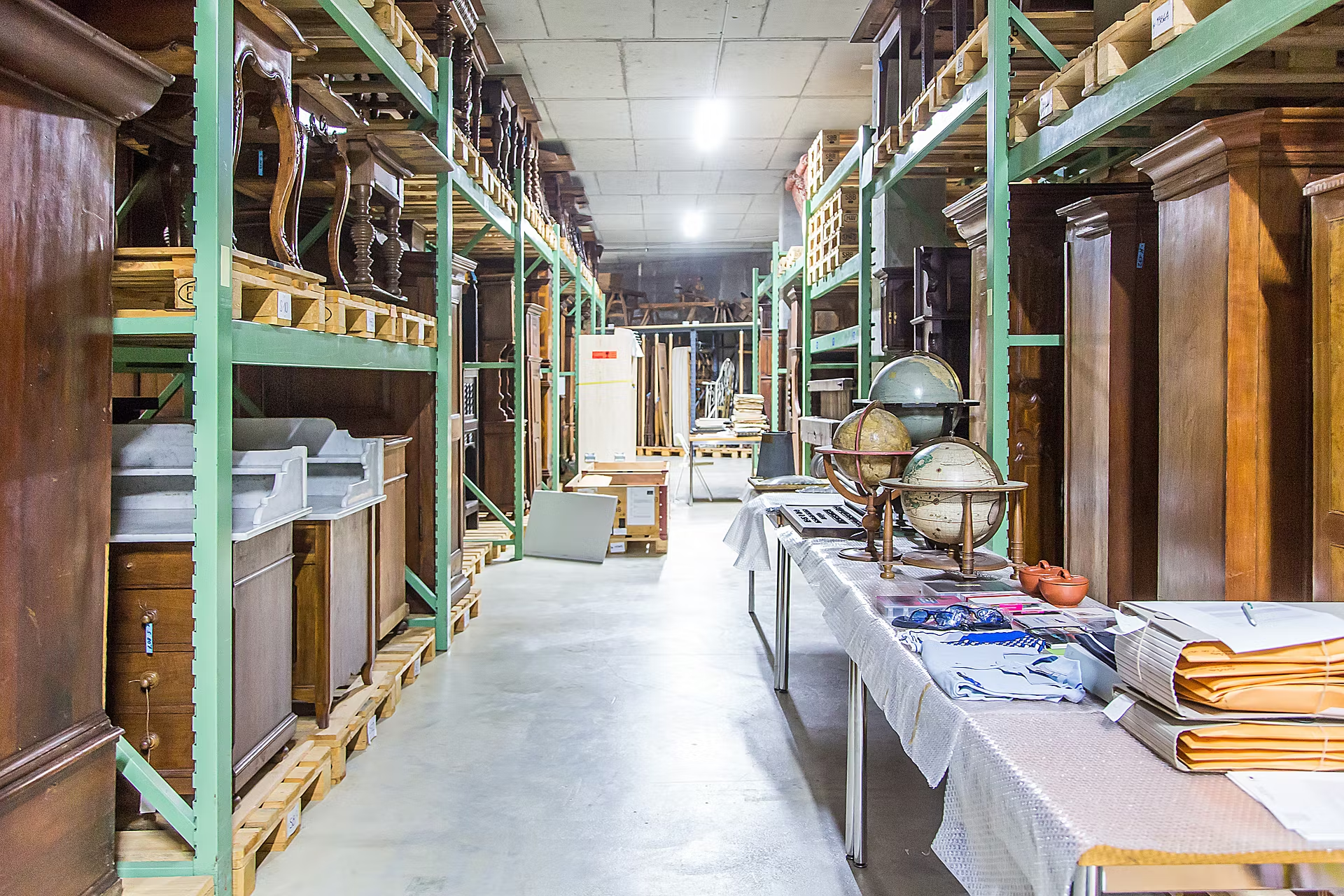
Blick in die Halle des Sammlungszentrums Egliswil

Egliswil Collection Centre

Treasure Trove of the Collection

OVERVIEW

 
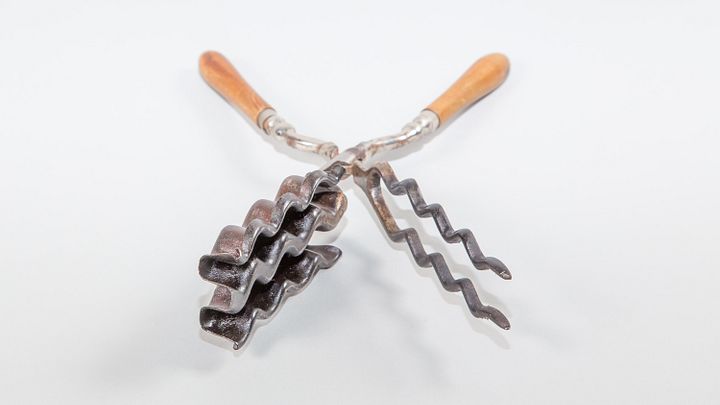
Objekt aus der Sammlung Museum Aargau auf weissem Grund.

Portrait of the
collection

50,000 objects on the history of Aargau  

 
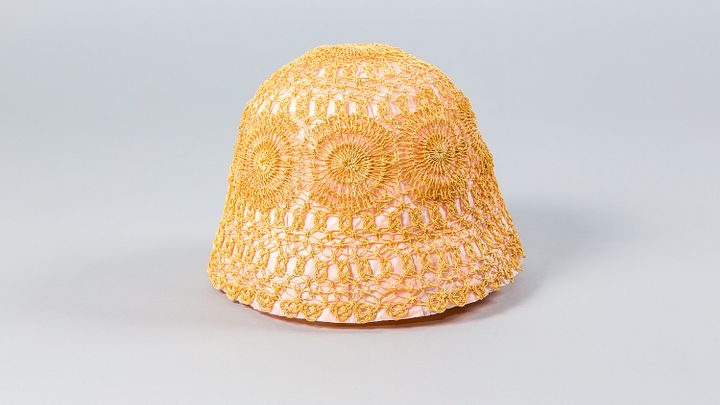
Objekt aus der Sammlung Museum Aargau: Hut

Collection
online

Discover 400 museum treasures online (in German)  

INFORMATION ON THE EGLISWIL COLLECTION CENTRE

 
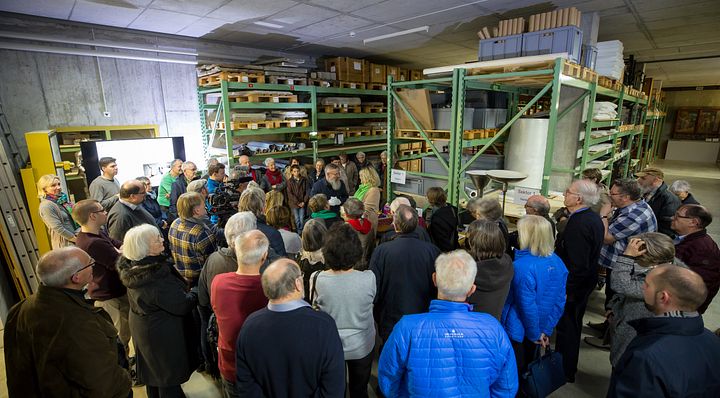
Besucherinnen und Besucher stehen in der Halle des Sammlungszentrum Egliswil

Guided tours and object talk

Event Calendar (in German)  

 
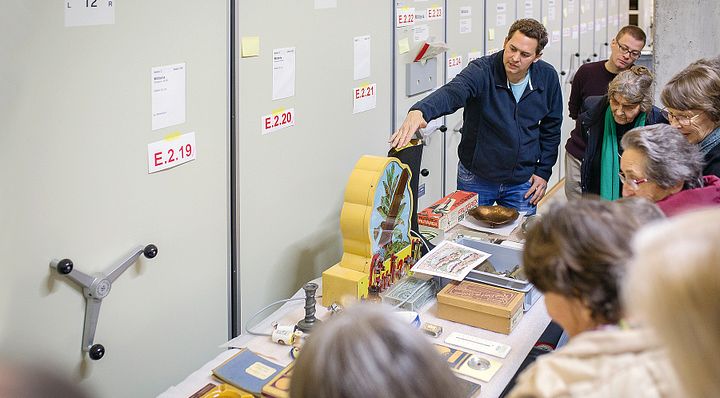
Ein Mann zeigt auf einer Führung im Sammlungszentrum Egliswil historische Objekte aus dem Aargau .

How to find us

Arrival by car, bus or on foot  

 
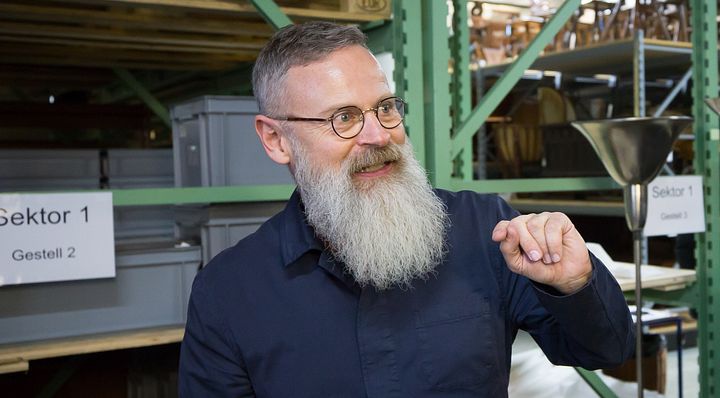
Rudolf Velhagen auf einer Führung im Sammlungszentrum Egliswil, im Hintergrund alte Objekte sowie mehrere Personen.

Please contact us

Information and reservations