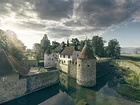
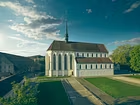
Wettingen Abbey

Header Logo

 
Wettingen Abbey

Event

 
Königsfelden Abbey

History

History A king's murder and the foundation of the monastery The German King Albrecht I fell victim to a conflict within the Habsburg family on May 1st 1308. His nephew Johann felt cheated out of his inheritance: Albrecht administered it after the death of Johann's parents but he did not let Johann himself take possession of it. Together with other conspirators, Johann murdered his uncle Albrecht on the high plateau in Windisch. The murder shook the House of Habsburg to the core, since the Albrecht's death meant the family lost its German kingship. In memory of the murdered King Albrecht, the family first had a chapel built along with a house for two Franciscan monks. Probably with the support of her daughter Agnes, the Dowager Queen Elisabeth initiated the construction of a Franciscan double monastery, for which lands were purchased. Construction work began on the new monastery in the autumn of 1310. The foundation formally took place in 1311 and the first nuns moved into the Clarist Convent in 1312. Albrecht's widow and monastery founder Queen Elisabeth died in Vienna in 1313 and chose Königsfelden as her last resting place. This gave the site significance as a Habsburg burial ground. Ten other family members were buried in the family vault at the centre of the church. The vault was opened in the 18th century and the bodies were transferred first to St. Blaise Abbey and in 1807 to St. Paul's Abbey in Carinthia. More Less 1308-1313 Queen Agnes Born in 1281, Agnes was married to the Hungarian King Andreas III in 1298, though the latter died just three years later. After her mother Elisabeth's death, Agnes became the driving force behind the construction of the monastery and its future. In 1316 she had her mother's mortal remains moved to Königsfelden and took up residence herself within the monastery walls. A house was built specially for her on the monastery grounds - presumably near the chancel. Agnes of Hungary resided in Königsfelden as a dowager queen and an influential member of the Habsburg dynasty until the advanced age of 83, establishing a reputation for herself as a generous sponsor of the monastery and an intermediary and regent in the Habsburg homelands. She created a sound economic basis for the monastery by making numerous donations. The building complex housed the women's convent of St. Clare and the men's convent of St. Francis in strictly separated sections. Agnes exercised considerable influence on the internal organisation of the two convents. In spite of the fact that she lived in the monastery, she never entered the order herself. She died in 1364 and was laid to rest in the Königsfelden vault. The nuns of Königsfelden were recruited from the high nobility of the time and contributed considerable assets themselves to the monastery on entering. In this way the monastery amassed treasures consisting of more than 200 items. After dissolution of the monastery in 1528 the majority of these were lost. A few valuable pieces were taken to Bern. More Less 1313-1364 Sempach knights and commemoration of the dead After the Battle of Sempach ended in disaster for the Habsburgs in 1386, Königsfelden was used as a burial place for Duke Leopold and other fallen knights. This became part of the Habsburg commemorative culture which Elisabeth and her daughter Agnes had initiated with the construction of the monastery: requiem masses were held to mark the anniversaries of Habsburg family members' deaths every year up until the Reformation. These feast days were celebrated in the name of the dead and in their memory, with banquets put on for select guests and food distributed to the poor. The practice of commemorating the dead was based on a fear which was widespread in the Middle Ages that the salvation of those who had died suddenly was at risk since they had not received the last sacrament. People believed that the soul of a person who had been killed abruptly would have to spend longer atoning for its sins in Purgatory before entering Paradise. Intercessions and commemorations aimed to accelerate the process and enable the soul to attain salvation more quickly. More Less 1386 Bernese period and secularisation The Bernese conquered the area of what is now Aargau in 1415, thereby taking control of the monastery. The Habsburgs finally relinquished any claims to their former possessions in 1480. A Bernese administrator was installed to take care of the Habsburg memorial site and Königsfelden Monastery. The double monastery remained in place but never regained the importance it had enjoyed under the Habsburgs in the 14th century. The monastery was dissolved in 1528 in the wake of the Reformation. A 'Toubhüssli’ or cell in which to keep the insane was established in the former women's convent. Under Bernese rule, the wealthy monastery in the area of Eigenamt once administered by the Habsburgs became one of the richest bailiwicks in the state of Bern. Administrators known as Hofmeister represented the Bernese until their rule came to an end. These administrators generally came from the upper echelons of Bernese society. Together with a secretary and a small staff of servants they administered the monastery estate and bailiwick; they lived in the Administrator's Residence or Hofmeisterei. Some of them were buried in the church. In the 18th century, the nave of the monastery church was converted into a multi-level warehouse after the Habsburg vault had been opened and the mortal remains transferred to St. Blaise Abbey in the Black Forest. The warehouse was used to store cereals, for example. The chancel of the church was converted into an infirmary and other monastery buildings were used as a shelter for the poor. More Less 1415-18th c. Psychiatric hospital, demolition, new start and Museum Aargau From 1803 onwards, Königsfelden was used as a sanatorium by the new canton of Aargau (today Psychiatrische Dienste Aargau AG). However, the monastery complex soon proved to be too small. So construction work started on new buildings in 1868 and these were completed in 1872. Most of the monastery complex was demolished for this purpose in 1870. Only the archive vaults of the former Franciscan monastery, parts of the women's convent, the Bernese bailiwick and‘the monastery church were left standing and later renovated. At this point the mezzanine floors inserted in the monastery church during the Bernese period were removed. A thorough archaeological investigation and restoration was carried out from 1982 to 1986. Königsfelden Monastery Church is regarded as one of Switzerland's foremost examples of mendicant order architecture and stained glass. It has belonged to Museum Aargau since 2009. More Less 1900 - today Abbey complex Stained glass windows Contact

 
Vindonissa Legionary Trail

Archaeological research

The depots and archives now contain hundreds of thousands of items and archaeological information that sheds light on the world of the Romans in Vindonissa. Some of this treasure trove is now on show at the Vindonissa Museum in Brugg. In Windisch it is possible to view the structural remains dating back to the time of the legionary camp in the form of stations along the Legionary Trail. The terrain in Windisch and Brugg continues to yield spectacular archaeological discoveries to this day. The most recent examples are the site of the eastern camp gate discovered by archaeologists of the canton of Aargau in 2014 and the previously unknown burial ground in Brugg-Remigersteig, which was unearthed in 2012. The burial ground at the foot of Bruggerberg was situated on the main road to Augusta Raurica. In addition to more than 140 graves, the excavations also brought to light an excellently preserved burial monument and the gravestone to go with it. The latter tells us that the grave belonged to Maxsimila from Bologna, who died at the age of 40, and her 10-year-old slave Heuprosinis. Current excavations Canton archaeologists are involved in a number of research projects relating to the Vindonissa excavation site. The Vindonissa Professorship for Roman Provincial Archaeology at the University of Basel Department of Classical Studies also makes an important contribution to research into the Roman site. A key focus here is collaboration with neighbouring scientific disciplines such as archaeobotany and archaeozoology. For more information on current excavations in Vindonissa and elsewhere in Canton Argovia see Kantonsarchäologie Aargau (in German).
 
Wettingen Abbey

Search page header logo

 
Museum Aargau

Header Logo

 
IndustriekulTour Aabach

Search page header logo

 
Egliswil Collection Centre

Search page header logo

 
Museum Aargau

Search page header logo

 
Vindonissa Museum

Search page header logo

Gradian
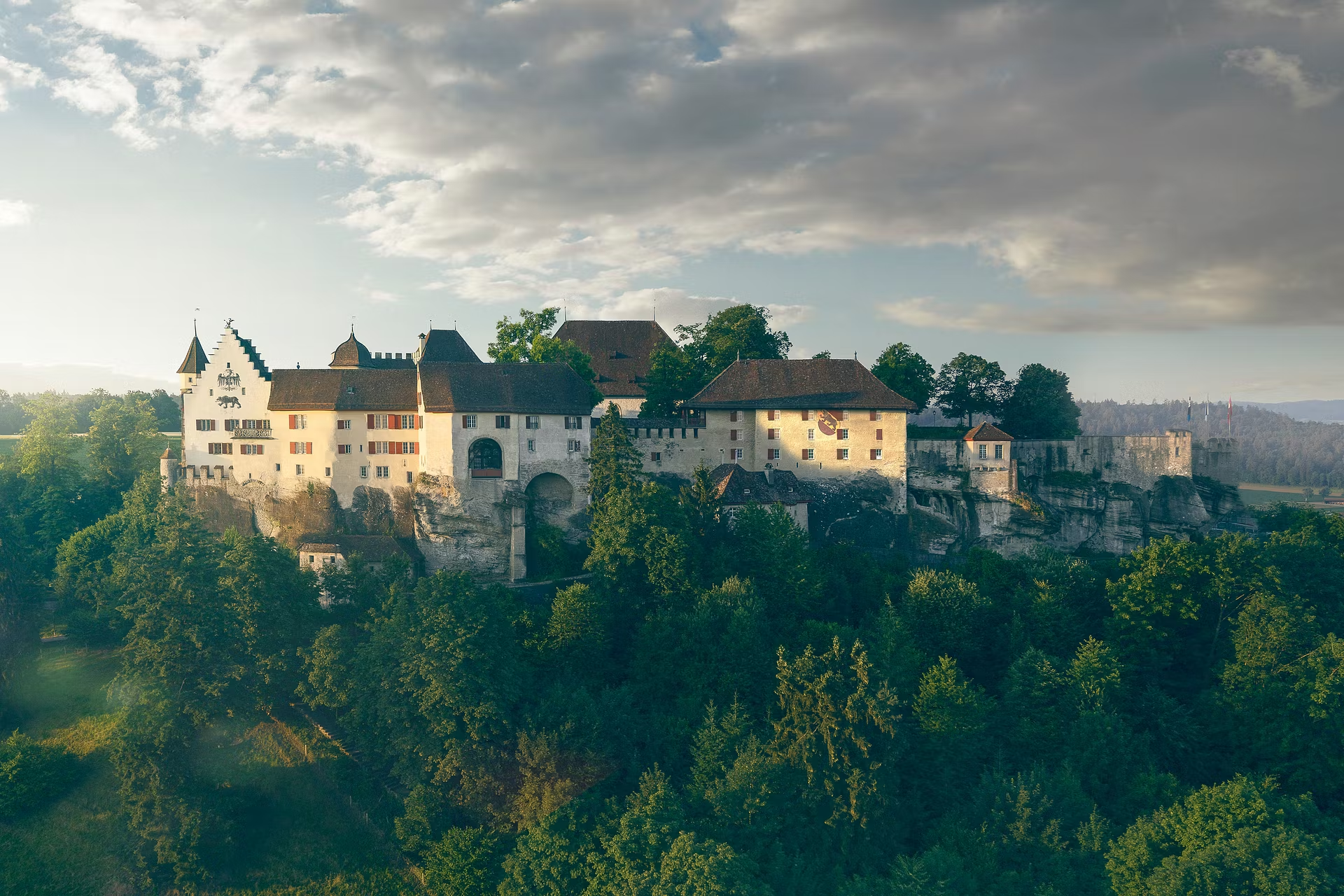
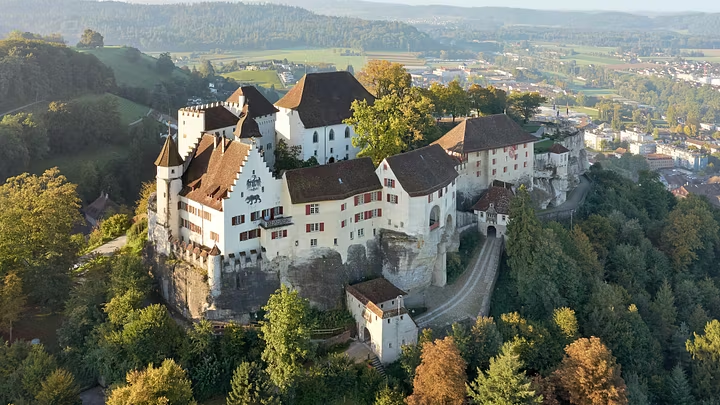
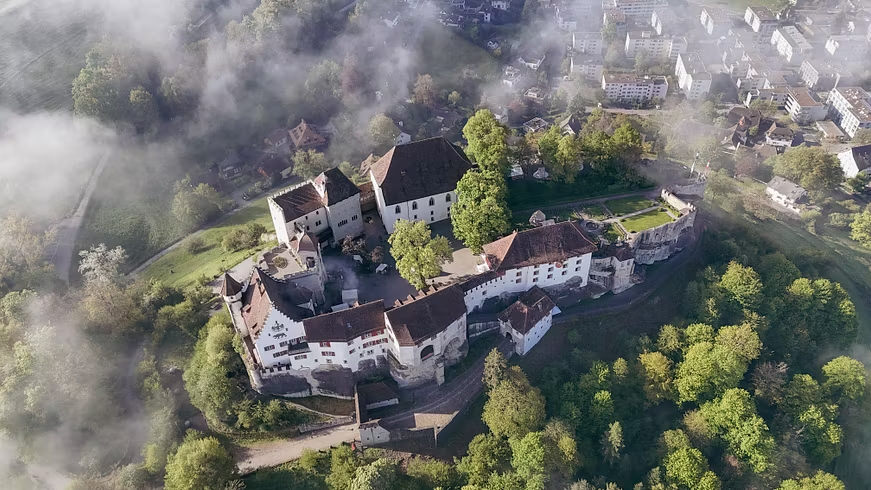
Luftaufnahme Schloss Lenzburg

Lenzburg Castle

Home of knights
and dragons

Lenzburg Castle is one of the most important hilltop castles in Switzerland. Experience knights, noblemen and crooks!

NOTE: MEDIEVAL MARKET

This weekend (Friday through Sunday, September 11–13, 2026), the big Medieval Market will take place at Lenzburg Castle. More information (in German)

PLANNING YOUR VISIT

 
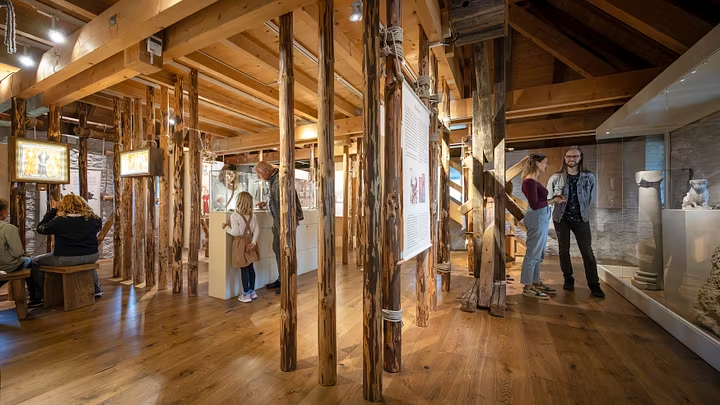
Ausstellung Ritter Schloss Lenzburg

Museum and
exhibitions

Museum, exhibitions and prison  

 
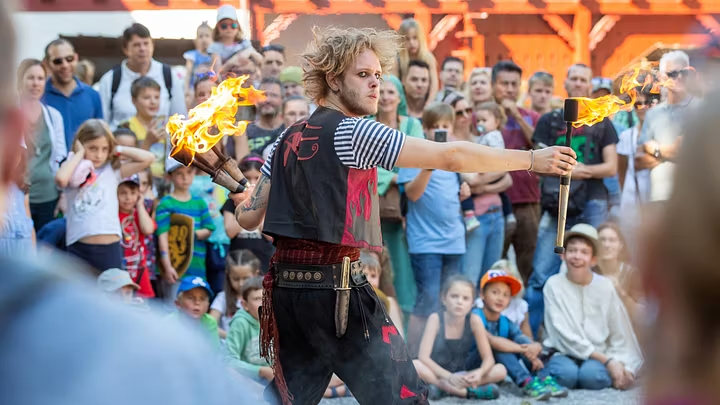
Ein Gaukler mit brennenden Fackeln vor einer Menschenmenge

Events and public
guided tours

Calendar of events (in German)  

 
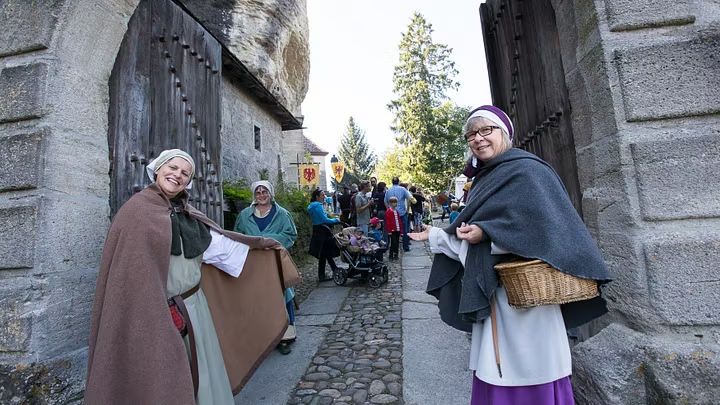
Zwei historisch gekleidete Freuen stehen vor dem Tor von Schloss Lenzburg und bitten Besucher mit einer einladenden Geste herein.

Opening hours
and entrance fees

Open from April to October  

 
Luftaufnahme Schloss Lenzburg

Getting
here

Directions  

SCHOOLS, FAMILIES, GROUPS

 
Workshop mit Schulklasse auf Schloss Lenzburg

For
schools

Guided tours and workshops  

 
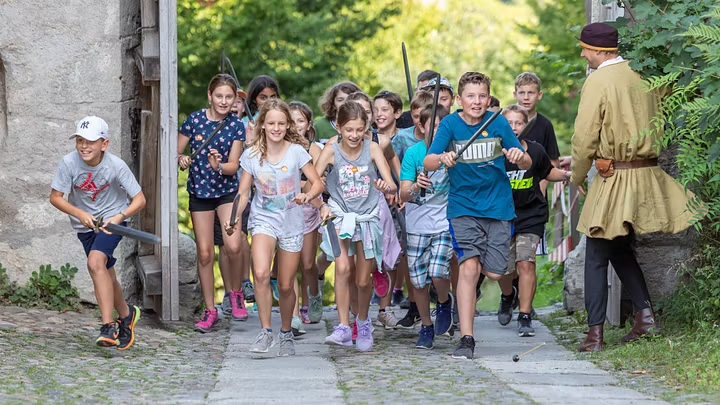
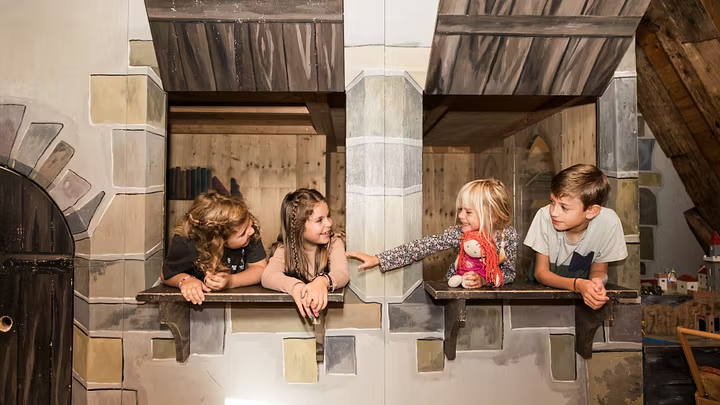
Kinder in Verkleidung (Ritter und Prinzessin) im Kindermuseum von Schloss Lenzburg

For
families

Children's museum and Fauchi  

 
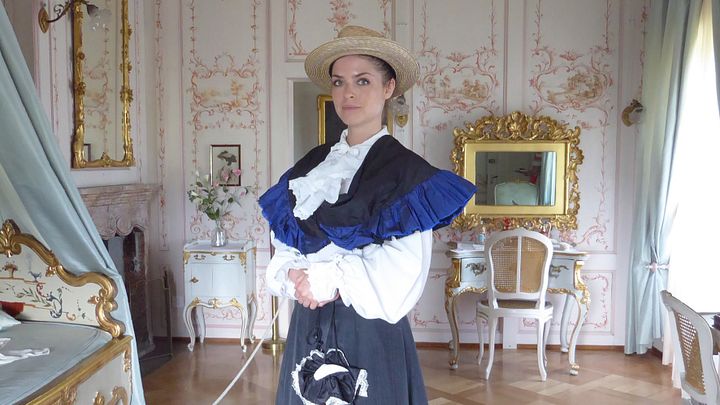
Lady Mildred im Museum auf Schloss Lenzburg (Führung).

For
groups

Guided tours and workshops  

HISTORY AND COLLECTION

 
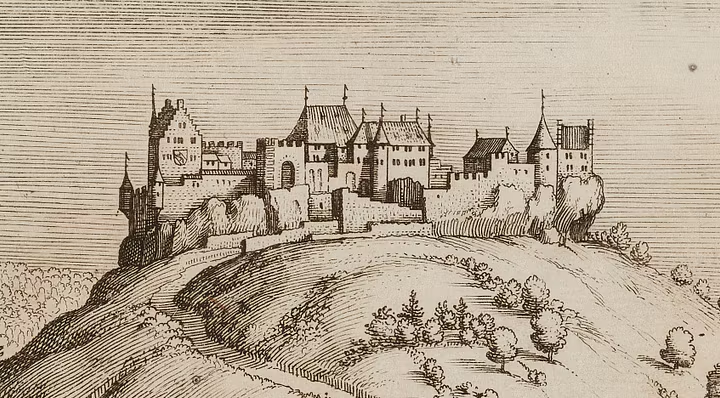
Historische Zeichnung/Illustration von Schloss Lenzburg

History

1000 years of history  

 
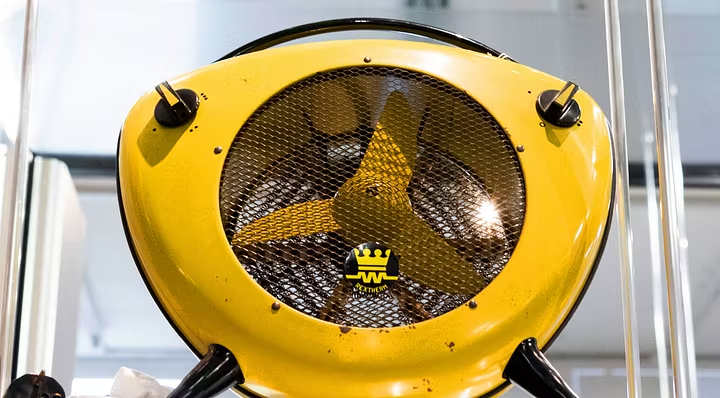
Ein gelber Heizlüfter, Objekt im Sammlungszentrum Egliswil

Collection

Treasure trove of Aargau's history  

 
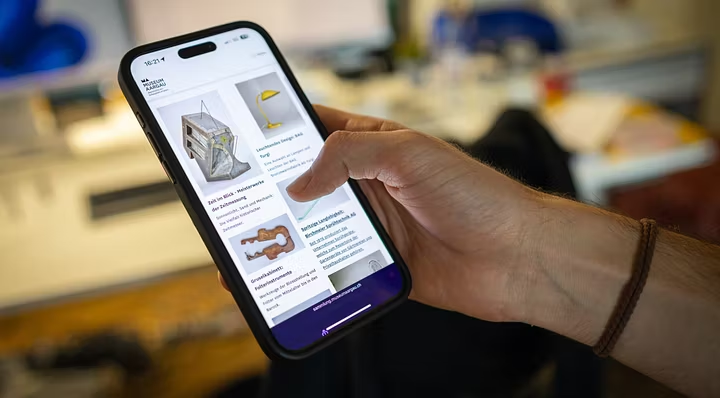
Grosses Handy in der Hand eines Benutzers, auf dem Bildschirm ist die "Sammlung online" von Museum Aargau dargestellt.

Collection online

Site in German  

Impressions

Luftaufnahme von Schloss Lenzburg: Schloss auf einem Hügel im Sommer
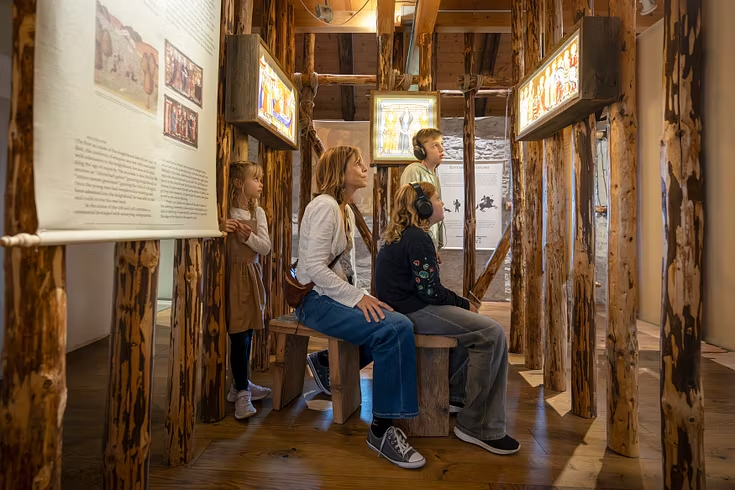
Eine Familie sitzt in der Ausstellung Ritter Schloss Lenzburg
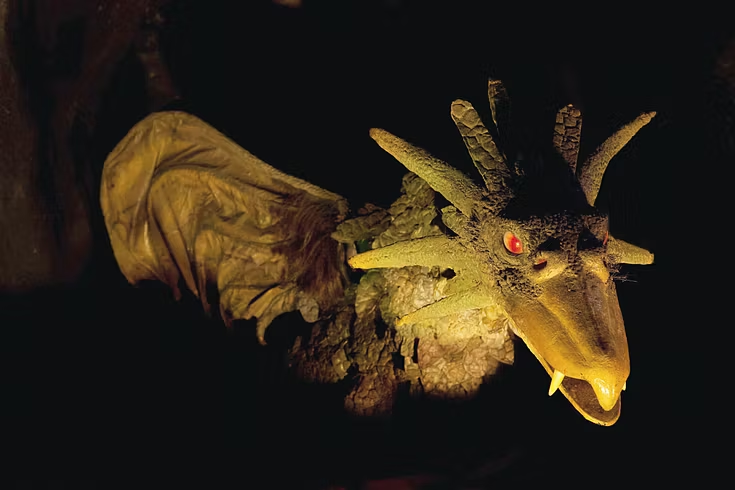
Schlossdrache Fauchi in der Drachenhöhle von Schloss Lenzburg
Mehrere Personen schreiten auf Schloss Lenzburg über eine Holzbrücke ins Gefängnis.
Ein als Prinzessin verkleidetes Mädchen blickt in einen Spiegel im Kindermuseum von Schloss Lenzburg, neben dem Kind steht seine Mutter.
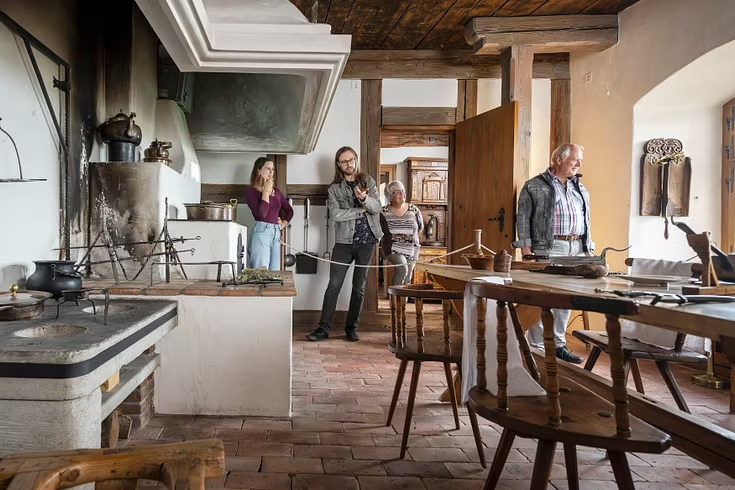
Küche mit Besuchern im Schloss Lenzburg Museum