Museum Aargau

Privacy policy

With this Privacy Policy we provide information about the processing of personal data in connection with our activities and operations , including our website under the domain name museumaargau.ch . In particular, we explain which personal data we process, for what purpose, in what manner and where. We also provide information about the rights of persons whose data we process. We have drafted this Privacy Policy in German. In the event of publication in another language, the German-language Privacy Policy remains authoritative. For individual or additional activities and operations, we may publish further privacy policies or other information on data protection. Table of Contents 1. Contact Addresses 2. Terms and Legal Basis 2.1 Terms 2.2 Legal Basis 3. Nature, Scope and Purpose of the Processing of Personal Data 4. Disclosure of Personal Data 5. Communication 6. Data Security 7. Personal Data Abroad 8. Rights of Data Subjects 8.1 Data Protection Claims 8.2 Legal Remedies 9. Use of the Website 9.1 Cookies 9.2 Logging 9.3 Tracking Pixels 9.4 Comments 10. Notifications and Communications 10.1 Performance and Reach Measurement 10.2 Consent and Objection 10.3 Service Providers for Notifications and Communications 11. Social Media 12. Third-Party Services 12.1 Digital Infrastructure 12.2 Audio and Video Conferencing 12.3 Online Collaboration 12.4 Social Media Features and Social Media Content 12.5 Maps 12.6 Digital Content 12.7 Documents 12.8 E-Commerce 12.9 Payments 12.10 Advertising 13. Extensions for the Website 14. Performance and Reach Measurement 15. Video Surveillance 16. Final Remarks on this Privacy Policy 1. Contact Addresses Responsible for the processing of personal data within the meaning of data protection law is: Museum Aargau Effingerweg 6 CH-5103 Wildegg museumaargau@ag.ch In individual cases, third parties may be responsible for the processing of personal data, or there may be joint responsibility with third parties. We are happy to inform data subjects upon request about the respective responsibility. 2. Terms and Legal Basis 2.1 Terms Data subject: A natural person about whom we process personal data. Personal data: All information relating to an identified or identifiable natural person. Sensitive personal data: Data on trade union, political, religious or philosophical views and activities, data on health, the intimate sphere or affiliation with an ethnicity or race, genetic data, biometric data that uniquely identifies a natural person, data on criminal and administrative sanctions or proceedings, and data on social assistance measures. Processing: Any handling of personal data, irrespective of the means and procedures used, for example querying, comparing, adapting, archiving, retaining, reading, disclosing, obtaining, recording, collecting, deleting, revealing, sorting, organising, storing, altering, distributing, linking, destroying and using personal data. 2.2 Legal Basis We process personal data in accordance with Swiss law, in particular the Federal Act on Data Protection (Data Protection Act, FADP) and the Ordinance on Data Protection (Data Protection Ordinance, DPO). 3. Nature, Scope and Purpose of the Processing of Personal Data We process those personal data that are necessary to carry out our activities and operations in a sustainable, user-friendly, secure and reliable manner. The personal data processed may in particular fall into the categories of browser and device data, content data, communication data, metadata, usage data, master data including inventory and contact data, location data, transaction data, contract data and payment data. The personal data may also constitute sensitive personal data. We also process personal data that we receive from third parties, obtain from publicly accessible sources or collect in the course of our activities and operations, insofar as such processing is permitted. We process personal data, where necessary, with the consent of the data subjects. In many cases we may process personal data without consent, for example in order to fulfil legal obligations or to protect overriding interests. We may also ask data subjects for their consent even where their consent is not required. We process personal data for the duration required for the respective purpose. We anonymise or delete personal data in particular depending on statutory retention periods and limitation periods. 4. Disclosure of Personal Data We may disclose personal data to third parties , have them processed by third parties or process them jointly with third parties. Such third parties may be, for example, specialised providers whose services we use. Such third parties may in turn disclose personal data to third parties. In the course of our activities and operations, we may in particular disclose personal data to banks and other financial service providers, authorities, educational and research institutions, consultants and lawyers, accounting and fiduciary service providers, debt collection agencies, interest groups, IT service providers, cooperation partners, credit and business information agencies, logistics and shipping companies, marketing and advertising agencies, media, parent, sister and subsidiary companies, organisations and associations, social institutions, telecommunications companies, insurance companies and payment service providers. 5. Communication We process personal data in order to be able to communicate with individuals as well as with authorities, organisations and companies. In particular, we process data that a data subject transmits to us when contacting us, for example by post or e-mail. We may store such data in an address book or with comparable tools. Third parties who transmit data about other persons to us are legally obliged to ensure the data protection of these data subjects independently. In particular, they must ensure that they are permitted to transmit such data, but also guarantee the accuracy of the data transmitted. We use selected services from suitable providers to enable and improve communication with individuals and other communication partners. With such services, we may also manage and otherwise process the data of the data subjects beyond direct communication, for example in connection with orders, services, projects and resource planning. 6. Data Security We take appropriate technical and organisational measures to ensure data security appropriate to the respective risk. With our measures we ensure in particular the confidentiality, availability, traceability and integrity of the personal data processed, without, however, being able to guarantee absolute data security. Access to our website and our other digital presence takes place via transport encryption ( SSL / TLS , in particular using the Hypertext Transfer Protocol Secure, abbreviated HTTPS ). Most browsers warn before visiting a website without transport encryption. Our digital communication is subject – as is in principle all digital communication – to mass surveillance without cause or suspicion by security authorities in Switzerland, the rest of Europe, the United States of America (USA) and other countries. We cannot directly influence the corresponding processing of personal data by intelligence services, police authorities and other security authorities. Nor can we rule out that a data subject is being specifically monitored. 7. Personal Data Abroad We process personal data in principle in Switzerland. However, we may also disclose or export personal data to other countries, in particular in order to process them there or have them processed there. We may disclose personal data to all countries on Earth and elsewhere in the universe , provided that the law there guarantees adequate data protection in accordance with a decision of the Swiss Federal Council . We may disclose personal data to countries whose law does not guarantee adequate data protection, provided that appropriate data protection is ensured for other reasons, in particular on the basis of standard data protection clauses or other suitable safeguards. Exceptionally, we may export personal data to countries without adequate or appropriate data protection if the special data protection requirements for doing so are met, for example the express consent of the data subjects or a direct connection with the conclusion or performance of a contract. We are happy to inform data subjects upon request about any safeguards or to provide a copy of safeguards. 8. Rights of Data Subjects 8.1 Data Protection Claims We grant data subjects all claims under applicable law. In particular, data subjects have the following rights: Access: Data subjects may request information as to whether we process personal data about them and, if so, which personal data. Data subjects also receive the information necessary to assert their data protection claims and to ensure transparency. This includes the personal data processed as such, but also, among other things, information on the purpose of processing, the duration of retention, any disclosure or export of data to other countries and the origin of the personal data. Rectification and restriction: Data subjects may have inaccurate personal data corrected, incomplete data completed and the processing of their data restricted. Opportunity to state their own position and human review: In the case of decisions based solely on automated processing of personal data that have legal consequences for them or significantly affect them (automated individual decisions), data subjects may state their own position and request review by a human being. Erasure and objection: Data subjects may have personal data erased («right to be forgotten») and object to the processing of their data with effect for the future. Data disclosure and data portability: Data subjects may request the release of personal data or the transfer of their data to another controller. We may defer, restrict or refuse the exercise of the rights of data subjects within the legally permissible framework. We may point out to data subjects any conditions that must be met in order to exercise their data protection claims. For example, we may refuse to provide information in whole or in part with reference to confidentiality obligations, overriding interests or the protection of other persons. We may also, for example, refuse to erase personal data in whole or in part, in particular with reference to statutory retention obligations. We may exceptionally charge fees for the exercise of these rights. We inform data subjects in advance of any fees. We are obliged to identify data subjects who request access or assert other rights by means of appropriate measures. Data subjects are obliged to cooperate. 8.2 Legal Remedies Data subjects have the right to enforce their data protection claims through legal proceedings or to file a report or complaint with a data protection supervisory authority. The data protection supervisory authority for private controllers and federal bodies in Switzerland is the Federal Data Protection and Information Commissioner (FDPIC) . 9. Use of the Website 9.1 Cookies We may use cookies. Cookies – both our own cookies (first-party cookies) and cookies from third parties whose services we use (third-party cookies) – are data stored in the browser. Such stored data need not be limited to traditional cookies in text form. Cookies may be stored in the browser temporarily as «session cookies» or for a certain period as so-called permanent cookies. «Session cookies» are automatically deleted when the browser is closed. Permanent cookies have a specific storage period. Cookies make it possible in particular to recognise a browser on the next visit to our website and thereby, for example, to measure the reach of our website. However, permanent cookies may also be used, for example, for online marketing. Cookies can be completely or partially deactivated, restricted or deleted at any time in the browser settings. The browser settings often also enable automated deletion and other management of cookies. Without cookies, our website may no longer be available in full. We actively request – at least insofar as and to the extent required by applicable law – express consent to the use of cookies. For cookies used for performance and reach measurement or for advertising, a general objection («opt-out») is possible for numerous services via AdChoices (Digital Advertising Alliance of Canada) , the Network Advertising Initiative (NAI) , YourAdChoices (Digital Advertising Alliance) or Your Online Choices (European Interactive Digital Advertising Alliance, EDAA) . 9.2 Logging For each access to our website and our other digital presence, we may log at least the following information, provided that it is determined or transmitted to our digital infrastructure by default during such access: date and time including time zone, IP address , access status (HTTP status code) , operating system including user interface and version, browser including language and version, the individual sub-page of our website accessed including the amount of data transferred, the web page last accessed in the same browser window (referer or referrer) . We log such information, which may also constitute personal data, in log files. The information is necessary in order to provide our digital presence in a sustainable, user-friendly and reliable manner. The information is also necessary to ensure data security – including by third parties or with the help of third parties. 9.3 Tracking Pixels We may embed tracking pixels in our digital presence. Tracking pixels are also referred to as web beacons. Tracking pixels – including those of third parties whose services we use – are usually small, invisible images or scripts written in JavaScript that are automatically retrieved when our digital presence is accessed. Tracking pixels can capture at least the same information as logging in log files. 9.4 Comments We enable you to publish comments on our website. In this context, we process in particular the information that a commenting person transmits to us, but also the IP address used as well as the date and time. This information is required in order to enable the publication of comments and to ensure protection against misuse, which is in our overriding legitimate interest. 10. Notifications and Communications 10.1 Performance and Reach Measurement Notifications and communications may contain web links or tracking pixels that record whether an individual communication has been opened and which web links were clicked. Such web links and tracking pixels may also record the use of notifications and communications on a personal basis. We need this statistical recording of usage for performance and reach measurement, in order to send notifications and communications effectively and in a user-friendly manner as well as sustainably, securely and reliably, based on the needs and reading habits of the recipients. 10.2 Consent and Objection You must in principle consent to the use of your e-mail address and your other contact addresses, unless the use is permitted for other legal reasons. For obtaining a doubly confirmed consent, we may use the «double opt-in» procedure. In this case you will receive a message with instructions for the double confirmation. We may log consents obtained, including IP address and timestamp , for evidentiary and security reasons. You may in principle object to receiving notifications and communications such as newsletters at any time. With such an objection you may at the same time object to the statistical recording of usage for performance and reach measurement. Necessary notifications and communications in connection with our activities and operations remain reserved. 10.3 Service Providers for Notifications and Communications We send notifications and communications with the help of specialised service providers. We use in particular: Mailchimp: Communication platform; provider: The Rocket Science Group LLC DBA Mailchimp (USA) as a subsidiary of Intuit Inc. (USA); information on data protection: Privacy Policy (Intuit) including «Country and Region-Specific Provisions» , «Mailchimp Privacy FAQ» , «Mailchimp and European Data Transfers» , «Security» , Cookie Policy , «Privacy Rights Requests» , «Legal» . 11. Social Media We are present on social media platforms and other online platforms in order to communicate with interested persons and to provide information about our activities and operations. In connection with such platforms, personal data may also be processed outside Switzerland. The general terms and conditions (GTC) and terms of use as well as the privacy policies and other provisions of the individual operators of such platforms also apply in each case. These provisions provide information in particular about the rights of data subjects directly vis-à-vis the respective platform, which include, for example, the right of access. 12. Third-Party Services We use services from specialised third parties in order to carry out our activities and operations in a sustainable, user-friendly, secure and reliable manner. With such services we can, among other things, embed features and content in our website. In the case of such embedding, the services used record, for technically compelling reasons, at least temporarily the IP addresses of users. For necessary security-related, statistical and technical purposes, third parties whose services we use may process data in connection with our activities and operations in aggregated, anonymised or pseudonymised form. This concerns, for example, performance or usage data in order to be able to offer the respective service. We use in particular: Google services: Providers: Google LLC (USA) / Google Ireland Limited (Ireland) in part for users in the European Economic Area (EEA) and Switzerland; general information on data protection: «Privacy Practices» , Privacy Policy , «How Google uses personal data» , «Google is committed to complying with applicable data protection laws» , «Privacy Guide to Google Products» , «How Google uses information from sites or apps that use our services» , Cookie Policy , «Advertising you can control» (settings for personalised advertising) . Microsoft services: Providers: Microsoft Ireland Operations Limited (Ireland) for users in the European Economic Area (EEA), Switzerland and the United Kingdom / Microsoft Corporation (USA) for users in the rest of the world; general information on data protection: «Privacy at Microsoft» , «Data Protection and Privacy» , Privacy Statement , «Data and Privacy Settings» . 12.1 Digital Infrastructure We use services from specialised third parties in order to obtain the digital infrastructure required in connection with our activities and operations. These include, for example, hosting and storage services from selected providers. We use in particular: Cloudflare: Content Delivery Network (CDN); Cloudflare Inc. (USA); information on data protection: «Privacy and Data Protection» , Privacy Policy , Cookie Policy . Google Cloud including Google Cloud Platform (GCP): Storage space and other infrastructure; Google Cloud-specific providers: national or regional Google companies depending on country and region ; Google Cloud-specific information: «Privacy Resource Center» , «Google Cloud and common privacy principles» , «Google Cloud Privacy Notice» , «Data Protection» . METANET: Hosting; provider: METANET AG (Switzerland); information on data protection: Privacy Policy , «Legal» including «Technical and Organisational Measures» . Ops One: Hosting; provider: Ops One AG (Switzerland); information on data protection: Privacy Policy . 12.2 Audio and Video Conferencing We use specialised services for audio and video conferencing in order to communicate online. With these we can, for example, hold virtual meetings or conduct online lessons and webinars. For participation in audio and video conferences, the legal texts of the individual services, such as privacy policies and terms of use, apply in addition. Depending on your life situation, we recommend that when participating in audio or video conferences you mute the microphone by default and blur the background or display a virtual background. 12.3 Online Collaboration We use third-party services to enable online collaboration. In addition to this Privacy Policy, any directly visible terms of the services used, such as terms of use or privacy policies, also apply. We use in particular: Asana: Platform for collaboration in organisations; provider: Asana Inc. (USA); information on data protection: «Trust at Asana» , Privacy Statement , Bug Bounty Program . Microsoft Teams: Platform for productive collaboration, in particular with audio and video conferencing; provider: Microsoft; Teams-specific information: «Security and compliance in Microsoft Teams», in particular «Privacy» . 12.4 Social Media Features and Social Media Content We use third-party services and plugins in order to embed features and content from social media platforms and to enable the sharing of content on social media platforms and by other means. We use in particular: Facebook (Social Plugins): Embedding of Facebook features and Facebook content, for example «Like» or «Share»; providers: Meta Platforms Ireland Limited (Ireland) and other Meta companies (including in the USA); information on data protection: Privacy Policy . Instagram Platform: Embedding of Instagram content; providers: Meta Platforms Ireland Limited (Ireland) and other Meta companies (including in the USA); information on data protection: Privacy Policy (Instagram) , Privacy Policy (Facebook) . X for Websites: Integration of features and content from X, for example posts or «Follow» buttons; providers: X Internet Unlimited Company (Ireland) for users in the European Economic Area (EEA), Switzerland and the United Kingdom / X Corp. (USA) for users in the rest of the world; information on data protection: Privacy Policy , «Additional information about data processing» , «Personalization based on your inferred identity» , «Privacy controls for tailored ads» , Cookie Policy . Contentfry: Embedding of social media posts and other content. Privacy Policy: Privacy. 12.5 Maps We use third-party services in order to embed maps in our website. We use in particular: Google Maps including Google Maps Platform: Map service; provider: Google; Google Maps-specific information: «How Google uses location information» . 12.6 Digital Content We use services from specialised third parties in order to embed digital content in our website. Digital content includes in particular image and video material, music and podcasts. We use in particular: Wistia: Video platform; provider: Wistia Inc. (USA); information on data protection: «Privacy and Data Protection» , Privacy Policy . YouTube: Video platform; provider: Google; YouTube-specific information: «Privacy and Safety Center» , «Your data in YouTube» . Interacty: Platform for interactive content and gamification: Contact , Privacy Policy . Riddle: Platform for embedding interactive content such as quizzes, surveys and games; provider: Riddle Technologies AG (Switzerland); information on data protection: Privacy Policy . 12.7 Documents We use third-party services in order to embed documents in our website. Such documents may include PDF files, presentations, spreadsheets and text documents. This allows us to enable not only the viewing but also the editing or commenting of such documents. 12.8 E-Commerce We operate e-commerce and use third-party services in order to successfully offer services, content or goods. 12.9 Payments We use specialised service providers in order to process payments securely and reliably. For the processing of payments, the legal texts of the individual service providers, for example general terms and conditions (GTC) or privacy policies, apply in addition. We use in particular: Worldline: Processing of payments, in particular with mobile payment solutions; providers: Worldline SA (France), Worldline Schweiz AG (Switzerland) and other Worldline companies worldwide (including in the USA); information on data protection: Privacy Policy , «Responsible Disclosure Program» , Cookie Notice . 12.10 Advertising We make use of the possibility of having targeted advertising displayed by third parties , such as social media platforms and search engines, for our activities and operations. With such advertising we wish in particular to reach persons who are already interested in our activities and operations or who might be interested in them ( remarketing and targeting ). For this purpose we may transmit corresponding – possibly also personal – information to third parties that enable such advertising. We may also determine whether our advertising is successful, i.e. in particular whether it leads to visits to our website (conversion tracking) . Third parties with whom we advertise and with whom you are registered as a user may be able to associate your use of our website with your profile there. We use in particular: Google Ads: Search engine advertising; provider: Google; Google Ads-specific information: advertising based, among other things, on search queries, whereby various domain names – in particular doubleclick.net, googleadservices.com and googlesyndication.com – are used for Google Ads, Advertising Privacy Policy , «Manage the ads you see directly from ads» . Meta Ads: Social media advertising on Facebook and Instagram; providers: Meta Platforms Ireland Limited (Ireland) and other Meta companies (including in the USA); information on data protection: targeting, including retargeting, in particular with the Meta Pixel and with Custom Audiences including Lookalike Audiences , Privacy Policy , «Ad Preferences» (login as a user required). TikTok Ads: Social media advertising; providers: TikTok Information Technologies UK Limited (United Kingdom) and TikTok Technology Limited (Ireland) for users in the European Economic Area (EEA), Switzerland and the United Kingdom / TikTok Inc. (USA) for users in the USA / TikTok Pte. Ltd. (Singapore) for most users in the rest of the world; information on data protection: remarketing and targeting, in particular with the TikTok Pixel , Privacy Policy , «Privacy Policy for Younger Users» , «Privacy Policy for TikTok Partners» , Cookie Policy . 13. Extensions for the Website We use extensions for our website in order to make use of additional features. We may use selected services from suitable providers or run such extensions on our own digital infrastructure. We use in particular: Google reCAPTCHA: Bot protection (distinguishing between desired activities by humans and undesired activities by bots); provider: Google; Google reCAPTCHA-specific information: «What is reCAPTCHA?» . 14. Performance and Reach Measurement We try to measure the performance and reach of our activities and operations. In this context we may also measure the effect of third-party references or examine how different parts or versions of our digital presence are used («A/B testing» method). Based on the results of performance and reach measurement, we may in particular fix errors, strengthen popular content or make improvements. For performance and reach measurement, the IP addresses of individual users are recorded in most cases. In this case, IP addresses are in principle shortened («IP masking») in order to follow the principle of data minimisation through the corresponding pseudonymisation. Cookies may be used and user profiles may be created for performance and reach measurement. Any user profiles created include, for example, the individual pages visited or content viewed on our digital presence, information on the size of the screen or browser window and the – at least approximate – location. In principle , any user profiles are created exclusively in pseudonymised form and are not used to identify individual users. Individual third-party services with which users are registered may be able to associate the use of our online offering with the user account or user profile at the respective service. We use in particular: Google Marketing Platform: Performance and reach measurement, in particular with Google Analytics ; provider: Google; Google Marketing Platform-specific information: measurement also across different browsers and devices (cross-device tracking) with pseudonymised IP addresses, which are only exceptionally transmitted in full to Google in the USA, Privacy Policy for Google Analytics , «Google Analytics Opt-out Browser Add-on» . Google Tag Manager: Integration and management of Google and third-party services, in particular for performance and reach measurement; provider: Google; Google Tag Manager-specific information: Privacy Policy for Google Tag Manager ; further information on data protection can be found with the individual integrated and managed services. Matomo: Performance and reach measurement; provider: InnoCraft Ltd. (New Zealand, free open source software); information on data protection: use on our own digital infrastructure and with anonymised IP addresses, «List of all Matomo Features» . 15. Video Surveillance We use video surveillance for the prevention of criminal offences, for securing evidence in the event of criminal offences and for exercising our domiciliary rights. We retain recordings from our video surveillance for as long as they are required for securing evidence or for another stated purpose. We may secure recordings from our video surveillance and transmit them to competent bodies, in particular courts or law enforcement authorities, insofar as the transmission is necessary for a stated purpose, in our overriding interest or on the basis of legal obligations. 16. Final Remarks on this Privacy Policy We have created this Privacy Policy with the Privacy Policy Generator by Datenschutzpartner . We may update this Privacy Policy at any time. We provide information about updates by publishing the current Privacy Policy on our website.

 
Königsfelden Abbey

History

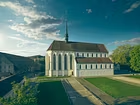
History A king's murder and the foundation of the monastery The German King Albrecht I fell victim to a conflict within the Habsburg family on May 1st 1308. His nephew Johann felt cheated out of his inheritance: Albrecht administered it after the death of Johann's parents but he did not let Johann himself take possession of it. Together with other conspirators, Johann murdered his uncle Albrecht on the high plateau in Windisch. The murder shook the House of Habsburg to the core, since the Albrecht's death meant the family lost its German kingship. In memory of the murdered King Albrecht, the family first had a chapel built along with a house for two Franciscan monks. Probably with the support of her daughter Agnes, the Dowager Queen Elisabeth initiated the construction of a Franciscan double monastery, for which lands were purchased. Construction work began on the new monastery in the autumn of 1310. The foundation formally took place in 1311 and the first nuns moved into the Clarist Convent in 1312. Albrecht's widow and monastery founder Queen Elisabeth died in Vienna in 1313 and chose Königsfelden as her last resting place. This gave the site significance as a Habsburg burial ground. Ten other family members were buried in the family vault at the centre of the church. The vault was opened in the 18th century and the bodies were transferred first to St. Blaise Abbey and in 1807 to St. Paul's Abbey in Carinthia. More Less 1308-1313 Queen Agnes Born in 1281, Agnes was married to the Hungarian King Andreas III in 1298, though the latter died just three years later. After her mother Elisabeth's death, Agnes became the driving force behind the construction of the monastery and its future. In 1316 she had her mother's mortal remains moved to Königsfelden and took up residence herself within the monastery walls. A house was built specially for her on the monastery grounds - presumably near the chancel. Agnes of Hungary resided in Königsfelden as a dowager queen and an influential member of the Habsburg dynasty until the advanced age of 83, establishing a reputation for herself as a generous sponsor of the monastery and an intermediary and regent in the Habsburg homelands. She created a sound economic basis for the monastery by making numerous donations. The building complex housed the women's convent of St. Clare and the men's convent of St. Francis in strictly separated sections. Agnes exercised considerable influence on the internal organisation of the two convents. In spite of the fact that she lived in the monastery, she never entered the order herself. She died in 1364 and was laid to rest in the Königsfelden vault. The nuns of Königsfelden were recruited from the high nobility of the time and contributed considerable assets themselves to the monastery on entering. In this way the monastery amassed treasures consisting of more than 200 items. After dissolution of the monastery in 1528 the majority of these were lost. A few valuable pieces were taken to Bern. More Less 1313-1364 Sempach knights and commemoration of the dead After the Battle of Sempach ended in disaster for the Habsburgs in 1386, Königsfelden was used as a burial place for Duke Leopold and other fallen knights. This became part of the Habsburg commemorative culture which Elisabeth and her daughter Agnes had initiated with the construction of the monastery: requiem masses were held to mark the anniversaries of Habsburg family members' deaths every year up until the Reformation. These feast days were celebrated in the name of the dead and in their memory, with banquets put on for select guests and food distributed to the poor. The practice of commemorating the dead was based on a fear which was widespread in the Middle Ages that the salvation of those who had died suddenly was at risk since they had not received the last sacrament. People believed that the soul of a person who had been killed abruptly would have to spend longer atoning for its sins in Purgatory before entering Paradise. Intercessions and commemorations aimed to accelerate the process and enable the soul to attain salvation more quickly. More Less 1386 Bernese period and secularisation The Bernese conquered the area of what is now Aargau in 1415, thereby taking control of the monastery. The Habsburgs finally relinquished any claims to their former possessions in 1480. A Bernese administrator was installed to take care of the Habsburg memorial site and Königsfelden Monastery. The double monastery remained in place but never regained the importance it had enjoyed under the Habsburgs in the 14th century. The monastery was dissolved in 1528 in the wake of the Reformation. A 'Toubhüssli’ or cell in which to keep the insane was established in the former women's convent. Under Bernese rule, the wealthy monastery in the area of Eigenamt once administered by the Habsburgs became one of the richest bailiwicks in the state of Bern. Administrators known as Hofmeister represented the Bernese until their rule came to an end. These administrators generally came from the upper echelons of Bernese society. Together with a secretary and a small staff of servants they administered the monastery estate and bailiwick; they lived in the Administrator's Residence or Hofmeisterei. Some of them were buried in the church. In the 18th century, the nave of the monastery church was converted into a multi-level warehouse after the Habsburg vault had been opened and the mortal remains transferred to St. Blaise Abbey in the Black Forest. The warehouse was used to store cereals, for example. The chancel of the church was converted into an infirmary and other monastery buildings were used as a shelter for the poor. More Less 1415-18th c. Psychiatric hospital, demolition, new start and Museum Aargau From 1803 onwards, Königsfelden was used as a sanatorium by the new canton of Aargau (today Psychiatrische Dienste Aargau AG). However, the monastery complex soon proved to be too small. So construction work started on new buildings in 1868 and these were completed in 1872. Most of the monastery complex was demolished for this purpose in 1870. Only the archive vaults of the former Franciscan monastery, parts of the women's convent, the Bernese bailiwick and‘the monastery church were left standing and later renovated. At this point the mezzanine floors inserted in the monastery church during the Bernese period were removed. A thorough archaeological investigation and restoration was carried out from 1982 to 1986. Königsfelden Monastery Church is regarded as one of Switzerland's foremost examples of mendicant order architecture and stained glass. It has belonged to Museum Aargau since 2009. More Less 1900 - today Abbey complex Stained glass windows Contact

 
Vindonissa Legionary Trail

Archaeological research

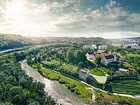
The depots and archives now contain hundreds of thousands of items and archaeological information that sheds light on the world of the Romans in Vindonissa. Some of this treasure trove is now on show at the Vindonissa Museum in Brugg. In Windisch it is possible to view the structural remains dating back to the time of the legionary camp in the form of stations along the Legionary Trail. The terrain in Windisch and Brugg continues to yield spectacular archaeological discoveries to this day. The most recent examples are the site of the eastern camp gate discovered by archaeologists of the canton of Aargau in 2014 and the previously unknown burial ground in Brugg-Remigersteig, which was unearthed in 2012. The burial ground at the foot of Bruggerberg was situated on the main road to Augusta Raurica. In addition to more than 140 graves, the excavations also brought to light an excellently preserved burial monument and the gravestone to go with it. The latter tells us that the grave belonged to Maxsimila from Bologna, who died at the age of 40, and her 10-year-old slave Heuprosinis. Current excavations Canton archaeologists are involved in a number of research projects relating to the Vindonissa excavation site. The Vindonissa Professorship for Roman Provincial Archaeology at the University of Basel Department of Classical Studies also makes an important contribution to research into the Roman site. A key focus here is collaboration with neighbouring scientific disciplines such as archaeobotany and archaeozoology. For more information on current excavations in Vindonissa and elsewhere in Canton Argovia see Kantonsarchäologie Aargau (in German).

 
Wettingen Abbey

Search page header logo

 
Wettingen Abbey

Event

 
Egliswil Collection Centre

Search page header logo

 
IndustriekulTour Aabach

Search page header logo

 
Wildegg Castle

Search

 
Museum Aargau

Header Logo

 
Vindonissa Museum

Search page header logo

Gradian
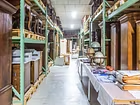
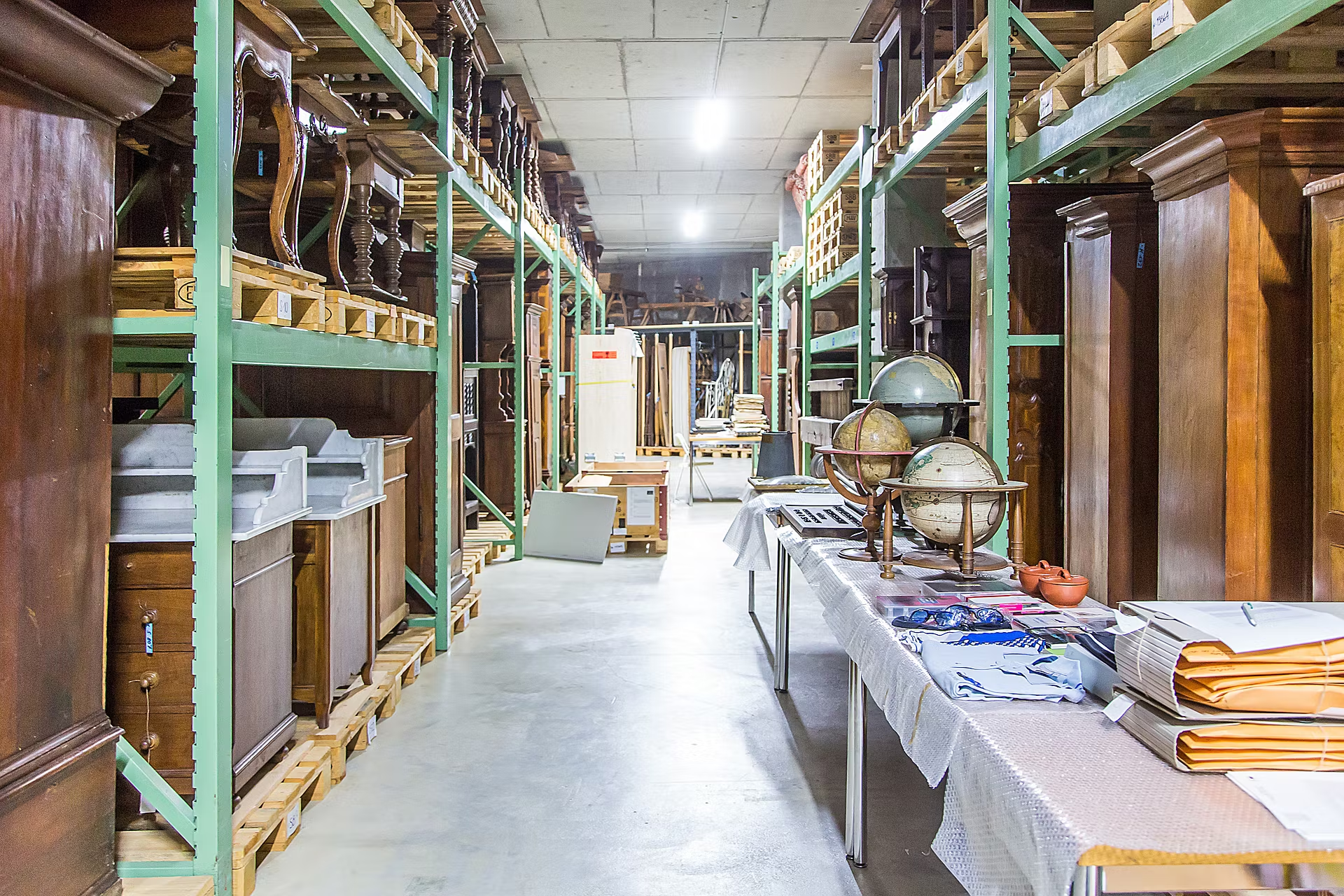
Blick in die Halle des Sammlungszentrums Egliswil

Egliswil Collection Centre

Treasure Trove of the Collection

OVERVIEW

 
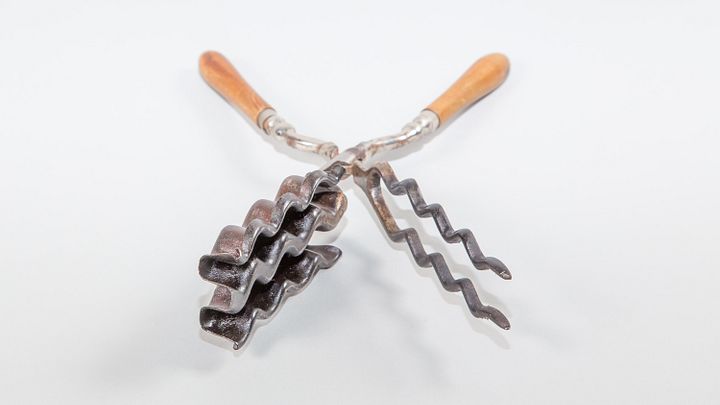
Objekt aus der Sammlung Museum Aargau auf weissem Grund.

Portrait of the
collection

50,000 objects on the history of Aargau  

 
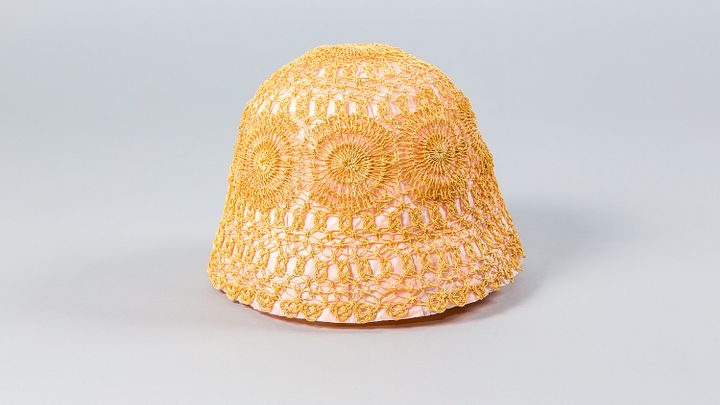
Objekt aus der Sammlung Museum Aargau: Hut

Collection
online

Discover 400 museum treasures online (in German)  

INFORMATION ON THE EGLISWIL COLLECTION CENTRE

 
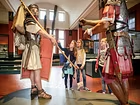
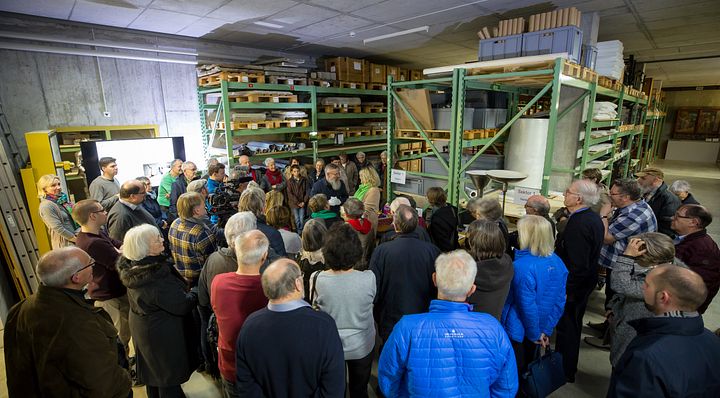
Besucherinnen und Besucher stehen in der Halle des Sammlungszentrum Egliswil

Guided tours and object talk

Event Calendar (in German)  

 
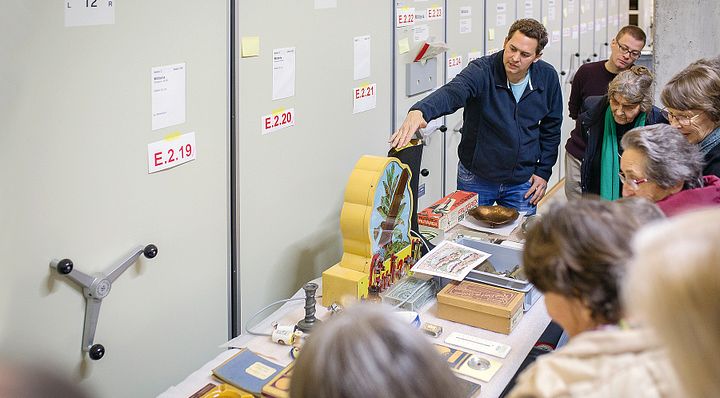
Ein Mann zeigt auf einer Führung im Sammlungszentrum Egliswil historische Objekte aus dem Aargau .

How to find us

Arrival by car, bus or on foot  

 
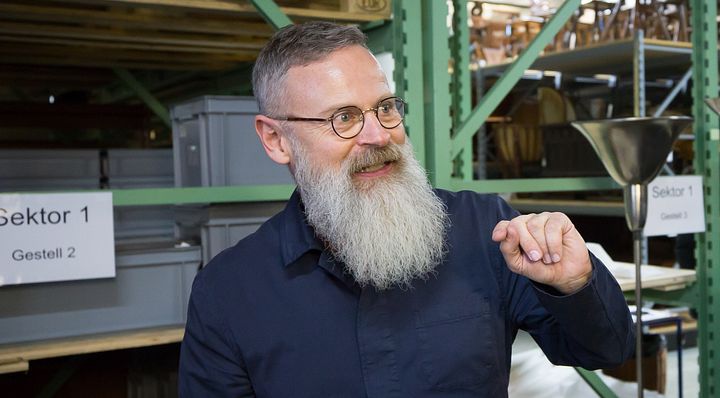
Rudolf Velhagen auf einer Führung im Sammlungszentrum Egliswil, im Hintergrund alte Objekte sowie mehrere Personen.

Please contact us

Information and reservations